Georgius Gemistus Plethon
FREE Catholic Classes
Born in Constantinople about 1355, died in the Peloponnesus, 1450. Out of veneration for Plato he changed his name from Gemistos to Plethon. Although he wrote commentaries on Aristotle's logical treatises and on Porphyry's "Isagoge", he was a professed Platonist in philosophy. Owing, most probably, to the influence of Mohammedan teachers, he combined with Platonism, or rather with Neo-Platonism, the most extraordinary kind of Oriental mysticism and magic which he designated as Zoroastrianism. It was due, no doubt, to these tendencies of thought that he openly abandoned Christianity and sought to substitute paganism for it as a standard of life. When he was about fifteen years old he visited Western Europe in the train of the Emperor John Palaeologus. After his return to Greece, he settled at Misithra in the Peloponnesus, the site of ancient Sparta, and there he spent the greater part of his life. In 1438, although he was then in his eighty-third year, he again accompanied the Emperor to Italy, where he was designated as one of the six champions of the Orthodox Church in the Council of Florence . His interest in ecclesiastical matters was, however, very slight. Instead of attending the Council, he spent his time discoursing on Platonism and Zoroastrianism to the Florentines. It was his enthusiasm for Platonism that influenced Cosimo de Medici to found a Platonic Academy at Florence. In 1441 Plethon had returned to the Peloponnesus, and there he died and was buried at Misithra in 1450. In 1465 his remains were carried to Rimini and placed in the church of St. Francis, where an inscription, curiously enough, styles him "Themistius Byzantinus". Among his disciples was the learned Cardinal Bessarion. Plethon's most important works are the "Laws" written in imitation of Plato's "Laws", which was condemned by Gennadios, Patriarch of Constantinople, and "On the Differences between Plato and Aristotle ", in which he attacks the Aristotelian philosophy and asserts the superiority of Platonism. He also composed a work in defence of the Greek doctrine of the Procession of the Holy Ghost. In his philosophical system he borrows largely from the Neo-Platonist, Proclus, and mingles with the traditional Neo-Platonic mysticism many popular Oriental superstitions. His influence was chiefly negative. His attack on Aristotelianism was to some extent effective, although opposed to him were men of equal ability and power, such as Gennadios, Patriarch of Constantinople. He was honoured by the Italian Platonists as the restorer of the Academy, and as a martyr for the cause of Platonism.
 Hi readers, it seems you use Catholic Online a lot; that's great! It's a little awkward to ask, but we need your help. If you have already donated, we sincerely thank you. We're not salespeople, but we depend on donations averaging $14.76 and fewer than 1% of readers give. If you donate just $5.00, the price of your coffee, Catholic Online School could keep thriving. Thank you. Help Now >
We ask you, humbly: don't scroll away.
Hi readers, it seems you use Catholic Online a lot; that's great! It's a little awkward to ask, but we need your help. If you have already donated, we sincerely thank you. We're not salespeople, but we depend on donations averaging $14.76 and fewer than 1% of readers give. If you donate just $5.00, the price of your coffee, Catholic Online School could keep thriving. Thank you.Help Now >

Join the Movement
When you sign up below, you don't just join an email list - you're joining an entire movement for Free world class Catholic education.


-

-
Mysteries of the Rosary
-
St. Faustina Kowalska
-
Litany of the Blessed Virgin Mary
-
Saint of the Day for Wednesday, Oct 4th, 2023
-
Popular Saints
-
St. Francis of Assisi
-
Bible
-
Female / Women Saints
-
7 Morning Prayers you need to get your day started with God
-
Litany of the Blessed Virgin Mary


Sacrifices of Faith: The Pro-Life Legacies of St. Gianna and Jessica Hanna
-
How to love God by caring for our bodies
-
Pope Francis calls for negotiations to End Russia-Ukraine War
-
Pope Francis Contemplates Return to U.S. for United Nations Assembly Address
-
Pope Francis Calls on Faithful to Embrace Faith, Hope, and Charity in New Teaching Series


Daily Catholic
- Daily Readings for Sunday, April 28, 2024
- St. Peter Chanel: Saint of the Day for Sunday, April 28, 2024
- Prayer before a Crucifix: Prayer of the Day for Sunday, April 28, 2024
- Daily Readings for Saturday, April 27, 2024
- St. Zita: Saint of the Day for Saturday, April 27, 2024
- Prayer for the Dead # 2: Prayer of the Day for Saturday, April 27, 2024
 Daily Readings for Sunday, April 28, 2024
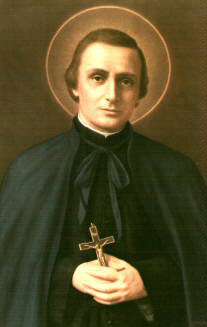 St. Peter Chanel: Saint of the Day for Sunday, April 28, 2024
 Prayer before a Crucifix: Prayer of the Day for Sunday, April 28, 2024


Copyright 2024 Catholic Online. All materials contained on this site, whether written, audible or visual are the exclusive property of Catholic Online and are protected under U.S. and International copyright laws, © Copyright 2024 Catholic Online. Any unauthorized use, without prior written consent of Catholic Online is strictly forbidden and prohibited.
Catholic Online is a Project of Your Catholic Voice Foundation, a Not-for-Profit Corporation. Your Catholic Voice Foundation has been granted a recognition of tax exemption under Section 501(c)(3) of the Internal Revenue Code. Federal Tax Identification Number: 81-0596847. Your gift is tax-deductible as allowed by law.