Peter Mongus
FREE Catholic Classes
( moggos , "stammerer", or "hoarse".)
Intruded Monophysite patriarch of Alexandria (d. 490). Under Timothy Ailuros, who was made patriarch by the Egyptian Monophysites after Chalcedon (454-460), Peter Mongus was an ardent adherent of that party. As Timothy's deacon he took part in the persecution of the Melchites. Timothy Ailuros was expelled from the patriarchal throne in 460 and the orthodox Timothy Salophakiolos was set up by the government instead (460-75). In 475 another revolution recalled Ailuros, who held his place till death (477). His party thereupon elected Peter Mongus to succeed him. The Emperor Zeno (474-91) sentenced Mongus to death; he escaped by flight. Meanwhile Salophakiolos returned and reigned till his death (481). The Melchites chose John Talaia to succeed (481-82; see JOHN TALAIA). Peter Mongus, always claiming to be patriarch, now comes forward again. John had quarrelled with Acacius, patriarch of Constantinople, and refused to sign Zeno's Henoticon (482); so he was expelled, the emperor changed his attitude, and supported Mongus (482). Talaia fled to Rome, Mongus took possession of the see, and sent notice of his succession to Rome, Antioch, and Constantinople. He had signed the Henoticon and was therefore inserted in Acacius's diptychs as Patriarch of Alexandria. But the pope ( Felix II or III , 483-92) defended Talaia's rights in two letters to Acacius.

From this time Mongus became the chief champion of all Monophysites. He held a synod to condemn Chalcedon, and desecrated the tombs of Proterios and Salophakiolos, his Melchite predecessors. He was excommunicated repeatedly by the pope. It was communion with Mongus and the acceptance of the Henoticon that caused the Acacian schism of Constantinople (484-519). When Acacius died and was succeeded by Flavitas (or Fravitas, 489-90) Mongus wrote to the new patriarch again condemning Chalcedon and encouraging him in his schism with Rome. He died in 490 and was succeeded by another Monophysite, Athanasius II (490-96). For a long time after his death the name of Peter Mongus was still a party word. To read it in the diptychs (of the dead) was a kind of profession of Monophystism; the first condition of reunion with Rome and the Catholic world generally was to erase it, with that of Dioscurus and the other great champions of the heresy. In the line of Alexandrine patriarchs Mongus is counted as Peter III. He is said to have written many books, of which however nothing remains. A pretended correspondence between him and Acacius (in Coptic) is proved to be spurious by Amelineau in the "Memoires publiés par les membres de la mission archéologique française au Caire", IV (Paris, 1888), 196-228.


Join the Movement
When you sign up below, you don't just join an email list - you're joining an entire movement for Free world class Catholic education.


-

-
Mysteries of the Rosary
-
St. Faustina Kowalska
-
Litany of the Blessed Virgin Mary
-
Saint of the Day for Wednesday, Oct 4th, 2023
-
Popular Saints
-
St. Francis of Assisi
-
Bible
-
Female / Women Saints
-
7 Morning Prayers you need to get your day started with God
-
Litany of the Blessed Virgin Mary


Sacrifices of Faith: The Pro-Life Legacies of St. Gianna and Jessica Hanna
-
How to love God by caring for our bodies
-
Pope Francis calls for negotiations to End Russia-Ukraine War
-
Pope Francis Contemplates Return to U.S. for United Nations Assembly Address
-
Pope Francis Calls on Faithful to Embrace Faith, Hope, and Charity in New Teaching Series


Daily Catholic
- Daily Readings for Sunday, April 28, 2024
- St. Peter Chanel: Saint of the Day for Sunday, April 28, 2024
- Prayer before a Crucifix: Prayer of the Day for Sunday, April 28, 2024
- Daily Readings for Saturday, April 27, 2024
- St. Zita: Saint of the Day for Saturday, April 27, 2024
- Prayer for the Dead # 2: Prayer of the Day for Saturday, April 27, 2024
 Daily Readings for Sunday, April 28, 2024
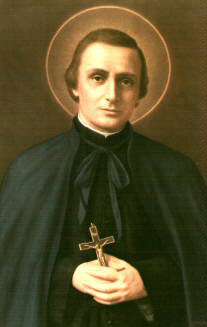 St. Peter Chanel: Saint of the Day for Sunday, April 28, 2024
 Prayer before a Crucifix: Prayer of the Day for Sunday, April 28, 2024
 Hi readers, it seems you use Catholic Online a lot; that's great! It's a little awkward to ask, but we need your help. If you have already donated, we sincerely thank you. We're not salespeople, but we depend on donations averaging $14.76 and fewer than 1% of readers give. If you donate just $5.00, the price of your coffee, Catholic Online School could keep thriving. Thank you. Help Now >


Copyright 2024 Catholic Online. All materials contained on this site, whether written, audible or visual are the exclusive property of Catholic Online and are protected under U.S. and International copyright laws, © Copyright 2024 Catholic Online. Any unauthorized use, without prior written consent of Catholic Online is strictly forbidden and prohibited.
Catholic Online is a Project of Your Catholic Voice Foundation, a Not-for-Profit Corporation. Your Catholic Voice Foundation has been granted a recognition of tax exemption under Section 501(c)(3) of the Internal Revenue Code. Federal Tax Identification Number: 81-0596847. Your gift is tax-deductible as allowed by law.