We ask you, humbly: don't scroll away.
Hi readers, it seems you use Catholic Online a lot; that's great! It's a little awkward to ask, but we need your help. If you have already donated, we sincerely thank you. We're not salespeople, but we depend on donations averaging $14.76 and fewer than 1% of readers give. If you donate just $5.00, the price of your coffee, Catholic Online School could keep thriving. Thank you.Help Now >
St. Peter Faber
FREE Catholic Classes
Born 13 April, 1506, at Villaret, Savoy ; died 1 Aug., 1546, in Rome. As a child he tended his father's sheep during the week, and on Sunday he taught catechism to other children. The instinctive knowledge of his vocation as an apostle inspired him with a desire to study. At first he was entrusted to the care of a priest at Thônes, and then to a neighbouring school. Although without any defininte plans for the future, he resolved to go to Paris. His parents consented to the separation, and in 1525 Peter arrived in Paris. Here he acquired the learning he desired, and found quite unexpectedly his real vocation. He was admitted gratuitously to the college of Sainte-Barbe, and shared the lodging of a student from Navarre, Francis Xavier, the future saint, in a tower which still existed in 1850. They became intimately attached to each other, receiving on the same day in 1530 the degree of master of arts. At the university he also met St. Ignatius of Loyola and became one of his associates. He was ordained in 1534, and received at Montmartre, on 15 August of the same year, the vows of Ignatius and his five companions. To these first six volunteers, three others were to attach themselves. Ignatius appointed them all to meet at Venice, and charged Faber to conduct them there. Leaving Paris 15 Nov., 1536, Faber and his companions rejoined Ignatius at Venice in Jan., 1537. Ignatius then thought of going to evangelize the Holy Land, but God had destined him for a vaster field of action.
After Ignatius, Faber was the one whom Xavier and his companions esteemed the most eminent. He merited this esteem by his profound knowledge, his gentle sanctity, and his influence over souls. Faber now repaired to Rome, and after some months of preaching and teaching, the pope sent him to Parma and Piacenza, where he brought about a revival of Christian piety. Recalled to Rome, Faber was sent to Germany to uphold Catholicism at the Diet of Worms. In reality the diets which the Protestants were enabled to hold through the weakness of Charles accomplished no good. From the Diet of Worms, convoked in 1540, he was called to that of Ratisbon in 1541. Faber was startled by the ruin which Protestantism had caused in Germany, and by the state of decadence presented by Catholicism ; and he saw that the remedy did not lie in discussions with the heretics, but in the reform of the faithful — above all, of the clergy. For ten months, at Speyer, at Ratisbon, and at Mainz, he conducted himself with gentleness and success. It was above all by the Spiritual that he accomplished most of his conversions. Princes, prelates, and priests revealed their consciences to him, and people were astounded by the efficacy of an apostolate accomplished so rapidly. Recalled to Spain by St. Ignatius, Faber tore himself away from the field where he had already gathered such a harvest, and won Savoy, which has never ceased to venerate him as a saint; but he had hardly been in Spain six months when by order of the pope he was again sent to Germany. This time for nineteen months Faber was to work for the reform of Speyer, Mainz, and Cologne — a thankless task. However, he gained the ecclesiastics little by little, changed their hearts, and discovered in the young many vocations. That he decided the vocation of Bl. Peter Canisius is in itself sufficient to justify his being called the Apostle of Germany. The Archbishop of Cologne, Herman of Wied, was already won over by the heresy which he was later publicly to embrace. It was also at Cologne that Faber especially exercised his zeal. After spending some months at Louvain, in 1543, where he implanted the seeds of numerous vocations among the young, he returned to Cologne, and there it may be said that he extirpated all heresy. But he was forced by obedience to leave Germany in August, 1544, going at first to Portugal, later to Spain. At the court of Lisbon and that of Valladolid, Faber was an angel of God. He was called to the principal cities of Spain, and everywhere inculcated fervour and fostered vocations. Let it suffice to mention that of Francis Borgia , which he, more than anyone else, was the means of strengthening. Faber, at forty, was wasted by his incessant labours and his unceasing journeys always made on foot. The pope, however, thought of sending him to the Council of Trent as theologian of the Holy See ; John III wanted him to be made Patriarch of Ethiopia. Called to Rome, Faber, weakened by fever, arrived there 17 July, 1546, to die in the arms of St. Ignatius, the first of the following August. Those who had known him already invoked him as a saint. Saint Francis de Sales , whose character recalled that of Faber's, never spoke of him except as a saint. He was beatified, 5 September, 1872; his feast is kept on 8 August.

We ask you, humbly: don't scroll away.
Hi readers, it seems you use Catholic Online a lot; that's great! It's a little awkward to ask, but we need your help. If you have already donated, we sincerely thank you. We're not salespeople, but we depend on donations averaging $14.76 and fewer than 1% of readers give. If you donate just $5.00, the price of your coffee, Catholic Online School could keep thriving. Thank you.Help Now >

Join the Movement
When you sign up below, you don't just join an email list - you're joining an entire movement for Free world class Catholic education.


-

-
Mysteries of the Rosary
-
St. Faustina Kowalska
-
Litany of the Blessed Virgin Mary
-
Saint of the Day for Wednesday, Oct 4th, 2023
-
Popular Saints
-
St. Francis of Assisi
-
Bible
-
Female / Women Saints
-
7 Morning Prayers you need to get your day started with God
-
Litany of the Blessed Virgin Mary

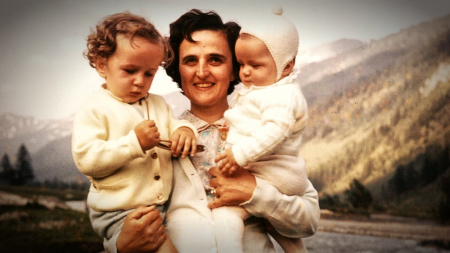
Sacrifices of Faith: The Pro-Life Legacies of St. Gianna and Jessica Hanna
-
How to love God by caring for our bodies
-
Pope Francis calls for negotiations to End Russia-Ukraine War
-
Pope Francis Contemplates Return to U.S. for United Nations Assembly Address
-
Pope Francis Calls on Faithful to Embrace Faith, Hope, and Charity in New Teaching Series


Daily Catholic
- Daily Readings for Sunday, April 28, 2024
- St. Peter Chanel: Saint of the Day for Sunday, April 28, 2024
- Prayer before a Crucifix: Prayer of the Day for Sunday, April 28, 2024
- Daily Readings for Saturday, April 27, 2024
- St. Zita: Saint of the Day for Saturday, April 27, 2024
- Prayer for the Dead # 2: Prayer of the Day for Saturday, April 27, 2024
 Daily Readings for Sunday, April 28, 2024
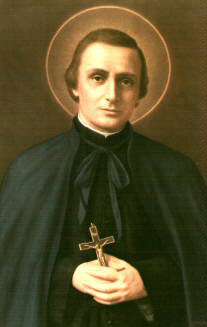 St. Peter Chanel: Saint of the Day for Sunday, April 28, 2024
 Prayer before a Crucifix: Prayer of the Day for Sunday, April 28, 2024

We ask you, humbly: don't scroll away.
Hi readers, it seems you use Catholic Online a lot; that's great! It's a little awkward to ask, but we need your help. If you have already donated, we sincerely thank you. We're not salespeople, but we depend on donations averaging $14.76 and fewer than 1% of readers give. If you donate just $5.00, the price of your coffee, Catholic Online School could keep thriving. Thank you.Help Now >

Copyright 2024 Catholic Online. All materials contained on this site, whether written, audible or visual are the exclusive property of Catholic Online and are protected under U.S. and International copyright laws, © Copyright 2024 Catholic Online. Any unauthorized use, without prior written consent of Catholic Online is strictly forbidden and prohibited.
Catholic Online is a Project of Your Catholic Voice Foundation, a Not-for-Profit Corporation. Your Catholic Voice Foundation has been granted a recognition of tax exemption under Section 501(c)(3) of the Internal Revenue Code. Federal Tax Identification Number: 81-0596847. Your gift is tax-deductible as allowed by law.