We ask you, humbly: don't scroll away.
Hi readers, it seems you use Catholic Online a lot; that's great! It's a little awkward to ask, but we need your help. If you have already donated, we sincerely thank you. We're not salespeople, but we depend on donations averaging $14.76 and fewer than 1% of readers give. If you donate just $5.00, the price of your coffee, Catholic Online School could keep thriving. Thank you.Help Now >
Pentecost (Jewish Feast)
FREE Catholic Classes
The second in importance of the great Jewish feasts.
The term, adopted from the Greek-speaking Jews (Tob. 2:1; II Mac. 12:32; Josephus, "Ant.", III, x, 6; etc.) alludes to the fact that the feast, known in the Old Testament as "the feast of harvest of the firstfruits " ( Exodus 23:16 ), "the feast of weeks" ( Exodus 34:22 ; Deuteronomy 16:10 : 2 Chronicles 8:13 ), the "day of firstfruits " ( Numbers 28:26 ), and called by later Jews 'asereth or 'asartha (solemn assembly, and probably "closing festival", Pentecost being the closing festival of the harvest and of the Paschal season), fell on the fiftieth day from "the next day after the sabbath " of the Passover ( Leviticus 23:11 ). The interpretation of this passage was early disputed and at the time of Jesus Christ two opinions touching the exact day of the feast were held. Most doctors (and the bulk of the people) understood (on the force of Leviticus 23:7 ) the sabbath spoken of in verse 11 to be the first day of the unleavened bread, Nisan 15; whereas the Sadducees (later also the Karaites) held that the weekly sabbath falling during the Passover festivities was meant (Talmud, Treat. Menach., x, 1-3; Chagiga, ii, 4). Which opinion is more in accordance with the natural meaning of the passage, we shall leave undecided; the dissent is long since over, all Jews celebrating the Pentecost on the fiftieth day after Nisan 16. As the offering of a sheaf of barley marked the beginning of the harvest season, so the offering of loaves made from the new wheat marked its completion. This is no proof that Pentecost was originally a mere nature-festival; but it shows that the Mosaic legislation had in view an agricultural population, to whose special needs and disposition it was perfectly adapted. Since the close of Biblical times, an entirely new significance, never so much as hinted at in Scripture, has been attached by the Jews to the feast : the Pentecost is held to commemorate the giving of the Law on Mount Sinai, which, according to Exodus 19:1, took place on the fiftieth day after the departure from Egypt. This view, admitted by several Fathers of the Church (St. Jer., "Epist.", lxxviii, 12, P.L., XLII, 707; St. August., "Cont. Faust", xxxii, 12, P.L., XXII, 503; St. Leo , "De Pent. Serm.", I, P.L., LIV, 400), has passed into some modern Jewish Liturgical books, where the feast is described as "the day of the giving of the Law" (Maimon. More Neb., iii, 41).
We ask you, humbly: don't scroll away.
Hi readers, it seems you use Catholic Online a lot; that's great! It's a little awkward to ask, but we need your help. If you have already donated, we sincerely thank you. We're not salespeople, but we depend on donations averaging $14.76 and fewer than 1% of readers give. If you donate just $5.00, the price of your coffee, Catholic Online School could keep thriving. Thank you.Help Now >
In accordance with this interpretation, modern Jews pass the eve in reading the Law and other appropriate Scriptures. Among them the feast lasts two days, a tradition dating from the difficulty which the Jews of the Diaspora found in ascertaining exactly what day the month begins in Palestine (Talmud, Treat. Pesach., lii, 1; Rosh hashsh., v, 1). On the day of Pentecost no servile work was allowed ( Leviticus 23:21 ). The oblation consisted of two loaves of leavened bread made from two-tenths of an ephah (about seven quarts and a fifth) of flour from the new wheat ( Leviticus 23:17 ; Exodus 24:22 ). The leavened bread could not be placed on the altar ( Leviticus 2:11 ), and was merely waved (D.V., "lifted"; see O FFERINGS ); one loaf was given to the High Priest, the other was divided among the priests who ate it within the sacred precincts. Two yearling lambs were also offered as a peace-offering, and a buck-goat for sin, together with a holocaust of seven lambs without blemish, one calf, and two rams ( Leviticus 23:18-19 ). According to Numbers 28:26-31, the number of victims to be offered in holocaust on that day differs from the above. The Jews of later times regarded the two enactments as supplementary (Jos., "Ant.", III, X, 6; Talmud, Treat. Menach., iv, 2, 5). The feast was an occasion for social and joyful gatherings ( Deuteronomy 16:11 ) and we may infer from the New Testament that it was, like the Passover, attended at Jerusalem by a great homecoming of the Jews from all parts of the world (Act., ii, 5-11).
See also P ENTECOST (C HRISTIAN F EAST )
 Hi readers, it seems you use Catholic Online a lot; that's great! It's a little awkward to ask, but we need your help. If you have already donated, we sincerely thank you. We're not salespeople, but we depend on donations averaging $14.76 and fewer than 1% of readers give. If you donate just $5.00, the price of your coffee, Catholic Online School could keep thriving. Thank you. Help Now >
Join the Movement
When you sign up below, you don't just join an email list - you're joining an entire movement for Free world class Catholic education.


-

-
Mysteries of the Rosary
-
St. Faustina Kowalska
-
Litany of the Blessed Virgin Mary
-
Saint of the Day for Wednesday, Oct 4th, 2023
-
Popular Saints
-
St. Francis of Assisi
-
Bible
-
Female / Women Saints
-
7 Morning Prayers you need to get your day started with God
-
Litany of the Blessed Virgin Mary


Sacrifices of Faith: The Pro-Life Legacies of St. Gianna and Jessica Hanna
-
How to love God by caring for our bodies
-
Pope Francis calls for negotiations to End Russia-Ukraine War
-
Pope Francis Contemplates Return to U.S. for United Nations Assembly Address
-
Pope Francis Calls on Faithful to Embrace Faith, Hope, and Charity in New Teaching Series


Daily Catholic
- Daily Readings for Sunday, April 28, 2024
- St. Peter Chanel: Saint of the Day for Sunday, April 28, 2024
- Prayer before a Crucifix: Prayer of the Day for Sunday, April 28, 2024
- Daily Readings for Saturday, April 27, 2024
- St. Zita: Saint of the Day for Saturday, April 27, 2024
- Prayer for the Dead # 2: Prayer of the Day for Saturday, April 27, 2024
 Daily Readings for Sunday, April 28, 2024
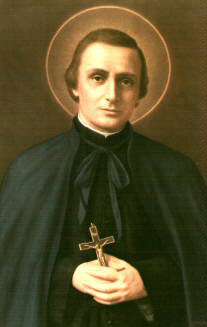 St. Peter Chanel: Saint of the Day for Sunday, April 28, 2024
 Prayer before a Crucifix: Prayer of the Day for Sunday, April 28, 2024
We ask you, humbly: don't scroll away.
Hi readers, it seems you use Catholic Online a lot; that's great! It's a little awkward to ask, but we need your help. If you have already donated, we sincerely thank you. We're not salespeople, but we depend on donations averaging $14.76 and fewer than 1% of readers give. If you donate just $5.00, the price of your coffee, Catholic Online School could keep thriving. Thank you.Help Now >

Copyright 2024 Catholic Online. All materials contained on this site, whether written, audible or visual are the exclusive property of Catholic Online and are protected under U.S. and International copyright laws, © Copyright 2024 Catholic Online. Any unauthorized use, without prior written consent of Catholic Online is strictly forbidden and prohibited.
Catholic Online is a Project of Your Catholic Voice Foundation, a Not-for-Profit Corporation. Your Catholic Voice Foundation has been granted a recognition of tax exemption under Section 501(c)(3) of the Internal Revenue Code. Federal Tax Identification Number: 81-0596847. Your gift is tax-deductible as allowed by law.