Your Catholic Family Belongs Here.
Membership Is FREE.
What if your next step in growing your family’s faith cost nothing? Join the World Catholic Education Alliance (WCEA) for FREE and explore 10,000+ Catholic lessons and 5,300+ downloadable resources for your home, classroom, or school.
Built on the work of Catholic Online School—with 2.2 million student enrollments across 193 countries—our mission is simple: free, world-class Catholic education for anyone, anywhere.
Your family belongs here. Become a member today.
Diocese of Nice
FREE Catholic Classes
(NICIENSIS)
Nice comprises the Department of Alpes-Maritimes. It was re-established by the Concordat of 1801 as suffragan of Aix. The Countship of Nice from 1818 to 1860 was part of the Sardinian States, and the see became a suffragan of Genoa. When Nice was annexed to France in 1860, certain parts which remained Italian were cut off from it and added to the Diocese of Vintimille. In 1862 the diocese was again a suffragan of Aix. The arrondissement of Grasse was separated from the Diocese of Fréjus in 1886, and given to Nice which now unites the three former Dioceses of Nice, Grasse, and Vence.
I. DIOCESE OF NICE
Traditions tell us that Nice was evangelized by St. Barnabas, sent by St. Paul, or else by St. Mary Magdalen, St. Martha, and St. Lazarus; and they make St. Bassus, a martyr under Decius, the first Bishop of Nice. The See of Nice in Gaul existed in 314, since the bishop sent delegates to the Council of Arles in that year. The first bishop historically known is Amantius who attended the Council of Aquileia in 381. Cimiez, near Nice, where still can be seen the remains of a Roman amphitheatre, and which was made illustrious by the martyrdom of the youthful St. Pontius about 260 had also a see, held in the middle of the fifth century by St. Valerianus; a rescript of St. Leo the Great, issued after 450 and confirmed by St. Hilarus in 465, united the Sees of Nice and Cimiez. This newly-formed see remained a suffragan of Embrun up to the time of the Revolution (see GAP, DIOCESE OF). Mgr Duchesne has not discovered sufficient historical proof of the episcopate at Nice of St. Valerianus (433-43), of St. Deutherius (490-93), martyred by the Vandals, of St. Syagrius (died 787), Count of Brignoles and son-in-law perhaps of Charlemagne. St. Anselm, a former monk of Lérins, is mentioned as Bishop of Nice (1100-07). Bishops of Nice bore the title of Counts of Drap since the donation of property situated at Drap, made in 1073 by Pierre, Bishop of Vaison, a native of Nice, to Raymond I, its bishop, and to his successors. Charlemagne, when visiting Cimiez devastated by the Lombards in 574, caused St. Syagrius to build on its ruins the monastery of St. Pontius, the largest Alpine abbey of the Middle Ages.
II. DIOCESE OF GRASSE
The first known Bishop of Antibes is Armentarius who attended the Council of Vaison in 442; Mgr Duchesne admits as possible that the Remigius, who signed at the Council of Nîmes in 396 and in 417 received a letter from Pope Zosimus, may have been Bishop of Antibes before Armentarius. About the middle of the thirteenth century the See of Antibes was transferred to Grasse. Bishops of Grasse worthy of mention are: Cardinal Agostino Trivulzio (1537-1648); the poet Antoine Godeau (1636-53), one of the most celebrated habitués of the Hôtel de Rambouillet, where he was nicknamed "Julia's dwarf" on account of his small stature.
III. DIOCESE OF VENCE
The first known Bishop of Vence is Severus, bishop in 439 and perhaps as early as 419. Among others are: St. Veranus, son of St. Eucherius, Archbishop of Lyons and a monk of Lérins, bishop before 451 and at least until 465; St. Lambert, first a Benedictine monk (died 1154); Cardinal Alessandro Farnese (1505-11). Antoine Godeau, Bishop of Grasse, was named Bishop of Vence in 1638; the Holy See wished to unite the two dioceses. Meeting with opposition from the chapter and the clergy of Vence Godeau left Grasse in 1653, to remain Bishop of Vence, which see he held until 1672.
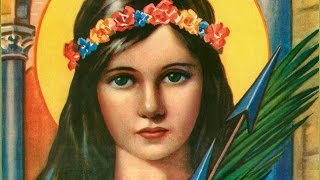
The following saints are specially honoured in the Diocese of Nice: The youthful martyr St. Celsus, whom certain traditions make victim of Nero's persecution ; St. Vincentius and St. Orontius, natives of Cimiez, apostles of Aquitaine and of Spain, martyrs under Diocletian ; St. Hospitius , a hermit of Cap Ferrat (died about 581); Blessed Antoine Gallus (1300-92), a native of Nice, one of St. Catherine of Siena'sconfessors. The martyr St. Reparata of Cæsarea in Palestine is the patroness of the diocese. The chief pilgrimages of the diocese are: Our Lady of Laghet, near Monaco, a place of pilgrimage since the end of the seventeenth century; the chapel of the Sacred Heart of Jesus at Roquefort near Grasse ; Our Lady of Valcluse; Our Lady of Brusq; Our Lady of Vie. Prior to the application of the law of 1901 against associations, the diocese counted Assumptionists, Capuchins, Cistercians of the Immaculate Conception, Jesuits, Priests of the Christian Doctrine, Franciscans, Lazarists, Discalced Carmelites, Oblates of Mary Immaculate, Salesians of Dom Bosco, Camillians, several orders of teaching Brothers. The Sisters of St. Martha, devoted to teaching and nursing and founded in 1832, have their mother-house at Grasse. At the beginning of the twentieth century religious congregations of the diocese conducted 4 crèches, 16 day nurseries, 2 institutions for crippled children, 1 boys' orphanage, 10 girls' orphanages, 3 sewing rooms, 11 hospitals or asylums, 4 convalescent homes, 6 houses for the care of the sick in their own homes, 1 insane asylum, 1 asylum for incurables. The Diocese of Nice, whither every year the warm and balmy climate of the Côte d'Azur attracts innumerable foreigners, counted in 1909 about 260,000 inhabitants, 32 parishes and 185 succursal parishes.


Come Grow With Us
Sign up and walk the Catholic journey with millions around the world.
Receive inspiring emails on saints, daily readings, and free faith-building resources—no cost, ever.
World Catholic Education Alliance
Your Child Needs Help Tonight—Could the Answer Be Right Here?
Watch the Video.

- 7 Morning Prayers
- Mysteries of the Rosary
- Litany of the Bl. Virgin Mary
- Popular Saints
- Popular Prayers
- Female Saints
- Saint Feast Days by Month
- Stations of the Cross
- St. Francis of Assisi
- St. Michael the Archangel
- The Apostles' Creed
- Unfailing Prayer to St. Anthony
- Pray the Rosary







Copyright 2026 Catholic Online. All materials contained on this site, whether written, audible or visual are the exclusive property of Catholic Online and are protected under U.S. and International copyright laws, © Copyright 2026 Catholic Online. Any unauthorized use, without prior written consent of Catholic Online is strictly forbidden and prohibited.
Catholic Online is a Project of Your Catholic Voice Foundation, a Not-for-Profit Corporation. Your Catholic Voice Foundation has been granted a recognition of tax exemption under Section 501(c)(3) of the Internal Revenue Code. Federal Tax Identification Number: 81-0596847. Your gift is tax-deductible as allowed by law.
