Litta
FREE Catholic Classes
A noble Milanese family which gave two distinguished cardinals to the Church.
I. ALFONSO LITTA
Archbishop of Milan, born in 1608; died at Rome, 22 Aug., 1679. After filling other important positions, he was appointed governor of the Marches by Innocent X, was made Archbishop of Milan in 1652, and received the purple in 1640. He died shortly after the conclave which elected Innocent XI. He was a learned and charitable man and defended with courage the ecclesiastical immunities against the officers of the King of Spain. His works are enumerated by Argelati in the "Bibliotheca Scriptorum Mediolanensium" (Milan, 1745); his life was written by M. Bardocchi (Bologna, 1691).
II. LORENZO LITTA
Born at Milan, 25 Feb, 1756; died at Monte Flavio, 1 May, 1820. A distinguished littérateur, he played a prominent part in contemporary ecclesiastical history . As a youth he was sent by his parents to the Clementine College in Rome, where he made rapid progress in letters and law. Not long after the completion of his studies he was made prothonotary Apostolic by Pius VI. In 1793 he was consecrated titular Archbishop of Thebes, and sent as nuncio to Poland, where he arrived in March, 1794, shortly before the outbreak of the revolution. Notwithstanding the difficulty of his own position, he used his influence with Kosciuszko on behalf of the Church and churchmen, and saved the life of Monsignor Skarzewski, Bishop of Chelm, already condemned to death, though he was not so successful with regard to the Bishop of Wilna and Livonia. In the negotiations for the third partition of Poland, he used his utmost endeavours to have the three States guarantee the preservation of the Church organization and property — guarantees which were disgracefully violated by Catherine II. On the latter's death Litta was sent on an extraordinary mission to Moscow for the coronation of Paul I, whence he was transferred as ambassador of Pius VI to St. Petersburg, to settle, according to Paul's wish, the affairs of the Latin and the Uniat Ruthenian church. He secured the erection, or rather restoration, of six dioceses of the Latin Rite and three of the Ruthenian (Polotsk, Lutsk, and Brest). The restoration of the See of Kiev was prevented by the Holy Synod. Church property was only partly restored, though the Government was obliged to establish suitable allowances for the clergy. Litta also induced the metropolitans of Gnesen (Posnania), and Lemberg (Galicia) to renounce their jurisdiction over the dioceses of the Latin Rite in Russian territory, these being transferred to the new metropolis of Mohileff. Through his efforts also the Basilian Order was restored. In April, 1789, he had to leave Russia.
 Hi readers, it seems you use Catholic Online a lot; that's great! It's a little awkward to ask, but we need your help. If you have already donated, we sincerely thank you. We're not salespeople, but we depend on donations averaging $14.76 and fewer than 1% of readers give. If you donate just $5.00, the price of your coffee, Catholic Online School could keep thriving. Thank you. Help Now >
On the death of Pius VI he went to Venice to assist at the conclave. When he returned to Rome he was given an office in the papal treasury which enabled him to eradicate many abuses and introduce a better administration. In 1801 he was created cardinal and was made Prefect of the Congregation of the Index and, later, of Studies. In 1809 he was expelled from Rome with Pius VII and sent to Saint-Quentin on the Seine. During this exile he translated the Iliad, and wrote a series of letters containing a brilliant refutation of the four Gallican Articles of 1682, then the subject of much discussion. Some of these letters were addressed to Napoleon himself, and were later published anonymously. Returning to Rome with Pius VII , Litta was made Prefect of Propaganda, which, under his administration, soon recovered its former status. In 1814 he became suburbicarian Bishop of Sabina, and in 1818 Cardinal Vicar of Rome. He is buried at Rome in SS. Giovanni e Paolo.
We ask you, humbly: don't scroll away.
Hi readers, it seems you use Catholic Online a lot; that's great! It's a little awkward to ask, but we need your help. If you have already donated, we sincerely thank you. We're not salespeople, but we depend on donations averaging $14.76 and fewer than 1% of readers give. If you donate just $5.00, the price of your coffee, Catholic Online School could keep thriving. Thank you.Help Now >

Join the Movement
When you sign up below, you don't just join an email list - you're joining an entire movement for Free world class Catholic education.


-

-
Mysteries of the Rosary
-
St. Faustina Kowalska
-
Litany of the Blessed Virgin Mary
-
Saint of the Day for Wednesday, Oct 4th, 2023
-
Popular Saints
-
St. Francis of Assisi
-
Bible
-
Female / Women Saints
-
7 Morning Prayers you need to get your day started with God
-
Litany of the Blessed Virgin Mary

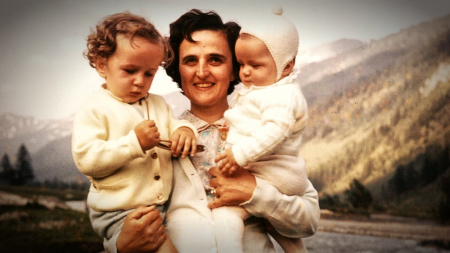
Sacrifices of Faith: The Pro-Life Legacies of St. Gianna and Jessica Hanna
-
How to love God by caring for our bodies
-
Pope Francis calls for negotiations to End Russia-Ukraine War
-
Pope Francis Contemplates Return to U.S. for United Nations Assembly Address
-
Pope Francis Calls on Faithful to Embrace Faith, Hope, and Charity in New Teaching Series


Daily Catholic
- Daily Readings for Sunday, April 28, 2024
- St. Peter Chanel: Saint of the Day for Sunday, April 28, 2024
- Prayer before a Crucifix: Prayer of the Day for Sunday, April 28, 2024
- Daily Readings for Saturday, April 27, 2024
- St. Zita: Saint of the Day for Saturday, April 27, 2024
- Prayer for the Dead # 2: Prayer of the Day for Saturday, April 27, 2024
 Daily Readings for Sunday, April 28, 2024
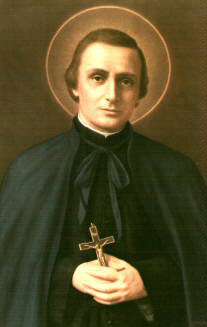 St. Peter Chanel: Saint of the Day for Sunday, April 28, 2024
 Prayer before a Crucifix: Prayer of the Day for Sunday, April 28, 2024


Copyright 2024 Catholic Online. All materials contained on this site, whether written, audible or visual are the exclusive property of Catholic Online and are protected under U.S. and International copyright laws, © Copyright 2024 Catholic Online. Any unauthorized use, without prior written consent of Catholic Online is strictly forbidden and prohibited.
Catholic Online is a Project of Your Catholic Voice Foundation, a Not-for-Profit Corporation. Your Catholic Voice Foundation has been granted a recognition of tax exemption under Section 501(c)(3) of the Internal Revenue Code. Federal Tax Identification Number: 81-0596847. Your gift is tax-deductible as allowed by law.