We ask you, humbly: don't scroll away.
Hi readers, it seems you use Catholic Online a lot; that's great! It's a little awkward to ask, but we need your help. If you have already donated, we sincerely thank you. We're not salespeople, but we depend on donations averaging $14.76 and fewer than 1% of readers give. If you donate just $5.00, the price of your coffee, Catholic Online School could keep thriving. Thank you.Help Now >
Ligugé
FREE Catholic Classes
A Benedictine Abbey, in the Diocese of Poitiers, France, was founded about the year A.D. 360, by St. Martin of Tours . The miracles and reputation of the holy founder attracted a large number of disciples to the new monastery. When however, St. Martin became Bishop of Tours and established the monastery of Marmoutiers a short distance from that city, the fame of Ligugé declined considerably. Among St. Martin's successors as abbots of Ligugé may be mentioned St. Savin, who resigned the post of abbot to become a hermit, and Abbot Ursinus, during whose reign the monk Defensor compiled the well-known "Scintillarum Liber" printed in P. L., LXXXVIII. The Saracenic invasion, the wars of the dukes of Aquitame and the early Carlovingians, and lastly the Norman invasion were a series of disasters that almost destroyed the monastery. By the eleventh century it had sunk to the position of a dependent priory attached to the Abbey of Maillezais, and finally reached the lowest level as a benefice in commendam , One of the commendatory priors, Geoffrey d'Estissac, a great patron of literature and the friend of Rabelais, built the existing church, a graceful structure but smaller by far than the ancient basilica which it replaced. In 1607 Ligugé ceased to be a monastery and was annexed to the Jesuit college of Poitiers to which institution it served as a country house until the suppression of the society in 1762. At the French Revolution the buildings and lands were sold as national property, the church being used for some time as the Municipal Council chamber. Eventually when the upheaval of the Revolution had subsided, the building was constituted a parish church.

In 1849 the famous Mgr Pie, afterwards cardinal, became Bishop of Poitiers. This prelate was the intimate friend of Dom Prosper Guéranger, re-founder of the French Benedictine Congregation of monks, and in 1852 he established at Ligugé a colony of monks from Solesmes. In 1864 the priory was erected into an abbey by Pope Pius IX , and Dom Léon Bastide was appointed first abbot. When, in 1880, the monks were driven from their cloister as a result of the "Ferry laws ", many of them retired under Dom Bourigaud, the successor of Dom Bastide, to the monastery of Silos in Spain which was saved from extinction by the recruits thus received. Some years later the buildings at Ligugé were sold to a syndicate, civil in its constitution, by which they were leased to the abbot and community who thus entered their monastery once more. Novices now came in considerable numbers and, in 1894, the ancient Abbey of St. Wandrille de Fontenelle in the Diocese of Rouen was repeopled by a colony from Ligugé. In 1902 the community were again driven out by the "Association Laws", and they are now settled in Belgium at Chevetoigne, in the Diocese of Namur. On Dom Bourigaud's resignation in 1907. Dom Léopold Gaugain was elected abbot, the community now numbers about forty choir monks and ten lay brothers.


Join the Movement
When you sign up below, you don't just join an email list - you're joining an entire movement for Free world class Catholic education.


-

-
Mysteries of the Rosary
-
St. Faustina Kowalska
-
Litany of the Blessed Virgin Mary
-
Saint of the Day for Wednesday, Oct 4th, 2023
-
Popular Saints
-
St. Francis of Assisi
-
Bible
-
Female / Women Saints
-
7 Morning Prayers you need to get your day started with God
-
Litany of the Blessed Virgin Mary


Sacrifices of Faith: The Pro-Life Legacies of St. Gianna and Jessica Hanna
-
How to love God by caring for our bodies
-
Pope Francis calls for negotiations to End Russia-Ukraine War
-
Pope Francis Contemplates Return to U.S. for United Nations Assembly Address
-
Pope Francis Calls on Faithful to Embrace Faith, Hope, and Charity in New Teaching Series


Daily Catholic
- Daily Readings for Sunday, April 28, 2024
- St. Peter Chanel: Saint of the Day for Sunday, April 28, 2024
- Prayer before a Crucifix: Prayer of the Day for Sunday, April 28, 2024
- Daily Readings for Saturday, April 27, 2024
- St. Zita: Saint of the Day for Saturday, April 27, 2024
- Prayer for the Dead # 2: Prayer of the Day for Saturday, April 27, 2024
 Daily Readings for Sunday, April 28, 2024
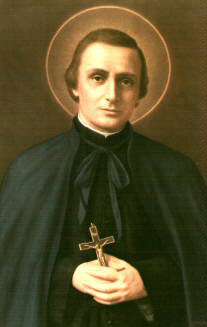 St. Peter Chanel: Saint of the Day for Sunday, April 28, 2024
 Prayer before a Crucifix: Prayer of the Day for Sunday, April 28, 2024

We ask you, humbly: don't scroll away.
Hi readers, it seems you use Catholic Online a lot; that's great! It's a little awkward to ask, but we need your help. If you have already donated, we sincerely thank you. We're not salespeople, but we depend on donations averaging $14.76 and fewer than 1% of readers give. If you donate just $5.00, the price of your coffee, Catholic Online School could keep thriving. Thank you.Help Now >

Copyright 2024 Catholic Online. All materials contained on this site, whether written, audible or visual are the exclusive property of Catholic Online and are protected under U.S. and International copyright laws, © Copyright 2024 Catholic Online. Any unauthorized use, without prior written consent of Catholic Online is strictly forbidden and prohibited.
Catholic Online is a Project of Your Catholic Voice Foundation, a Not-for-Profit Corporation. Your Catholic Voice Foundation has been granted a recognition of tax exemption under Section 501(c)(3) of the Internal Revenue Code. Federal Tax Identification Number: 81-0596847. Your gift is tax-deductible as allowed by law.
