We ask you, humbly: don't scroll away.
Hi readers, it seems you use Catholic Online a lot; that's great! It's a little awkward to ask, but we need your help. If you have already donated, we sincerely thank you. We're not salespeople, but we depend on donations averaging $14.76 and fewer than 1% of readers give. If you donate just $5.00, the price of your coffee, Catholic Online School could keep thriving. Thank you.Help Now >
Emmanuel
FREE Catholic Classes
Emmanual ( Septuagint Emmanouel ; A.V., Immanuel ) signifies " God with us" ( Matthew 1:23 ), and is the name of the child predicted in Isaiah 7:14 : "Behold a virgin shall conceive, and bear a son, and his name shall be called Emmanuel". The various views advanced as to the identity of the child cannot be fully explained and discussed here; the following observations must suffice:
- The child is not a merely ideal or metaphorical person, he cannot be identified with the regenerate people of Israel (Hoffmann), nor with religious faith (Porter), for "he shall eat butter and honey."
- The Prophet does not refer to a child in general, but points to an individual (cf. Boorda, Kuenen, W.R. Smith, Smend, Duhm, Cheyne. Marti); both text and context require this.
- The child is not a son of the Prophet Isaias (cf. Hitzig, Reuss ); Isaias 8:1-4, shows that the Prophet's son has a name different from that Emmanuel.
- The child is not a son of Achaz (cf. Lagarde, McCurdy); for Ezechias did not possess the most essential characteristics of Emmanuel as described by Isaias.
- The Emmanuel is the Messias foretold in the other prophecies of Isaias. In Isaias 8:8, Palestine is called the land of Emmanuel, though in other passage it is termed the land or the inheritance of Yahweh ( Isaiah 14:2, 25 ; 47:6 ; Hosea 9:3 ; Jeremiah 2:7 ; 12:14 ; etc), so that Emmanuel and Yahweh are identified. Again, in the Hebrew text of Isaias 8:9-10, the Prophet predicts the futility of all the enemies' schemes against Palestine, because of Emmanuel. In 9:6-7, the characteristics of the child Emmanuel are so clearly described that we can doubt no longer of his Messianic mission. The eleventh chapter pictures the Messianic blessings which the child Emmanuel will bring upon the earth. Moreover, St. Matthew (1:23) expressly identifies the Emmanuel with Jesus the Messias, and Christian tradition has constantly taught the same doctrine.
The question why the Messias was called Emmanuel, or " God with us", admits of a double answer: the name is a pledge of Divine help and also a description of the nature of the Messias. King Achaz had not believed the Prophet's first promise of deliverance from his enemies, Rasin, King of Syria, and Phacee, King of Israel ( Isaiah 7:1-9 ). And when the Prophet tried a second time to restore his confidence, Achaz refused to ask for the sign which God was ready to grant in confirmation of the prophetic promise (7:10-12). The Prophet, therefore, forces, in a way, King Achaz to confide in God, showing that the Messias, the hope of Israel and the glory of the house of David, implies by his very name "Emmanuel", or " God with us", the Divine presence among his people. A number of the Fathers, e.g. St. Irenaeus, Lactantius, St. Epiphanius , St. Chrysostom, and Theodoret, regard the name "Emmanuel", not merely as a pledge of Divine assistance, but also as an expression of the mystery of the Incarnation by virtue of which the Messias will be " God with us" in very deed.

Join the Movement
When you sign up below, you don't just join an email list - you're joining an entire movement for Free world class Catholic education.


-

-
Mysteries of the Rosary
-
St. Faustina Kowalska
-
Litany of the Blessed Virgin Mary
-
Saint of the Day for Wednesday, Oct 4th, 2023
-
Popular Saints
-
St. Francis of Assisi
-
Bible
-
Female / Women Saints
-
7 Morning Prayers you need to get your day started with God
-
Litany of the Blessed Virgin Mary


Sacrifices of Faith: The Pro-Life Legacies of St. Gianna and Jessica Hanna
-
How to love God by caring for our bodies
-
Pope Francis calls for negotiations to End Russia-Ukraine War
-
Pope Francis Contemplates Return to U.S. for United Nations Assembly Address
-
Pope Francis Calls on Faithful to Embrace Faith, Hope, and Charity in New Teaching Series


Daily Catholic
- Daily Readings for Sunday, April 28, 2024
- St. Peter Chanel: Saint of the Day for Sunday, April 28, 2024
- Prayer before a Crucifix: Prayer of the Day for Sunday, April 28, 2024
- Daily Readings for Saturday, April 27, 2024
- St. Zita: Saint of the Day for Saturday, April 27, 2024
- Prayer for the Dead # 2: Prayer of the Day for Saturday, April 27, 2024
 Daily Readings for Sunday, April 28, 2024
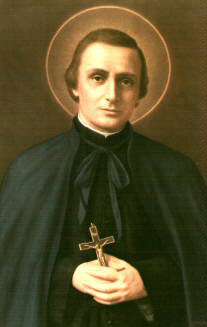 St. Peter Chanel: Saint of the Day for Sunday, April 28, 2024
 Prayer before a Crucifix: Prayer of the Day for Sunday, April 28, 2024
 Hi readers, it seems you use Catholic Online a lot; that's great! It's a little awkward to ask, but we need your help. If you have already donated, we sincerely thank you. We're not salespeople, but we depend on donations averaging $14.76 and fewer than 1% of readers give. If you donate just $5.00, the price of your coffee, Catholic Online School could keep thriving. Thank you. Help Now >

Copyright 2024 Catholic Online. All materials contained on this site, whether written, audible or visual are the exclusive property of Catholic Online and are protected under U.S. and International copyright laws, © Copyright 2024 Catholic Online. Any unauthorized use, without prior written consent of Catholic Online is strictly forbidden and prohibited.
Catholic Online is a Project of Your Catholic Voice Foundation, a Not-for-Profit Corporation. Your Catholic Voice Foundation has been granted a recognition of tax exemption under Section 501(c)(3) of the Internal Revenue Code. Federal Tax Identification Number: 81-0596847. Your gift is tax-deductible as allowed by law.