We ask you, humbly: don't scroll away.
Hi readers, it seems you use Catholic Online a lot; that's great! It's a little awkward to ask, but we need your help. If you have already donated, we sincerely thank you. We're not salespeople, but we depend on donations averaging $14.76 and fewer than 1% of readers give. If you donate just $5.00, the price of your coffee, Catholic Online School could keep thriving. Thank you.Help Now >
Ignorance
FREE Catholic Classes
( Latin in , not, and gnarus , knowing)
Ignorance is lack of knowledge about a thing in a being capable of knowing. Fundamentally speaking and with regard to a given object ignorance is the outcome of the limitations of our intellect or of the obscurity of the matter itself. In this article it is the ethical aspect and consequences of ignorance that are directly under consideration. From this point of view, since only voluntary and free acts are imputable, ignorance which either destroys or lessens the first-named characteristic is a factor to be reckoned with. It is customary then to narrow somewhat the definition already given of it. It will, therefore, be taken to mean the absence of information which one is required to have. The mere want of knowledge without connoting any requirement on the part of a person to possess it may be called nescience.
So far as fixing human responsibility, the most important division of ignorance is that designated by the terms invincible and vincible . Ignorance is said to be invincible when a person is unable to rid himself of it notwithstanding the employment of moral diligence, that is, such as under the circumstances is, morally speaking, possible and obligatory. This manifestly includes the states of inadvertence, forgetfulness, etc. Such ignorance is obviously involuntary and therefore not imputable. On the other hand, ignorance is termed vincible if it can be dispelled by the use of "moral diligence". This certainly does not mean all possible effort; otherwise, as Ballerini naively says, we should have to have recourse to the pope in every instance. We may say, however, that the diligence requisite must be commensurate with the importance of the affair in hand, and with the capacity of the agent, in a word such as a really sensible and prudent person would use under the circumstances. Furthermore, it must be remembered that the obligation mentioned above is to be interpreted strictly and exclusively as the duty incumbent on a man to do something, the precise object of which is the acquisition of the needed knowledge. In other words the mere fact that one is bound by some extrinsic title to do something the performance of which would have actually, though not necessarily, given the required information, is negligible. When ignorance is deliberately aimed at and fostered, it is said to be affected, not because it is pretended, but rather because it is sought for by the agent so that he may not have to relinquish his purpose. Ignorance which practically no effort is made to dispel is termed crass or supine.

The area covered by human ignorance is clearly a vast one. For our purposes, however, three divisions may be noted.
- Ignorance of law, when one is unaware of the existence of the law itself, or at least that a particular case is comprised under its provisions.
- Ignorance of the fact, when not the relation of something to the law but the thing itself or some circumstance is unknown.
- Ignorance of penalty, when a person is not cognizant that a sanction has been attached to a particular crime. This is especially to be considered when there is question of more serious punishment.
Invincible ignorance, whether of the law or of the fact, is always a valid excuse and excludes sin. The evident reason is that neither this state nor the act resulting therefrom is voluntary. It is undeniable that a man cannot be invincibly ignorant of the natural law, so far as its first principles are concerned, and the inferences easily drawn therefrom. This, however, according to the teaching of St. Thomas, is not true of those remoter conclusions, which are deducible only by a process of laborious and sometimes intricate reasoning. Of these a person may be invincibly ignorant. Even when the invincible ignorance is concomitant, it prevents the act which it accompanies from being regarded as sinful. The perverse temper of soul, which in this case is supposed, retains, of course, such malice as it had. Vincible ignorance, being in some way voluntary, does not permit a man to escape responsibility for the moral deformity of his deeds; he is held to be guilty and in general the more guilty in proportion as his ignorance is more voluntary. Hence, the essential thing to remember is that the guilt of an act performed or omitted in vincible ignorance is not to be measured by the intrinsic malice of the thing done or omitted so much as by the degree of negligence discernible in the act.

It must not be forgotten that, although vincible ignorance leaves the culpability of a person intact, still it does make the act less voluntary than if it were done with full knowledge. This holds good except perhaps with regard to the sort of ignorance termed affected. Here theologians are not agreed as to whether it increases or diminishes a man's moral liability. The solution is possibly to be had from a consideration of the motive which influences one in choosing purposely to be ignorant. For instance, a man who would refuse to learn the doctrines of the Church from a fear that he would thus find himself compelled to embrace them would certainly be in a bad plight. Still he would be less guilty than the man whose neglect to know the teachings of the Church was inspired by sheer scorn of her authority. Invincible ignorance, whether of the law or fact, exempts one from the penalty which may have been provided by positive legislation. Even vincible ignorance, either of the law or fact, which is not crass, excuses one from the punishment. Mere lack of knowledge of the sanction does not free one from the penalty except in cases of censures. It is true then that any sort of ignorance which is not itself grievously sinful excuses, because for the incurring of censures contumacy is required. Vincible and consequent ignorance about the duties of our state of life or the truths of faith necessary for salvation is, of course, sinful. Ignorance of the nature or effects of an act does not make it invalid if everything else requisite for its validity be present. For instance, one who knows nothing of the efficacy of baptism validly baptizes, provided that he employs the matter and form and has the intention of doing what the Church does.
We ask you, humbly: don't scroll away.
Hi readers, it seems you use Catholic Online a lot; that's great! It's a little awkward to ask, but we need your help. If you have already donated, we sincerely thank you. We're not salespeople, but we depend on donations averaging $14.76 and fewer than 1% of readers give. If you donate just $5.00, the price of your coffee, Catholic Online School could keep thriving. Thank you.Help Now >

Join the Movement
When you sign up below, you don't just join an email list - you're joining an entire movement for Free world class Catholic education.


-

-
Mysteries of the Rosary
-
St. Faustina Kowalska
-
Litany of the Blessed Virgin Mary
-
Saint of the Day for Wednesday, Oct 4th, 2023
-
Popular Saints
-
St. Francis of Assisi
-
Bible
-
Female / Women Saints
-
7 Morning Prayers you need to get your day started with God
-
Litany of the Blessed Virgin Mary


Sacrifices of Faith: The Pro-Life Legacies of St. Gianna and Jessica Hanna
-
How to love God by caring for our bodies
-
Pope Francis calls for negotiations to End Russia-Ukraine War
-
Pope Francis Contemplates Return to U.S. for United Nations Assembly Address
-
Pope Francis Calls on Faithful to Embrace Faith, Hope, and Charity in New Teaching Series


Daily Catholic
- Daily Readings for Sunday, April 28, 2024
- St. Peter Chanel: Saint of the Day for Sunday, April 28, 2024
- Prayer before a Crucifix: Prayer of the Day for Sunday, April 28, 2024
- Daily Readings for Saturday, April 27, 2024
- St. Zita: Saint of the Day for Saturday, April 27, 2024
- Prayer for the Dead # 2: Prayer of the Day for Saturday, April 27, 2024
 Daily Readings for Sunday, April 28, 2024
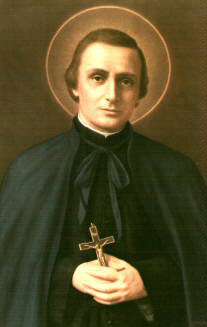 St. Peter Chanel: Saint of the Day for Sunday, April 28, 2024
 Prayer before a Crucifix: Prayer of the Day for Sunday, April 28, 2024
 Hi readers, it seems you use Catholic Online a lot; that's great! It's a little awkward to ask, but we need your help. If you have already donated, we sincerely thank you. We're not salespeople, but we depend on donations averaging $14.76 and fewer than 1% of readers give. If you donate just $5.00, the price of your coffee, Catholic Online School could keep thriving. Thank you. Help Now >



Copyright 2024 Catholic Online. All materials contained on this site, whether written, audible or visual are the exclusive property of Catholic Online and are protected under U.S. and International copyright laws, © Copyright 2024 Catholic Online. Any unauthorized use, without prior written consent of Catholic Online is strictly forbidden and prohibited.
Catholic Online is a Project of Your Catholic Voice Foundation, a Not-for-Profit Corporation. Your Catholic Voice Foundation has been granted a recognition of tax exemption under Section 501(c)(3) of the Internal Revenue Code. Federal Tax Identification Number: 81-0596847. Your gift is tax-deductible as allowed by law.