Hautecombe
FREE Catholic Classes
(Altacomba, Altæcombæum)
A Cistercian monastery near Aix-les-Bains in Savoy, Diocese of Chambéry (formerly Geneva); founded about a. d. 1101 in a narrow valley (or combe ) between hills near the Lake of Bourget by hermits from Aulpes, in the Lake of Geneva. About 1125 it was transferred to a site on the north-western shore of the lake under Mont du Chat, granted to it by Amadeus, Count of Savoy ; and shortly afterwards it accepted the Cistercian Rule from Clairvaux. The first abbot was the saintly and learned Amadeus de Haute-Rive, afterwards Bishop of Lausanne. Two daughter-houses were founded from Hautecombe at an early date, one, Fossa-Nuova (afterwards called For Appio), in the Diocese of Terracina, in 1135, and the other, S. Angelo de Petra, close to Constantinople in 1214. Celestine IV and Nicholas III have been claimed as alumni of Hautecombe, but this is disputed by Janauschek, the historian of the Cistercian Order. The chief interest of Hautecombe, apart from the beauty of its situation, arises from its having been for centuries the burial-place of the Counts and Dukes of Savoy. Count Humbert III, known as "Blessed", and his wife Anne were interred there in the latter part of the twelfth century; and about a century later Boniface, Archbishop of Canterbury (1245-1270), son of Count Thomas I, was buried in the sanctuary of the abbey church. He had come out from England with King Edward I to accompany him in a crusade, but died at the castle of St. Helena in Savoy. The last abbot, Anthony of Savoy, a son of Charles Emmanuel I, was interred there in 1673. The abbey was restored (in a debased style) by one of the dukes about 1750, but it was secularized and sold in 1792, when the French entered Savoy, and was turned into a china-factory. King Charles Felix of Sardinia purchased the ruins in 1824, had the church rebuilt and re-constructed, and restored it to the Cistercian Order. He and his queen (Maria Christina of Naples ) are buried in the Belley chapel, which forms a kind of vestibule to the church. Some 300 statues and many frescoes adorn the interior of the church, which is 215 feet long, with a transept 85 feet wide. Most of the tombs are little more than reproductions of the medieval monuments.


We ask you, humbly: don't scroll away.
Hi readers, it seems you use Catholic Online a lot; that's great! It's a little awkward to ask, but we need your help. If you have already donated, we sincerely thank you. We're not salespeople, but we depend on donations averaging $14.76 and fewer than 1% of readers give. If you donate just $5.00, the price of your coffee, Catholic Online School could keep thriving. Thank you.Help Now >
Join the Movement
When you sign up below, you don't just join an email list - you're joining an entire movement for Free world class Catholic education.


-

-
Mysteries of the Rosary
-
St. Faustina Kowalska
-
Litany of the Blessed Virgin Mary
-
Saint of the Day for Wednesday, Oct 4th, 2023
-
Popular Saints
-
St. Francis of Assisi
-
Bible
-
Female / Women Saints
-
7 Morning Prayers you need to get your day started with God
-
Litany of the Blessed Virgin Mary


Sacrifices of Faith: The Pro-Life Legacies of St. Gianna and Jessica Hanna
-
How to love God by caring for our bodies
-
Pope Francis calls for negotiations to End Russia-Ukraine War
-
Pope Francis Contemplates Return to U.S. for United Nations Assembly Address
-
Pope Francis Calls on Faithful to Embrace Faith, Hope, and Charity in New Teaching Series


Daily Catholic
- Daily Readings for Sunday, April 28, 2024
- St. Peter Chanel: Saint of the Day for Sunday, April 28, 2024
- Prayer before a Crucifix: Prayer of the Day for Sunday, April 28, 2024
- Daily Readings for Saturday, April 27, 2024
- St. Zita: Saint of the Day for Saturday, April 27, 2024
- Prayer for the Dead # 2: Prayer of the Day for Saturday, April 27, 2024
 Daily Readings for Sunday, April 28, 2024
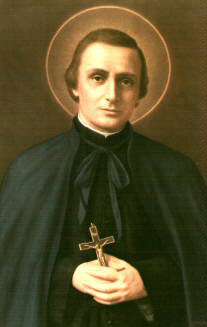 St. Peter Chanel: Saint of the Day for Sunday, April 28, 2024
 Prayer before a Crucifix: Prayer of the Day for Sunday, April 28, 2024


Copyright 2024 Catholic Online. All materials contained on this site, whether written, audible or visual are the exclusive property of Catholic Online and are protected under U.S. and International copyright laws, © Copyright 2024 Catholic Online. Any unauthorized use, without prior written consent of Catholic Online is strictly forbidden and prohibited.
Catholic Online is a Project of Your Catholic Voice Foundation, a Not-for-Profit Corporation. Your Catholic Voice Foundation has been granted a recognition of tax exemption under Section 501(c)(3) of the Internal Revenue Code. Federal Tax Identification Number: 81-0596847. Your gift is tax-deductible as allowed by law.
