We ask you, humbly: don't scroll away.
Hi readers, it seems you use Catholic Online a lot; that's great! It's a little awkward to ask, but we need your help. If you have already donated, we sincerely thank you. We're not salespeople, but we depend on donations averaging $14.76 and fewer than 1% of readers give. If you donate just $5.00, the price of your coffee, Catholic Online School could keep thriving. Thank you.Help Now >
Gerasa
FREE Catholic Classes
A titular see in the province of Arabia and the Patriarchate of Antioch. According to Josephus, it was a city of Decapolis in which a number of Jews resided. Alexander Jannaeus took possession of it, although it was surrounded by a triple wall (Bell. Jud., I, 4, 8). In 68 A.D. Vespasian ravaged the country and sacked the city because the Jews were all-powerful there (op. cit., IV, 9, 1). Simon, the son of Gioras, one of the principal leaders of the rebellious Jews, was born at Gerasa. The city is mentioned as forming a part, sometimes of Arabia, sometimes of Syria, by Ptolemy, Pliny, and Stephen of Byzantium, who also speak of several notable persons of the place. Coins and a number of inscriptions prove that it was sometimes called Antioch on the Chrysorrhoas, the little river by which it is watered. In the Gospel ( Matthew 8:28 ; Mark 5:1 ; Luke 8:26, 37 ) there is question of the country of the Gerasans, but if this name is to be read instead of Gadarenians or Gergesians, the reference is to another locality, near the Lake of Tiberias. The prosperity of Gerasa, once considerable, dates from the first centuries of our era, its buildings date from the emperors of the second and third centuries. Its destruction was brought about by earthquakes and the Arab invasions. We know three Greek Bishops of Gerasa: Exairesius, fourth century; Plancus, 451; Aeneas, who built the church of St. Theodore in the sixth century. In 1121 Baldwin II attempted in vain to conquer it, and at the beginning of the thirteenth century the geographer Yakut informs us that it was no longer inhabited. In modern times, several thousand Tcherkesses have established themselves amid its ruins and have unfortunately destroyed most of the Graeco-Roman monuments which time had spared. Until recently Djerasch was the best preserved city of Roman antiquity and the one which afforded us the most exact idea of Roman civilization. Its ramparts, in a state of partial preservation, are still to be seen; also a magnificent triumphal arch, with three openings about 82 feet wide by 29 high; a "naumachia", or circus for naval combats; two theatres; the forum with fifty-five columns still standing; the great colonnade which crosses the city from north to south, and which still retains from 100 to 150 of its columns; several aqueducts; some propylaea; a temple of the Sun, the columns of which are about 40 feet high, and several other temples, baths, etc. Greek and Latin inscriptions are very numerous among the ruins. The ramparts of the city cover a distance of about three miles.
 Hi readers, it seems you use Catholic Online a lot; that's great! It's a little awkward to ask, but we need your help. If you have already donated, we sincerely thank you. We're not salespeople, but we depend on donations averaging $14.76 and fewer than 1% of readers give. If you donate just $5.00, the price of your coffee, Catholic Online School could keep thriving. Thank you. Help Now >


Join the Movement
When you sign up below, you don't just join an email list - you're joining an entire movement for Free world class Catholic education.


-

-
Mysteries of the Rosary
-
St. Faustina Kowalska
-
Litany of the Blessed Virgin Mary
-
Saint of the Day for Wednesday, Oct 4th, 2023
-
Popular Saints
-
St. Francis of Assisi
-
Bible
-
Female / Women Saints
-
7 Morning Prayers you need to get your day started with God
-
Litany of the Blessed Virgin Mary

U.S. Catholic Parishes Experience Resurgence of Traditional Practices
-
Pope Francis Urges Faith and Prayers for Peace
-
Florida Welcomes Volunteer Chaplains to Public Schools
-
10 Fascinating Details About St. Joseph the Worker: Celebrating His Feast Day - May 1
-
St. Joseph the Worker: Model for Men, Young and Old

Daily Catholic
- Daily Readings for Thursday, May 02, 2024
- St. Athanasius: Saint of the Day for Thursday, May 02, 2024
- The Our Father: Prayer of the Day for Thursday, May 02, 2024
- Daily Readings for Wednesday, May 01, 2024
- St. Marculf: Saint of the Day for Wednesday, May 01, 2024
- To Saint Peregrine: Prayer of the Day for Wednesday, May 01, 2024
 Daily Readings for Thursday, May 02, 2024
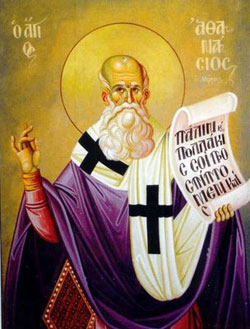 St. Athanasius: Saint of the Day for Thursday, May 02, 2024
 The Our Father: Prayer of the Day for Thursday, May 02, 2024
We ask you, humbly: don't scroll away.
Hi readers, it seems you use Catholic Online a lot; that's great! It's a little awkward to ask, but we need your help. If you have already donated, we sincerely thank you. We're not salespeople, but we depend on donations averaging $14.76 and fewer than 1% of readers give. If you donate just $5.00, the price of your coffee, Catholic Online School could keep thriving. Thank you.Help Now >


Copyright 2024 Catholic Online. All materials contained on this site, whether written, audible or visual are the exclusive property of Catholic Online and are protected under U.S. and International copyright laws, © Copyright 2024 Catholic Online. Any unauthorized use, without prior written consent of Catholic Online is strictly forbidden and prohibited.
Catholic Online is a Project of Your Catholic Voice Foundation, a Not-for-Profit Corporation. Your Catholic Voice Foundation has been granted a recognition of tax exemption under Section 501(c)(3) of the Internal Revenue Code. Federal Tax Identification Number: 81-0596847. Your gift is tax-deductible as allowed by law.