We ask you, humbly: don't scroll away.
Hi readers, it seems you use Catholic Online a lot; that's great! It's a little awkward to ask, but we need your help. If you have already donated, we sincerely thank you. We're not salespeople, but we depend on donations averaging $14.76 and fewer than 1% of readers give. If you donate just $5.00, the price of your coffee, Catholic Online School could keep thriving. Thank you.Help Now >
Pietro Luigi Galletti
FREE Catholic Classes
Benedictine, historian and archaeologist; b. at Rome in 1724; d. there, 13 December, 1790. He was educated in Rome where he entered the Order of St. Benedict. While a monk in the Abbey of St. Paul Without the Walls , he made a collection of the numerous ancient inscriptions used in the pavement of the floor of the famous basilica or scattered among the cloister buildings and in the surrounding vineyards. These became soon the nucleus of a classified museum of Christian and Pagan inscriptions. Later on he became keeper of the archives and librarian of the Benedictines in Florence. Pius VI bestowed various benefices on him and made him titular Bishop of Cyrene.
As a historian Galletti displayed great erudition and diligence. Some of his writings are still authoritative, notably his collection of inscriptions and his works on the higher papal officials of the old Lateran Palace. His literary activities were directed to widely divergent periods and spheres of historical and archaeological research. On Roman antiquity he wrote: "Capena, municipio dei Romani" (Rome, 1756), and "Gabbio, antica città di Sabina, scoperta ove era Torri" (Rome, 1757). His two works "Del Vestarario della santa Romana chiesa" (Rome, 1758), and "Del Primicerio della S. Sede Apostolica e di altri Uffiziali Maggiori del Sacro Palazzo Lateranense" (Rome, 1776) deal with the early history of the Roman Curia. The latter work is especially thorough and important. Among his contributions to the history of the religious orders the following are noteworthy: "Lettera intorno la vera e sicura origine del ven. ordine di S. Girolamo" (Rome, 1755), and "Raggionamento dell'origine e de'primi tempi dell'abbadia Fiorentina (Rome, 1773). He was the author of a biography of the bishops of Viterbo : "Lettera a Giannantonio Bersetta sopra alcuni vescovi di Viterbo" (Rome, 1759), and of Cardinal Passionei : "Memorie per servire alla storia della vita del card. Domenico Passionei" (Rome, 1762). His work on the early churches of Rieti is of value for Christian archaeology : "Memoria di tre antiche chiese di Riete, S. Michele Arcangelo, S. Agata alla Rocca, S. Giacomo" (Rome, 1765). Finally, it is to Galletti that is due the first great collection of medieval inscriptions, treated as a source of historical information. His "Inscriptiones Venetae infimi aevi Romae exstantes" (Rome, 1757) was followed in the same series by the inscriptions found in Rome concerning Bologna, Rome itself (3 vols.), the Piedmont, in all seven volumes (1757-66).


 Hi readers, it seems you use Catholic Online a lot; that's great! It's a little awkward to ask, but we need your help. If you have already donated, we sincerely thank you. We're not salespeople, but we depend on donations averaging $14.76 and fewer than 1% of readers give. If you donate just $5.00, the price of your coffee, Catholic Online School could keep thriving. Thank you. Help Now >
Join the Movement
When you sign up below, you don't just join an email list - you're joining an entire movement for Free world class Catholic education.


-

-
Mysteries of the Rosary
-
St. Faustina Kowalska
-
Litany of the Blessed Virgin Mary
-
Saint of the Day for Wednesday, Oct 4th, 2023
-
Popular Saints
-
St. Francis of Assisi
-
Bible
-
Female / Women Saints
-
7 Morning Prayers you need to get your day started with God
-
Litany of the Blessed Virgin Mary


U.S. Catholic Parishes Experience Resurgence of Traditional Practices
-
Pope Francis Urges Faith and Prayers for Peace
-
Florida Welcomes Volunteer Chaplains to Public Schools
-
10 Fascinating Details About St. Joseph the Worker: Celebrating His Feast Day - May 1
-
St. Joseph the Worker: Model for Men, Young and Old


Daily Catholic
- Daily Readings for Thursday, May 02, 2024
- St. Athanasius: Saint of the Day for Thursday, May 02, 2024
- The Our Father: Prayer of the Day for Thursday, May 02, 2024
- Daily Readings for Wednesday, May 01, 2024
- St. Marculf: Saint of the Day for Wednesday, May 01, 2024
- To Saint Peregrine: Prayer of the Day for Wednesday, May 01, 2024
 Daily Readings for Thursday, May 02, 2024
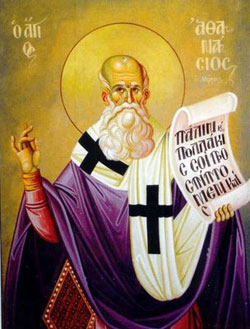 St. Athanasius: Saint of the Day for Thursday, May 02, 2024
 The Our Father: Prayer of the Day for Thursday, May 02, 2024
We ask you, humbly: don't scroll away.
Hi readers, it seems you use Catholic Online a lot; that's great! It's a little awkward to ask, but we need your help. If you have already donated, we sincerely thank you. We're not salespeople, but we depend on donations averaging $14.76 and fewer than 1% of readers give. If you donate just $5.00, the price of your coffee, Catholic Online School could keep thriving. Thank you.Help Now >
We ask you, humbly: don't scroll away.
Hi readers, it seems you use Catholic Online a lot; that's great! It's a little awkward to ask, but we need your help. If you have already donated, we sincerely thank you. We're not salespeople, but we depend on donations averaging $14.76 and fewer than 1% of readers give. If you donate just $5.00, the price of your coffee, Catholic Online School could keep thriving. Thank you.Help Now >

Copyright 2024 Catholic Online. All materials contained on this site, whether written, audible or visual are the exclusive property of Catholic Online and are protected under U.S. and International copyright laws, © Copyright 2024 Catholic Online. Any unauthorized use, without prior written consent of Catholic Online is strictly forbidden and prohibited.
Catholic Online is a Project of Your Catholic Voice Foundation, a Not-for-Profit Corporation. Your Catholic Voice Foundation has been granted a recognition of tax exemption under Section 501(c)(3) of the Internal Revenue Code. Federal Tax Identification Number: 81-0596847. Your gift is tax-deductible as allowed by law.