We ask you, humbly: don't scroll away.
Hi readers, it seems you use Catholic Online a lot; that's great! It's a little awkward to ask, but we need your help. If you have already donated, we sincerely thank you. We're not salespeople, but we depend on donations averaging $14.76 and fewer than 1% of readers give. If you donate just $5.00, the price of your coffee, Catholic Online School could keep thriving. Thank you.Help Now >
Joseph Fesch
FREE Catholic Classes
Cardinal, b. at Ajaccio, Corsica, 3 January, 1763; d. at Rome, 13 May, 1839. He was the son of a captain of a Swiss regiment in the service of Genoa, studied at the seminary of Aix, was made archdeacon and provost of the chapter of Ajaccio before 1789, but was obliged to leave Corsica when his family sided with France against the English, who came to the island in answer to Paoli's summons. The young priest was half-brother to Letizia Ramolino, the mother of Napoleon and upon arriving in France he entered the commissariat department of the army; later, in 1795, became commissary of war under Bonaparte, then in command of the Armée d'Italie. When religious peace was reestablished, Fesch made a month's retreat under the direction of Emery, the superior of Saint-Sulpice and re-entered ecclesiastical life. During the Consulate he became canon of Bastia and helped to negotiate the Concordat of 1801 ; on 15 August, 1802, Caprara consecrated him Archbishop of Lyons, and in 1803 Pius VII created him cardinal.
On 4 April, 1803, Napoleon appointed Cardinal Fesch successor to Cacault as ambassador to Rome, giving him Chateaubriand for secretary. The early part of his sojourn in the Eternal City was noted for his differences with Chateaubriand and his efforts to have the Concordat extended to the Italian Republic. He prevailed upon Pius VII to go to Paris in person and crown Napoleon. This was Fesch's greatest achievement. He accompanied the pope to France and as grand almoner, blessed the marriage of Napoleon and Josephine before the coronation ceremony took place. By a decree issued in 1805, the missionary institutions of Saint-Lazare and Saint-Sulpice were placed under the direction of Cardinal Fesch, who, laden with this new responsibility, returned to Rome. In 1806, after the occupation of Ancona by French troops, and Napoleon's letter proclaiming himself Emperor of Rome, Alquier was named to succeed Fesch as ambassador to Rome. Returning to his archiepiscopal See of Lyons, the cardinal remained in close touch with his nephew's religious policy and strove, occasionally with success, to obviate certain irreparable mistakes. He accepted the coadjutorship to Dalberg, prince-primate, in the See of Ratisbon, but, in 1808, refused the emperor's offer of the Archbishopric of Paris, for which he could not have obtained canonical institution. Although powerless to prevent either the rupture between Napoleon and the pope in 1809 or the closing of the seminaries of Saint-Lazarre, Saint-Esprit, and the Missions Etrangeres, Fresch nevertheless managed to deter Napoleon from signing a decree relative to the Gallican Church. He consented to bless Napoleon's marriage with Marie-Louise, but, according the researches of Geoffrey de Grandmaison, he was not responsible to the same extent as the members of the diocesan officialité for the illegal annulment of the emperor's first marriage.

In 1809 and 1810 Fresch presided over the two ecclesiastical commissions charged with the question of canonical institution of bishops, but the proceedings were so conducted that neither commission adopted any schismatic resolutions. As its president, he opened the National Council od 1811, but at the very outset he took and also administered the oath ( forma juramenti professionis fidei ) required by the Bull "Injunctum nobis" of Pius IV ; it was decided by eight votes out of eleven that the method of canonical institution could not altered independently of the pope. A message containing the assurance of the cardinal's loyalty, and addressed to the supreme pontiff, then in exile at Fontainebleau, caused the Fesch to incur the emperor's disfavour and to forfeit the subsidy of 150,000 florins which he had received as Dalberg's coadjutor. Under the Restoration and the Monarchy of July, Fesch lived at Rome, his Archdiocese of Lyons being in charge of an administrator. He died without again returning to France and left a splendid collection of pictures, a part of which was bequeathed to his epicopal city.
As a diplomat, Fesch sometimes employed questionable methods. His relationship to the emperor and his cardinalitical dignity often made his position a difficult one; at least he could never be accused of approving the violent measures resorted to by Napoleon. As Archbishop, he was largely instrumental in re-establishing the Brothers of Christian Doctrine and recalling the Jesuits, under the name of Pacanarists. The Archdiocese of Lyons is indebted to him for some eminently useful institutions. It must be admitted, moreover, that in his pastoral capacity Fesch took a genuine interest in the education of priests.

We ask you, humbly: don't scroll away.
Hi readers, it seems you use Catholic Online a lot; that's great! It's a little awkward to ask, but we need your help. If you have already donated, we sincerely thank you. We're not salespeople, but we depend on donations averaging $14.76 and fewer than 1% of readers give. If you donate just $5.00, the price of your coffee, Catholic Online School could keep thriving. Thank you.Help Now >
Join the Movement
When you sign up below, you don't just join an email list - you're joining an entire movement for Free world class Catholic education.


-

-
Mysteries of the Rosary
-
St. Faustina Kowalska
-
Litany of the Blessed Virgin Mary
-
Saint of the Day for Wednesday, Oct 4th, 2023
-
Popular Saints
-
St. Francis of Assisi
-
Bible
-
Female / Women Saints
-
7 Morning Prayers you need to get your day started with God
-
Litany of the Blessed Virgin Mary

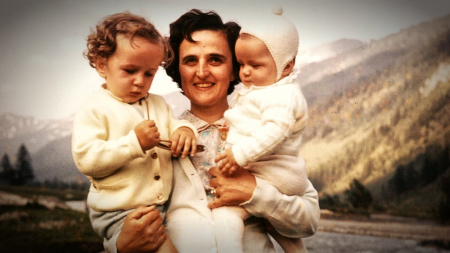
Sacrifices of Faith: The Pro-Life Legacies of St. Gianna and Jessica Hanna
-
How to love God by caring for our bodies
-
Pope Francis calls for negotiations to End Russia-Ukraine War
-
Pope Francis Contemplates Return to U.S. for United Nations Assembly Address
-
Pope Francis Calls on Faithful to Embrace Faith, Hope, and Charity in New Teaching Series


Daily Catholic
- Daily Readings for Sunday, April 28, 2024
- St. Peter Chanel: Saint of the Day for Sunday, April 28, 2024
- Prayer before a Crucifix: Prayer of the Day for Sunday, April 28, 2024
- Daily Readings for Saturday, April 27, 2024
- St. Zita: Saint of the Day for Saturday, April 27, 2024
- Prayer for the Dead # 2: Prayer of the Day for Saturday, April 27, 2024
 Daily Readings for Sunday, April 28, 2024
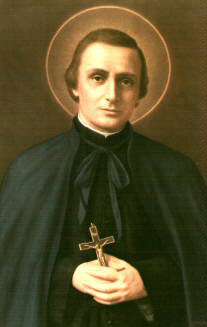 St. Peter Chanel: Saint of the Day for Sunday, April 28, 2024
 Prayer before a Crucifix: Prayer of the Day for Sunday, April 28, 2024
 Hi readers, it seems you use Catholic Online a lot; that's great! It's a little awkward to ask, but we need your help. If you have already donated, we sincerely thank you. We're not salespeople, but we depend on donations averaging $14.76 and fewer than 1% of readers give. If you donate just $5.00, the price of your coffee, Catholic Online School could keep thriving. Thank you. Help Now >
We ask you, humbly: don't scroll away.
Hi readers, it seems you use Catholic Online a lot; that's great! It's a little awkward to ask, but we need your help. If you have already donated, we sincerely thank you. We're not salespeople, but we depend on donations averaging $14.76 and fewer than 1% of readers give. If you donate just $5.00, the price of your coffee, Catholic Online School could keep thriving. Thank you.Help Now >

Copyright 2024 Catholic Online. All materials contained on this site, whether written, audible or visual are the exclusive property of Catholic Online and are protected under U.S. and International copyright laws, © Copyright 2024 Catholic Online. Any unauthorized use, without prior written consent of Catholic Online is strictly forbidden and prohibited.
Catholic Online is a Project of Your Catholic Voice Foundation, a Not-for-Profit Corporation. Your Catholic Voice Foundation has been granted a recognition of tax exemption under Section 501(c)(3) of the Internal Revenue Code. Federal Tax Identification Number: 81-0596847. Your gift is tax-deductible as allowed by law.