Because of You, 2.2 Million Students Are Being Formed in the Faith
Because of generous supporters like you, Catholic Online School has already delivered free, faithful Catholic education to over 2.2 million students across 193 countries. In an age of noise and algorithms, you are helping form souls with truth, prayer, Scripture, and Christ.
If everyone who reads this gave just $5 — the cost of a coffee — we could reach even more families and keep this life-changing formation free for all. Be Courageous. Be Catholic. Stand with us today.
DONATE TODAY >Comayagua
FREE Catholic Classes
The Diocese of Comayagua, suffragan to Guatemala, includes the entire Republic of Honduras in Central America, a territory of about 46,250 square miles, and a population (1902), exclusive of uncivilized Indians, of 684,400, mostly baptized Catholics. It also includes a group of islets in the Bay of Honduras (Ruatan, Bonacca, Utila, Barbareta, and Moret). The surface is mountainous, with many fertile plains and plateaux. Communication is difficult, as there are few good roads, but a railroad from Puerto Cortez to La Pimienta (sixty miles) is destined to reach the Pacific. The mineral wealth is great, and the trade in bananas very lucrative. The climate in the interior is usually healthy, but fevers are frequent along the low coast. The capital of the State, Tegucigalpa, has 17,000 inhabitants. The first missionaries were Franciscans, though the records of their labours have disappeared in the disastrous conflagrations that the wars of the nineteenth century visited on Comayagua, and in which the archives of the cathedral perished. The diocese was established in 1527 by Clement VII, and confirmed in 1539 by Paul III. It is supposed that Bishop Pedrasa, who went in that year to Trujillo, was the first bishop. Under the fourth, Jeronimo de Corella, Pius IV transferred (1561) the see to Nueva Valladolid, now Comayagua. The prosperous missions among the savage Indians on the north coast were broken up in 1601 by English pirates; colonists and missionaries were scattered, and the Indians (now about 90,000) relapsed into their original savagery. The revolution of 1821 did great damage to the Church. Before that time there were more than 300 ecclesiastical foundations, and public worship was everywhere carried on with dignity. The revolutionary Government confiscated the ecclesiastical property to the value of more than a million pesos, according to a presidential message of 1842. Since then parishes depended for public worship on precarious alms, and the clergy diminished in number. Nevertheless, tithes were still paid to the Church, and from them the bishop, the cathedral services, and the seminary were supported. The latter was open only to externs and only the sciences were taught; ecclesiastics and young men destined for the law were educated there together.
Between 1878 and 1880 the new president of Honduras, imposed by Guatemala, confiscated anew the ecclesiastical resources put together by the faithful, the parochial properties, residences of clergy and churches, abolished the tithes, and, to complete the ruin of the ecclesiastical order, suppressed in the university the courses of canon law and moral theology , and in the colleges even the study of Latin. These oppressive acts hampered greatly the proper formation of the clergy, public worship, and the administration of the diocese. Lately the seminary has been reopened, but despite the separation of Church and State the former is subject to many restrictions. The civil government is no longer hostile, but in its name provincial and local authorities exhibit no little hostility to the parish priests. The episcopal city, which has 8000 inhabitants, suffered much from the civil wars of the period of federation (1823-39) and has never regained its former size or prosperity. Bishop Joseph Maria Martinez Cabanas (1908) is the twenty-eighth or twenty-ninth of the line. The five parish priests of the Department of Comayagua represent the former cathedral canons, and assist the bishop on occasions; at his death they elect the vicar capitular. There are seventy secular priests, and no regulars; the Government has never tolerated the return of the latter since their expulsion (1821). There is a missionary on the northern coast and at Comayagua a Salesian Father. The wealthier classes of the diocese, with very few exceptions, are indifferent to religion. There are no parochial schools, as the people of the pueblos are unable to support them, after paying taxes for the public schools ; moreover the clergy are unable to conduct them, being obliged at all times to move about from one small town to another and among the widely scattered villages and the mountains. (See HONDURAS; GUATEMALA.)
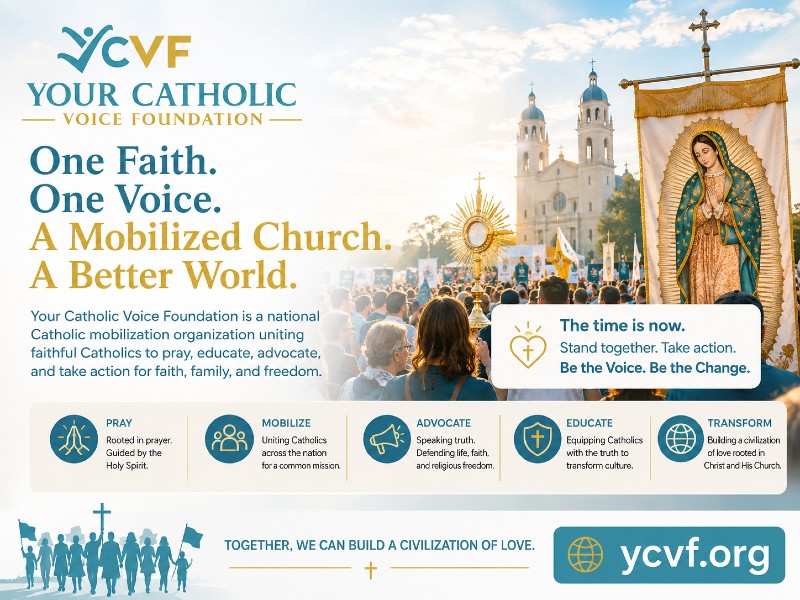
Come Grow With Us
Sign up and walk the Catholic journey with millions around the world.
Receive inspiring emails on saints, daily readings, and free faith-building resources—no cost, ever.
An important update for our readers.
Please Watch
- 7 Morning Prayers
- Mysteries of the Rosary
- Litany of the Bl. Virgin Mary
- Popular Saints
- Popular Prayers
- Female Saints
- Saint Feast Days by Month
- Stations of the Cross
- St. Francis of Assisi
- St. Michael the Archangel
- The Apostles' Creed
- Unfailing Prayer to St. Anthony
- Pray the Rosary




Copyright 2026 Catholic Online. All materials contained on this site, whether written, audible or visual are the exclusive property of Catholic Online and are protected under U.S. and International copyright laws, © Copyright 2026 Catholic Online. Any unauthorized use, without prior written consent of Catholic Online is strictly forbidden and prohibited.
Catholic Online is a Project of Your Catholic Voice Foundation, a Not-for-Profit Corporation. Your Catholic Voice Foundation has been granted a recognition of tax exemption under Section 501(c)(3) of the Internal Revenue Code. Federal Tax Identification Number: 81-0596847. Your gift is tax-deductible as allowed by law.