We ask you, humbly: don't scroll away.
Hi readers, it seems you use Catholic Online a lot; that's great! It's a little awkward to ask, but we need your help. If you have already donated, we sincerely thank you. We're not salespeople, but we depend on donations averaging $14.76 and fewer than 1% of readers give. If you donate just $5.00, the price of your coffee, Catholic Online School could keep thriving. Thank you.Help Now >
St. Christopher
FREE Catholic Classes
(Greek christos , Christ, pherein , to bear. Latin Christophorus , i.e. Christbearer).
A martyr, probably of the third century. Although St. Christopher is one of the most popular saints in the East and in the West, almost nothing certain is known about his life or death.
The legend says: A heathen king (in Canaan or Arabia ), through the prayers of his wife to the Blessed Virgin, had a son, whom he called Offerus (Offro, Adokimus, or Reprebus) and dedicated to the gods Machmet and Apollo. Acquiring in time extraordinary size and strength, Offerus resolved to serve only the strongest and the bravest. He bound himself successively to a mighty king and to Satan, but he found both lacking in courage, the former dreading even the name of the devil, and the latter frightened by the sight of a cross at the roadside.
For a time his search for a new master was in vain, but at last he found a hermit (Babylas?) who told him to offer his allegiance to Christ, instructed him in the Faith, and baptized him. Christopher, as he was now called, would not promise to do any fasting or praying, but willingly accepted the task of carrying people, for God's sake, across a raging stream. One day he was carrying a child who continually grew heavier, so that it seemed to him as if he had the whole world on his shoulders. The child, on inquiry, made himself known as the Creator and Redeemer of the world. To prove his statement the child ordered Christopher to fix his staff in the ground. The next morning it had grown into a palm-tree bearing fruit. The miracle converted many. This excited the rage of the king (prefect) of that region (Dagnus of Samos in Lycia?). Christopher was put into prison and, after many cruel torments, beheaded.
We ask you, humbly: don't scroll away.
Hi readers, it seems you use Catholic Online a lot; that's great! It's a little awkward to ask, but we need your help. If you have already donated, we sincerely thank you. We're not salespeople, but we depend on donations averaging $14.76 and fewer than 1% of readers give. If you donate just $5.00, the price of your coffee, Catholic Online School could keep thriving. Thank you.Help Now >
The Greek legend may belong to the sixth century; about the middle of the ninth, we find it spread through France. Originally, St. Christopher was only a martyr, and as such is recorded in the old martyrologies. The simple form of the Greek and Latin passio soon gave way to more elaborate legends. We have the Latin edition in prose and verse of 983 by the subdeacon Walter of Speyer, "Thesaurus anecdotorum novissimus" (Augsburg, 1721-23), II, 27-142, and Harster, "Walter von Speyer" (1878). An edition of the eleventh century is found in the Acta SS., and another in the "Golden Legend" of Jacob de Voragine . The idea conveyed in the name, at first understood in the spiritual sense of bearing Christ in the heart, was in the twelfth or thirteenth century taken in the realistic meaning and became the characteristic of the saint. The fact that he was frequently called a great martyr may have given rise to the story of his enormous size. The stream and the weight of the child may have been intended to denote the trials and struggles of a soul taking upon itself the yoke of Christ in this world.
The existence of a martyr St. Christopher cannot be denied, as was sufficiently shown by the Jesuit Nicholas Serarius, in his treatise on litanies, "Litaneutici" (Cologne, 1609), and by Molanus in his history of sacred pictures, "De picturis et imaginibus sacris" (Louvain, 1570). In a small church dedicated to the martyr St. Christopher, the body of St. Remigius of Reims was buried, 532 (Acta SS., 1 Oct., 161). St. Gregory the Great (d. 604) speaks of a monastery of St. Christopher (Epp., x., 33). The Mozarabic Breviary and Missal, ascribed to St. Isidore of Seville (d. 636), contains a special office in his honour. In 1386 a brotherhood was founded under the patronage of St. Christopher in Tyrol and Vorarlberg, to guide travellers over the Arlberg. In 1517, a St. Christopher temperance society existed in Carinthia, Styria, in Saxony, and at Munich. Great veneration was shown to the saint in Venice, along the shores of the Danube, the Rhine, and other rivers where floods or ice-jams caused frequent damage. The oldest picture of the saint, in the monastery on the Mount Sinai dates from the time of Justinian (527-65). Coins with his image were cast at Würzburg, in Würtemberg, and in Bohemia.
His statues were placed at the entrances of churches and dwellings, and frequently at bridges; these statues and his pictures often bore the inscription: "Whoever shall behold the image of St. Christopher shall not faint or fall on that day." The saint, who is one of the fourteen holy helpers, has been chosen as patron by Baden, by Brunswick, and by Mecklenburg, and several other cities, as well as by bookbinders, gardeners, mariners, etc. He is invoked against lightning, storms, epilepsy, pestilence, etc. His feast is kept on 25 July; among the Greeks, on 9 March; and his emblems are the tree, the Christ Child, and a staff. St. Christopher's Island (commonly called St. Kitts), lies 46 miles west of Antigua in the Lesser Antilles.
 Hi readers, it seems you use Catholic Online a lot; that's great! It's a little awkward to ask, but we need your help. If you have already donated, we sincerely thank you. We're not salespeople, but we depend on donations averaging $14.76 and fewer than 1% of readers give. If you donate just $5.00, the price of your coffee, Catholic Online School could keep thriving. Thank you. Help Now >

Join the Movement
When you sign up below, you don't just join an email list - you're joining an entire movement for Free world class Catholic education.


-

-
Mysteries of the Rosary
-
St. Faustina Kowalska
-
Litany of the Blessed Virgin Mary
-
Saint of the Day for Wednesday, Oct 4th, 2023
-
Popular Saints
-
St. Francis of Assisi
-
Bible
-
Female / Women Saints
-
7 Morning Prayers you need to get your day started with God
-
Litany of the Blessed Virgin Mary


Sacrifices of Faith: The Pro-Life Legacies of St. Gianna and Jessica Hanna
-
How to love God by caring for our bodies
-
Pope Francis calls for negotiations to End Russia-Ukraine War
-
Pope Francis Contemplates Return to U.S. for United Nations Assembly Address
-
Pope Francis Calls on Faithful to Embrace Faith, Hope, and Charity in New Teaching Series


Daily Catholic
- Daily Readings for Sunday, April 28, 2024
- St. Peter Chanel: Saint of the Day for Sunday, April 28, 2024
- Prayer before a Crucifix: Prayer of the Day for Sunday, April 28, 2024
- Daily Readings for Saturday, April 27, 2024
- St. Zita: Saint of the Day for Saturday, April 27, 2024
- Prayer for the Dead # 2: Prayer of the Day for Saturday, April 27, 2024
 Daily Readings for Sunday, April 28, 2024
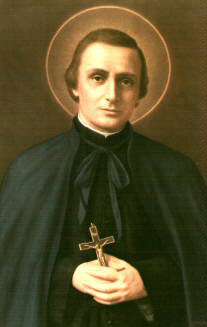 St. Peter Chanel: Saint of the Day for Sunday, April 28, 2024
 Prayer before a Crucifix: Prayer of the Day for Sunday, April 28, 2024
We ask you, humbly: don't scroll away.
Hi readers, it seems you use Catholic Online a lot; that's great! It's a little awkward to ask, but we need your help. If you have already donated, we sincerely thank you. We're not salespeople, but we depend on donations averaging $14.76 and fewer than 1% of readers give. If you donate just $5.00, the price of your coffee, Catholic Online School could keep thriving. Thank you.Help Now >


Copyright 2024 Catholic Online. All materials contained on this site, whether written, audible or visual are the exclusive property of Catholic Online and are protected under U.S. and International copyright laws, © Copyright 2024 Catholic Online. Any unauthorized use, without prior written consent of Catholic Online is strictly forbidden and prohibited.
Catholic Online is a Project of Your Catholic Voice Foundation, a Not-for-Profit Corporation. Your Catholic Voice Foundation has been granted a recognition of tax exemption under Section 501(c)(3) of the Internal Revenue Code. Federal Tax Identification Number: 81-0596847. Your gift is tax-deductible as allowed by law.