 Hi readers, it seems you use Catholic Online a lot; that's great! It's a little awkward to ask, but we need your help. If you have already donated, we sincerely thank you. We're not salespeople, but we depend on donations averaging $14.76 and fewer than 1% of readers give. If you donate just $5.00, the price of your coffee, Catholic Online School could keep thriving. Thank you. Help Now >
St. Bridget of Sweden
FREE Catholic Classes
(Also Birgitta).
The most celebrated saint of the Northern kingdoms, born about 1303; died 23 July, 1373.
Early Life
She was the daughter of Birger Persson, governor and provincial judge ( Lagman ) of Uppland, and of Ingeborg Bengtsdotter. Her father was one of the wealthiest landholders of the country, and, like her mother, distinguished by deep piety. St. Ingrid, whose death had occurred about twenty years before Bridget's birth, was a near relative of the family. Birger's daughter received a careful religious training, and from her seventh year showed signs of extraordinary religious impressions and illuminations. To her education, and particularly to the influence of an aunt who took the place of Bridget's mother after the latter's death (c. 1315), she owed that unswerving strength of will which later distinguished her.
Marriage
In 1316, at the age of thirteen, she was united in marriage to Ulf Gudmarsson, who was then eighteen. She acquired great influence over her noble and pious husband, and the happy marriage was blessed with eight children, among them St. Catherine of Sweden. The saintly life and the great charity of Bridget soon made her name known far and wide. She was acquainted with several learned and pious theologians, among them Nicolaus Hermanni, later Bishop of Linköping, Matthias, canon of Linköping, her confessor, Peter, Prior of Alvastrâ, and Peter Magister, her confessor after Matthias. She was later at the court of King Magnus Eriksson, over whom she gradually acquired great influence. Early in the forties (1341-43) in company with her husband she made a pilgrimage to Santiago de Compostella. On the return journey her husband was stricken with an attack of illness, but recovered sufficiently to finish the journey. Shortly afterwards, however, he died (1344) in the Cistercian monastery of Alvastrâ in East Gothland.
Widowhood
Bridget now devoted herself entirely to practices of religion and asceticism, and to religious undertakings. The visions which she believed herself to have had from her early childhood now became more frequent and definite. She believed that Christ Himself appeared to her, and she wrote down the revelations she then received, which were in great repute during the Middle Ages. They were translated into Latin by Matthias Magister and Prior Peter.
St. Bridget now founded a new religious congregation, the Brigittines, or Order of St. Saviour, whose chief monastery, at Vadstena, was richly endowed by King Magnus and his queen (1346). To obtain confirmation for her institute, and at the same time to seek a larger sphere of activity for her mission, which was the moral uplifting of the period, she journeyed to Rome in 1349, and remained there until her death, except while absent on pilgrimages, among them one to the Holy Land in 1373. In August, 1370, Pope Urban V confirmed the Rule of her congregation. Bridget made earnest representations to Pope Urban , urging the removal of the Holy See from Avignon back to Rome. She accomplished the greatest good in Rome, however, by her pious and charitable life, and her earnest admonitions to others to adopt a better life, following out the excellent precedents she had set in her native land. The year following her death her remains were conveyed to the monastery at Vadstena. She was canonized, 7 October, 1391, by Boniface IX.
We ask you, humbly: don't scroll away.
Hi readers, it seems you use Catholic Online a lot; that's great! It's a little awkward to ask, but we need your help. If you have already donated, we sincerely thank you. We're not salespeople, but we depend on donations averaging $14.76 and fewer than 1% of readers give. If you donate just $5.00, the price of your coffee, Catholic Online School could keep thriving. Thank you.Help Now >
Join the Movement
When you sign up below, you don't just join an email list - you're joining an entire movement for Free world class Catholic education.


-

-
Mysteries of the Rosary
-
St. Faustina Kowalska
-
Litany of the Blessed Virgin Mary
-
Saint of the Day for Wednesday, Oct 4th, 2023
-
Popular Saints
-
St. Francis of Assisi
-
Bible
-
Female / Women Saints
-
7 Morning Prayers you need to get your day started with God
-
Litany of the Blessed Virgin Mary

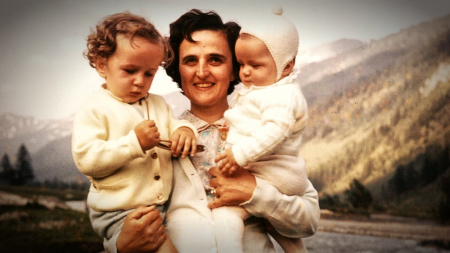
Sacrifices of Faith: The Pro-Life Legacies of St. Gianna and Jessica Hanna
-
How to love God by caring for our bodies
-
Pope Francis calls for negotiations to End Russia-Ukraine War
-
Pope Francis Contemplates Return to U.S. for United Nations Assembly Address
-
Pope Francis Calls on Faithful to Embrace Faith, Hope, and Charity in New Teaching Series


Daily Catholic
- Daily Readings for Sunday, April 28, 2024
- St. Peter Chanel: Saint of the Day for Sunday, April 28, 2024
- Prayer before a Crucifix: Prayer of the Day for Sunday, April 28, 2024
- Daily Readings for Saturday, April 27, 2024
- St. Zita: Saint of the Day for Saturday, April 27, 2024
- Prayer for the Dead # 2: Prayer of the Day for Saturday, April 27, 2024
 Daily Readings for Sunday, April 28, 2024
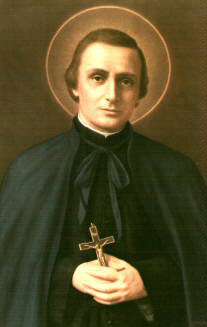 St. Peter Chanel: Saint of the Day for Sunday, April 28, 2024
 Prayer before a Crucifix: Prayer of the Day for Sunday, April 28, 2024

Copyright 2024 Catholic Online. All materials contained on this site, whether written, audible or visual are the exclusive property of Catholic Online and are protected under U.S. and International copyright laws, © Copyright 2024 Catholic Online. Any unauthorized use, without prior written consent of Catholic Online is strictly forbidden and prohibited.
Catholic Online is a Project of Your Catholic Voice Foundation, a Not-for-Profit Corporation. Your Catholic Voice Foundation has been granted a recognition of tax exemption under Section 501(c)(3) of the Internal Revenue Code. Federal Tax Identification Number: 81-0596847. Your gift is tax-deductible as allowed by law.