We ask you, humbly: don't scroll away.
Hi readers, it seems you use Catholic Online a lot; that's great! It's a little awkward to ask, but we need your help. If you have already donated, we sincerely thank you. We're not salespeople, but we depend on donations averaging $14.76 and fewer than 1% of readers give. If you donate just $5.00, the price of your coffee, Catholic Online School could keep thriving. Thank you.Help Now >
Jean Balue
FREE Catholic Classes
A French cardinal, b. probably c. 1421, in Poitou; d. 5 October, 1491, at Ripatransone (March of Ancona ). He has been frequently, but erroneously, called "de la Balue". He was graduated as licentiate in law about 1457, and at an early date entered the ecclesiastical state. He became so intimate with Jacques Juvénal des Ursins, Bishop of Poitiers (1449-57), that the latter named him executor of his will. The charge that in this capacity he misappropriated funds destined for the poor must be received with reserve. After the death of Des Ursins, Balue entered the service of John de Beauvau, Bishop of Angers (1451-67), who made him vicar-general (1461). In 1462, he accompanied his bishop to Rome, and thenceforth his career was marked by clever and unscrupulous intrigue. On his return, he was introduced by Charles de Melun to King Louis XI (1461-83), and, owing to the royal favour, his rise both in ecclesiastical and civil affairs was rapid. In 1464, Louis XI made him his almoner; the same year, Balue received the Abbeys of Fécamp and Saint-Thierri (Reims) and in 1465, that of Saint-Jean-d'Angély, two priories, and the Bishopric of Evreux. Having obtained the deposition of his benefactor, Beauvau, from the See of Angers , he secured the see for himself (1467). His intrigues in the affair of the Pragmatic Sanction procured him, at the request of Louis XI, the cardinalate, to which Paul II (1464-71) reluctantly raised him (1467). Guilty of high treason, he was arrested two years later (1469) with his accomplice William d'Haraucourt, Bishop of Verdun (1456-1500). As a cardinal, he could not be judged by a civil tribunal, but the negotiations between the pope and the king, regarding his trial, remaining fruitless, he was held captive by Louis XI for eleven years (1469-80). The baseless story of his detention in an iron cage originated in Italy in the sixteenth century. After many fruitless attempts, the pope in 1480 obtained Balue's freedom through Cardinal Julian de la Rovere, later Pope Julius II (1503-13). Balue went to Rome with the cardinal, was restored to all his rights and dignities (1482) and was named Bishop of Albano (1483). At the death of Louis XI (1483) he came, at the request of Charles VIII, as papal legate to France and left it as French ambassador to Rome (1485). Balue succeeded, moreover, in securing, besides several benefices, the nomination as Protector of the Order of St. John of Jerusalem and Guardian to Prince Djem, brother of the Sultan of Turkey. But his end was near; he died in 1491 and was buried at Rome. He had attained numerous dignities and amassed wealth, but dishonoured the Church.


We ask you, humbly: don't scroll away.
Hi readers, it seems you use Catholic Online a lot; that's great! It's a little awkward to ask, but we need your help. If you have already donated, we sincerely thank you. We're not salespeople, but we depend on donations averaging $14.76 and fewer than 1% of readers give. If you donate just $5.00, the price of your coffee, Catholic Online School could keep thriving. Thank you.Help Now >
Join the Movement
When you sign up below, you don't just join an email list - you're joining an entire movement for Free world class Catholic education.


-

-
Mysteries of the Rosary
-
St. Faustina Kowalska
-
Litany of the Blessed Virgin Mary
-
Saint of the Day for Wednesday, Oct 4th, 2023
-
Popular Saints
-
St. Francis of Assisi
-
Bible
-
Female / Women Saints
-
7 Morning Prayers you need to get your day started with God
-
Litany of the Blessed Virgin Mary


Sacrifices of Faith: The Pro-Life Legacies of St. Gianna and Jessica Hanna
-
How to love God by caring for our bodies
-
Pope Francis calls for negotiations to End Russia-Ukraine War
-
Pope Francis Contemplates Return to U.S. for United Nations Assembly Address
-
Pope Francis Calls on Faithful to Embrace Faith, Hope, and Charity in New Teaching Series


Daily Catholic
- Daily Readings for Sunday, April 28, 2024
- St. Peter Chanel: Saint of the Day for Sunday, April 28, 2024
- Prayer before a Crucifix: Prayer of the Day for Sunday, April 28, 2024
- Daily Readings for Saturday, April 27, 2024
- St. Zita: Saint of the Day for Saturday, April 27, 2024
- Prayer for the Dead # 2: Prayer of the Day for Saturday, April 27, 2024
 Daily Readings for Sunday, April 28, 2024
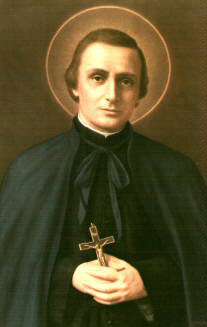 St. Peter Chanel: Saint of the Day for Sunday, April 28, 2024
 Prayer before a Crucifix: Prayer of the Day for Sunday, April 28, 2024
We ask you, humbly: don't scroll away.
Hi readers, it seems you use Catholic Online a lot; that's great! It's a little awkward to ask, but we need your help. If you have already donated, we sincerely thank you. We're not salespeople, but we depend on donations averaging $14.76 and fewer than 1% of readers give. If you donate just $5.00, the price of your coffee, Catholic Online School could keep thriving. Thank you.Help Now >


Copyright 2024 Catholic Online. All materials contained on this site, whether written, audible or visual are the exclusive property of Catholic Online and are protected under U.S. and International copyright laws, © Copyright 2024 Catholic Online. Any unauthorized use, without prior written consent of Catholic Online is strictly forbidden and prohibited.
Catholic Online is a Project of Your Catholic Voice Foundation, a Not-for-Profit Corporation. Your Catholic Voice Foundation has been granted a recognition of tax exemption under Section 501(c)(3) of the Internal Revenue Code. Federal Tax Identification Number: 81-0596847. Your gift is tax-deductible as allowed by law.