Gregory Bæticus
FREE Catholic Classes
Bishop of Elvira, in the province of Baetica, Spain, from which he derived his surname; d. about 392. Gregory is first met with as Bishop of Elvira (Illiberis) in 375; he is mentioned in the luciferian "Libellus precum ad Imperatores" ( Migne, P.L., XIII, 89 sq.) as the defender of Nicean creed, after Bishop Hosius of Cordova had given his assent in Sirmium to the second Sirmian formulation of doctrine, in the year 357. He proved himself at any rate an ardent opponent of Arianism, stood for the Nicean creed at the Council of Rimini, and refused to enter into ecclesiatical intercourse with the Arian Bishops Ursacius and Valens. He took, in fact, the extreme view, in common with Bishop Lucifer of Calaris (Cagliari), that it was unlawful to make advances to bishops or priests who at any time had been tainted with the Arian heresy, or to hold any religious communion with them. This Luciferian party found adherents in Spain, and on the death of Lucifer (370 or 371) Gregory of Elvira became the head and front of the movement. Such at least is the mention found of him in the "Libellus precum" above referred to, as well as in St. Jerome's chronicle ( Migne, P.L. XXVII, 659). However, the progress made in Spain was by no means considerable.

Gregory found time also for literary labours. St. Jerome says of him that he wrote, until a very ripe old age, a diversity of treatises composed in simple and ordinary language ( mediocri sermone ), and produced an excellent book ( elegantem librum ), "De Fide", which is said to be still extant (Hieron., De viris ill., c. 105). The book "De Trinitate seu de Fide" (Rome, 1575), which was ascribed to Gregory Bæticus by Achilles Statius, its first editor, did not come from his pen, but was written in Spain at the end of the fourth century. On the other hand early historians of literature, e.g. Quesnel, and quite recently Morin, have attributed to him the treatise "De Fide orthodoxa", which is directed against Arianism, and figures among the works of St. Ambrose ( Migne, P.L., XVII, 549-568) and of Vigilius of Thapsus ( Migne, P.L., LXII, 466-468; 449-463). The same may be said of the first seven of the twelve books "De Trinitate", the authorship of which has been ascribed to Vigilius of Thapsus ( Migne, P.L., LXII, 237-334). A few inquiring commentators have also sought to prove that Gregory Bæticus was the writer of the tractatus "De Libris Sacarum Scripturarum", published by Batiffol (Paris, 1900) as the work of Origen. But so far it has been impossible to ascertain positively the authorship in question. There is preserved a letter to him from Eusebius of Vercelli ( Migne, P.L., X, 713). As from Eusebius of Vercelli ( Migne, P.L., X, 713). As St. Jerome, in his "De Viris Illustribus", written in 392, does not mention Gregory as being dead, the supposition is that the latter was still living at the time. He must, however, have been then a very old man and cannot in any event have long survived the year 392. He is venerated in Spain as a saint, his feast being celebrated on 24 April.
 Hi readers, it seems you use Catholic Online a lot; that's great! It's a little awkward to ask, but we need your help. If you have already donated, we sincerely thank you. We're not salespeople, but we depend on donations averaging $14.76 and fewer than 1% of readers give. If you donate just $5.00, the price of your coffee, Catholic Online School could keep thriving. Thank you. Help Now >

Join the Movement
When you sign up below, you don't just join an email list - you're joining an entire movement for Free world class Catholic education.


-

-
Mysteries of the Rosary
-
St. Faustina Kowalska
-
Litany of the Blessed Virgin Mary
-
Saint of the Day for Wednesday, Oct 4th, 2023
-
Popular Saints
-
St. Francis of Assisi
-
Bible
-
Female / Women Saints
-
7 Morning Prayers you need to get your day started with God
-
Litany of the Blessed Virgin Mary

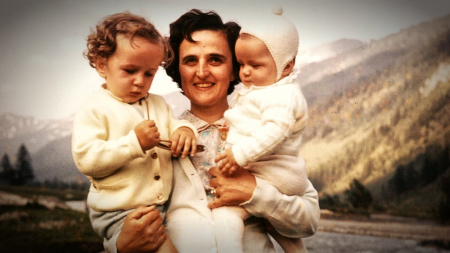
Sacrifices of Faith: The Pro-Life Legacies of St. Gianna and Jessica Hanna
-
How to love God by caring for our bodies
-
Pope Francis calls for negotiations to End Russia-Ukraine War
-
Pope Francis Contemplates Return to U.S. for United Nations Assembly Address
-
Pope Francis Calls on Faithful to Embrace Faith, Hope, and Charity in New Teaching Series


Daily Catholic
- Daily Readings for Sunday, April 28, 2024
- St. Peter Chanel: Saint of the Day for Sunday, April 28, 2024
- Prayer before a Crucifix: Prayer of the Day for Sunday, April 28, 2024
- Daily Readings for Saturday, April 27, 2024
- St. Zita: Saint of the Day for Saturday, April 27, 2024
- Prayer for the Dead # 2: Prayer of the Day for Saturday, April 27, 2024
 Daily Readings for Sunday, April 28, 2024
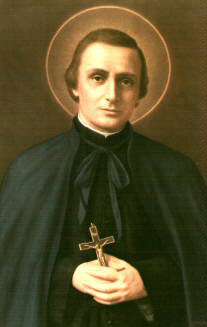 St. Peter Chanel: Saint of the Day for Sunday, April 28, 2024
 Prayer before a Crucifix: Prayer of the Day for Sunday, April 28, 2024
We ask you, humbly: don't scroll away.
Hi readers, it seems you use Catholic Online a lot; that's great! It's a little awkward to ask, but we need your help. If you have already donated, we sincerely thank you. We're not salespeople, but we depend on donations averaging $14.76 and fewer than 1% of readers give. If you donate just $5.00, the price of your coffee, Catholic Online School could keep thriving. Thank you.Help Now >


Copyright 2024 Catholic Online. All materials contained on this site, whether written, audible or visual are the exclusive property of Catholic Online and are protected under U.S. and International copyright laws, © Copyright 2024 Catholic Online. Any unauthorized use, without prior written consent of Catholic Online is strictly forbidden and prohibited.
Catholic Online is a Project of Your Catholic Voice Foundation, a Not-for-Profit Corporation. Your Catholic Voice Foundation has been granted a recognition of tax exemption under Section 501(c)(3) of the Internal Revenue Code. Federal Tax Identification Number: 81-0596847. Your gift is tax-deductible as allowed by law.