Autun
FREE Catholic Classes
THE DIOCESE OF AUTUN
(Augustodonum).
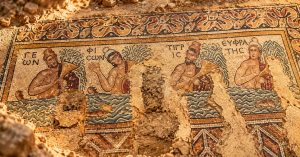
Comprises the entire Department of Saone et Loire in France. It was suffragan to the Archdiocese of Lyons under the old regime. The sees of Chalons-sur-Saone and Mâcon were united to Autun after the Revolution, and it then became suffragan to Besançon (1802), afterwards to Lyons (1822). Christian teaching reached Autun at a very early period, as we know from the famous Greek inscription of Pectorius which dates from the third century. It was found in 1839 in the cemetery of St. Peter l'Estrier at Autun and bears testimony to the antiquity and efficacy of baptism and the sacramental words of the Holy Eucharist. Local recensions of the "Passion" of St. Symphorianus of Autun exhibit St. Polycarp on the eve of the persecution of Septimius Severus, assigning to St. Irenæus two priests and a deacon (Sts. Benignus, Andochius, and Thyrsus), all three of whom depart for Autun. St. Benigus goes on to Langres, while the others remain at Autun. According to this legendary cycle, which dates from about the first half of the sixth century it was not then believed at Autun that the city was an episcopal see in the time of St. Irenæus (c. 140-211). St. Amator, whom Autun tradition designates as its first bishop, probably occupied the see about 250. The first bishop known to history is St. Reticius, an ecclesiastical writer, and contemporary of the Emperor Constantine (306-337). The Bishop of Autun enjoys the right of wearing the pallium, in virtue of a privilege accorded to the see in 599 by St. Gregory the Great (590-604). In the Merovingian period two Bishops of Autun figured prominently in political affairs; St. Syagrius, bishop during the second half of the sixth century, a contemporary of St. Germanus , Bishop of Paris (a native of Autun), and St. Leodegarius (Léger), bishop from 663 to 680, celebrated on account of his conflict with Ebroin and put to death by order of Thierry III. Charles Maurice de Talleyrand-Périgord, the future diplomat, was Bishop of Autun from 1788 to 1790, when he resigned. The last bishop of this see appointed in 1882 (d. 1906), was Cardinal Perraud , member of the French Academy . In 670, an important council was held at Autun for the purpose of regulating the discipline of the Benedictine monasteries. The present cathedral of Autun dates from the eleventh and twelfth centuries, and was formerly the chapel of the Dukes of Burgundy ; their palace was the actual episcopal residence. In the Diocese of Autun are yet to be seen the ruins of the Benedictine Abbey of Tournus and the great Abbey of Cluny, to which 2,000 monasteries were subject, and which gave to the Church the great pope, Gregory VII (1073-85). Gelasius II (1118-19) died at Cluny, and there also was held the conclave that elected Calixtus II (1119-24). The devotion to the Sacred Heart originated in the Visitation Convent at Paray-le Monial, founded in 1644, and now the object of frequent pilgrimages. At the end of the year 1905 the Diocese of Autun contained 618,227 inhabitants, 65 parishes, 458 succursal, or auxiliary, churches and 68 vicariates.
THE COUNCILS OF AUTUN
The first council, held in 663 (or 670) orders all ecclesiastics to learn by heart the Apostles Creed and the Athanasian Creed, and this seems to be the earliest mention of the latter in France. Cardinal Pitra says in his "Histoire de St. Léger" that this canon may have been directed against Monothelitism, then seeking entrance into the Gallican churches, but condemned beforehand in the latter of these creeds. The Rule of St. Benedict was also prescribed as the normal monastic code. In the Council of 1065, Saint Hugues, Abbot of Cluny, accomplished the reconciliation of Robert, Duke of Burgundy, with the Bishop of Autun. In 1077 Hugues, Bishop of Dié, held a council at Autun, by order of St. Gregory VII ; it deposed Manasses, Bishop of Reims, for simony and usurpation of the see, and reproved other bishops for absence from the council. In 1094 Hugues, Archbishop of Lyons, and thirty-three other bishops renewed at Autun the excommunication of Henry IV of Germany, the Antipope Guibert, and their partisans, also that of King Philip of France, guilty of bigamy. Simony, ecclesiastical disorders, and monastic usurpations provoked other decrees, only one of which is extant, forbidding the monks to induce the canons to enter monasteries.

Come Grow With Us
Sign up and walk the Catholic journey with millions around the world.
Receive inspiring emails on saints, daily readings, and free faith-building resources—no cost, ever.
Millions rely on our FREE Catholic resources - your donation helps keep them free.

- 7 Morning Prayers
- Mysteries of the Rosary
- Litany of the Bl. Virgin Mary
- Popular Saints
- Popular Prayers
- Female Saints
- Saint Feast Days by Month
- Stations of the Cross
- St. Francis of Assisi
- St. Michael the Archangel
- The Apostles' Creed
- Unfailing Prayer to St. Anthony
- Pray the Rosary







Copyright 2026 Catholic Online. All materials contained on this site, whether written, audible or visual are the exclusive property of Catholic Online and are protected under U.S. and International copyright laws, © Copyright 2026 Catholic Online. Any unauthorized use, without prior written consent of Catholic Online is strictly forbidden and prohibited.
Catholic Online is a Project of Your Catholic Voice Foundation, a Not-for-Profit Corporation. Your Catholic Voice Foundation has been granted a recognition of tax exemption under Section 501(c)(3) of the Internal Revenue Code. Federal Tax Identification Number: 81-0596847. Your gift is tax-deductible as allowed by law.
