Pope St. Sixtus I
FREE Catholic Classes
Pope St. Sixtus I (in the oldest documents, Xystus is the spelling used for the first three popes of that name), succeeded St. Alexander and was followed by St. Telesphorus. According to the "Liberian Catalogue" of popes, he ruled the Church during the reign of Adrian "a conulatu Nigri et Aproniani usque Vero III et Ambibulo", that is, from 117 to 126. Eusebius, who in his "Chronicon" made use of a catalogue of popes different from the one he used in his "Historia ecclesiastica", states in his "Chronicon" that Sixtus I was pope from 114 to 124, while in his "History" he makes him rule from 114 to 128. All authorities agree that he reigned about ten years. He was a Roman by birth, and his father's name was Pastor. According to the "Liber Pontificalis" (ed. Duchesne, I, 128), he passed the following three ordinances: (1) that none but sacred ministers are allowed to touch the sacred vessels ; (2) that bishops who have been summoned to the Holy See shall, upon their return, not be received by their diocese except on presenting Apostolic letters ; (3) that after the Preface in the Mass the priest shall recite the Sanctus with the people. The "Felician Catalogue" of popes and the various martyrologies give him the title of martyr. His feast is celebrated on 6 April. He was buried in the Vatican, beside the tomb of St. Peter. His relics are said to have been transferred to Alatri in 1132, though O Jozzi ("Il corpo di S. Sisto I., papa e martire rivendicato alla basilica Vaticana", Rome, 1900) contends that they are still in the Vatican Basilica. Butler (Lives of the Saints, 6 April) states that Clement X gave some of his relics to Cardinal de Retz, who placed them in the Abbey of St. Michael in Lorraine. The Xystus who is commemorated in the Canon of the Mass is Xystus II, not Xystus I.


Join the Movement
When you sign up below, you don't just join an email list - you're joining an entire movement for Free world class Catholic education.
-

-
Mysteries of the Rosary
-
St. Faustina Kowalska
-
Litany of the Blessed Virgin Mary
-
Saint of the Day for Wednesday, Oct 4th, 2023
-
Popular Saints
-
St. Francis of Assisi
-
Bible
-
Female / Women Saints
-
7 Morning Prayers you need to get your day started with God
-
Litany of the Blessed Virgin Mary

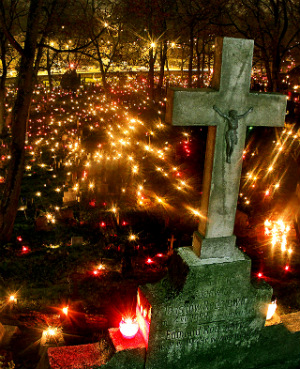
All Saints' Day, Halloween and All Souls' Day: What's the difference?
-
Should Christians Celebrate Halloween?
-
Since when did Halloween become a Christian holiday?
-
ADORABLE: A Little Boy's Heartfelt Lunchtime Prayer
-
Scientists Decode 3,000-Year-Old Babylonian Tablet, Revealing Potential Location of Noah's Ark

Daily Catholic
- Daily Readings for Friday, November 01, 2024
- St. Valentine Berrio-Ochoa: Saint of the Day for Friday, November 01, 2024
- Litany of the Saints: Prayer of the Day for Friday, November 01, 2024
- Daily Readings for Thursday, October 31, 2024
- St. Wolfgang: Saint of the Day for Thursday, October 31, 2024
- Memorare: Prayer of the Day for Thursday, October 31, 2024
 Daily Readings for Friday, November 01, 2024
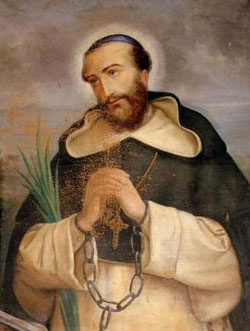 St. Valentine Berrio-Ochoa: Saint of the Day for Friday, November 01, 2024
 Litany of the Saints: Prayer of the Day for Friday, November 01, 2024


Copyright 2024 Catholic Online. All materials contained on this site, whether written, audible or visual are the exclusive property of Catholic Online and are protected under U.S. and International copyright laws, © Copyright 2024 Catholic Online. Any unauthorized use, without prior written consent of Catholic Online is strictly forbidden and prohibited.
Catholic Online is a Project of Your Catholic Voice Foundation, a Not-for-Profit Corporation. Your Catholic Voice Foundation has been granted a recognition of tax exemption under Section 501(c)(3) of the Internal Revenue Code. Federal Tax Identification Number: 81-0596847. Your gift is tax-deductible as allowed by law.
