We ask you, humbly: don't scroll away.
Hi readers, it seems you use Catholic Online a lot; that's great! It's a little awkward to ask, but we need your help. If you have already donated, we sincerely thank you. We're not salespeople, but we depend on donations averaging $14.76 and fewer than 1% of readers give. If you donate just $5.00, the price of your coffee, Catholic Online School could keep thriving. Thank you.Help Now >
Maurice de Sully
FREE Catholic Classes
Bishop of Paris, born of humble parents at Sully-sur-Loire (Soliacum), near Orléans, at the beginning of the twelfth century; died at Paris, 11 Sept., 1196. He came to Paris towards 1140 and studied for the ecclesiastical state. He soon became known as an able professor of theology and an eloquent preacher. It has been frequently asserted, but without sufficient proof, that he was canon of Bourges. In 1159 he appears as Archdeacon of Paris and on 12 Oct., 1160, largely through the influence of Louis VII, he was elected to succeed Peter Lombard in the episcopal see of that city. The present Cathedral of Notre-Dame stands as a monument to his episcopal administration. Its construction was begun and almost entirely completed under him. Alexander III, in 1163, laid the cornerstone of the magnificent edifice, and in 1185 the Patriarch of Jerusalem, Heraclius, officiated in the completed sanctuary. Maurice de Sully also rebuilt the episcopal palace in which the nobility and clergy met in 1179 at the coronation of Philip Augustus as joint rider with his father Louis VII. He enjoyed in a high degree the confidence of both rulers, accompanied Louis to his meeting with Frederick Barbarossa at Saint-Jean-de-Losne in 1162, and was one of the guardians of the royal treasury during the crusade (1190).

In the controversy between St. Thomas Becket and King Henry II he energetically defended the former and, in three letters still extant, pleaded his cause with Alexander III. He forbade the celebration of the feast of the Immaculate Conception in his diocese, but is said to have strongly supported by appeals to Holy Writ ( Job 19:25-27 ) the doctrine of the resurrection of bodies, against some sceptical noblemen. Although he retained the administration of his diocese, he retired, late in life, to the monastery of Saint-Victor, where he died. Maurice de Sully is the author of a treatise on the Canon of the Mass, preserved in manuscript at Bourges. Numerous sermons, some in Latin, others in vernacular, are also attributed to him. Those written in the Latin tongue were not directly destined for the people, bat rather for the use and study of the clergy. The French sermons do not seem to be in their present form the original work of Maurice de Sully; they are more commonly considered as reproductions made by ecclesiastics from his Latin collection. No critical edition of these sermons has yet been published; his three letters to Alexander III are printed in P. L., CC, 1419-22, as are also some of his official documents (CCV, 897-914).


Join the Movement
When you sign up below, you don't just join an email list - you're joining an entire movement for Free world class Catholic education.


-

-
Mysteries of the Rosary
-
St. Faustina Kowalska
-
Litany of the Blessed Virgin Mary
-
Saint of the Day for Wednesday, Oct 4th, 2023
-
Popular Saints
-
St. Francis of Assisi
-
Bible
-
Female / Women Saints
-
7 Morning Prayers you need to get your day started with God
-
Litany of the Blessed Virgin Mary


Sacrifices of Faith: The Pro-Life Legacies of St. Gianna and Jessica Hanna
-
How to love God by caring for our bodies
-
Pope Francis calls for negotiations to End Russia-Ukraine War
-
Pope Francis Contemplates Return to U.S. for United Nations Assembly Address
-
Pope Francis Calls on Faithful to Embrace Faith, Hope, and Charity in New Teaching Series


Daily Catholic
- Daily Readings for Sunday, April 28, 2024
- St. Peter Chanel: Saint of the Day for Sunday, April 28, 2024
- Prayer before a Crucifix: Prayer of the Day for Sunday, April 28, 2024
- Daily Readings for Saturday, April 27, 2024
- St. Zita: Saint of the Day for Saturday, April 27, 2024
- Prayer for the Dead # 2: Prayer of the Day for Saturday, April 27, 2024
 Daily Readings for Sunday, April 28, 2024
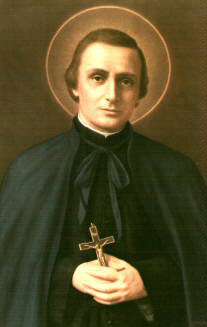 St. Peter Chanel: Saint of the Day for Sunday, April 28, 2024
 Prayer before a Crucifix: Prayer of the Day for Sunday, April 28, 2024

Copyright 2024 Catholic Online. All materials contained on this site, whether written, audible or visual are the exclusive property of Catholic Online and are protected under U.S. and International copyright laws, © Copyright 2024 Catholic Online. Any unauthorized use, without prior written consent of Catholic Online is strictly forbidden and prohibited.
Catholic Online is a Project of Your Catholic Voice Foundation, a Not-for-Profit Corporation. Your Catholic Voice Foundation has been granted a recognition of tax exemption under Section 501(c)(3) of the Internal Revenue Code. Federal Tax Identification Number: 81-0596847. Your gift is tax-deductible as allowed by law.
