University of Salamanca
FREE Catholic Classes
This university had its beginning in the Cathedral School under the direction, from the twelfth century, of a magister scholarum (chancellor). From this episcopal origin, probably in 1230, sprang the royal foundation of Alfonso IX of Léon, who "with was salutary discretion summoned the most experienced masters of sacred letters and established schools " (Lucas de Tuy ); which, however, does no signify, as Rashdall infers, that they taught theology. Alfonso IX granted them the privileges alluded to later by St. Ferdinand, who was in reality the founder, the foundation of his father not having endured. On 6 April, 1243, in letters patent, the saintly king took under his protection the professors, students, and their property, granting them an ecclesiastical tribunal for the settlement of their disputes. In his time began that period of unrivalled prosperity for the university, which for so many centuries made it the "glory of Spain " ( Denifle ). In Toledo on 8 May, 1254, the king granted the university the privileges that are its Magna Carta, appointing curators, placing it under the authority of the bishop, exempting it from the regular authorities, and assigning salaries for the professors. The professors of law received 500 maravedis a year, canon law 300, grammar, logic, and medicine 200. Some have endeavoured to trace an analogy between these privileges and those granted by Ferdinant I and II to the Universities of Bolgna and Naples.
We ask you, humbly: don't scroll away.
Hi readers, it seems you use Catholic Online a lot; that's great! It's a little awkward to ask, but we need your help. If you have already donated, we sincerely thank you. We're not salespeople, but we depend on donations averaging $14.76 and fewer than 1% of readers give. If you donate just $5.00, the price of your coffee, Catholic Online School could keep thriving. Thank you.Help Now >
But the fundamental difference that characterized the Spanish university must not be overlooked, that, although a royal foudnation, it was placed under the direction and control of the bishop, the dean, and the chancellor, who conferred the academic titles in the cathedral. The titles were given until 1830 in the name of the pope and king. Doctrinal and ecclesiastical professorships did not, however, contrary to Stein's view, predominate in the university ( Denifle ). Departments of medicine and juriprudencewere also established, and preference was given to the law, epecially canon law. By petition of theking, 6 Aril, 1255, Alexander IV confirmed the courses at Salamanca, "because in the multitude of the wise is the security of kingdoms, and their govrnments are mantained not less by the advice of the prudent, than by the energy and bravery of the strong". Later he decreed that any accepted teachr in any branch whatsoeveer at Salamanca cold teach his subject in any other university, with the exceptioni of Paris and Bologna, a limitation wich John XXII instituted in 1333. The principles Alfonso the Wise had put into practice in Salamanca, he drew from the "Leyes de Partida", commenced in 1256 and terminated in 1263. Rashdall calls this "a sort of educational code — the first of its kind in modern Europe ". In the time of Sancho the Brave the studies declined because the salaries of the professors were not paid. Finally, Ferdinand IV, authorized by Boniface VIII, assigned for this purpjose the "tertia ecclesarum" and from this date, 7 August, 1300, the university entered upon a new era of prosperity.
Classes were once more discontinued from 1306 to 1313, when Clement V commanded the "tertia" to be used in restoring the churches. In 1313 a third of the "tertia" was once more devoted to paying the professors of law, civil and canon, medicine, logic, grammar, and music. In 1355 the minorite friar, Dídaco Lupi, taught theology in Salamanca; but this branch, which in the sixteenth and seventeenth centuries was to draw the eyes of the entire world to Salamanca, did not flourish there until Benedict XIII introduced it in 1416, and Martin V re-established it in 1422. This pope gave the university its definitive constitution, and numbered it among the four greatest in the world. In 1401 the bishop, Diego de Anaya Maldonado, founded the first college for poor students, which was called the College of San Bartolomé and later the Old College. This and the colleges of Cuenca, Oviedo, and Fonseca were called "colegios mayores", larger colleges. Aftwerwards a great number of "colegios menores", smaller colleges, secular, regular, and of the four military orders were founded. The Liberals suppressed the "colegios mayores" under the pretext of their decadence but without substituting anyting better, or even equally good, to help the poor students. Following this the "colegios menores" were also closed. The laws of 1845 swept aside the last remaning vestures of these ancient establishments for university training, secularizing them and placing them under the control of the Liberal Government. The number of students at Salamanca in 1584 reached 6778; in 1822 it amounted only to 412, and later it dropped even lower. In the catalogue of its professors figure the names of some celebrated women, such as Doña Beatriz Gallindo and Doña Alvara de Alava.



Join the Movement
When you sign up below, you don't just join an email list - you're joining an entire movement for Free world class Catholic education.


-

-
Mysteries of the Rosary
-
St. Faustina Kowalska
-
Litany of the Blessed Virgin Mary
-
Saint of the Day for Wednesday, Oct 4th, 2023
-
Popular Saints
-
St. Francis of Assisi
-
Bible
-
Female / Women Saints
-
7 Morning Prayers you need to get your day started with God
-
Litany of the Blessed Virgin Mary

Sacrifices of Faith: The Pro-Life Legacies of St. Gianna and Jessica Hanna
-
How to love God by caring for our bodies
-
Pope Francis calls for negotiations to End Russia-Ukraine War
-
Pope Francis Contemplates Return to U.S. for United Nations Assembly Address
-
Pope Francis Calls on Faithful to Embrace Faith, Hope, and Charity in New Teaching Series

Daily Catholic
- Daily Readings for Sunday, April 28, 2024
- St. Peter Chanel: Saint of the Day for Sunday, April 28, 2024
- Prayer before a Crucifix: Prayer of the Day for Sunday, April 28, 2024
- Daily Readings for Saturday, April 27, 2024
- St. Zita: Saint of the Day for Saturday, April 27, 2024
- Prayer for the Dead # 2: Prayer of the Day for Saturday, April 27, 2024
 Daily Readings for Sunday, April 28, 2024
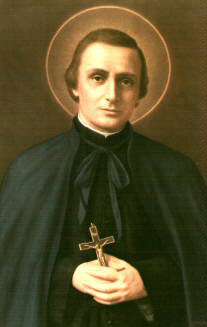 St. Peter Chanel: Saint of the Day for Sunday, April 28, 2024
 Prayer before a Crucifix: Prayer of the Day for Sunday, April 28, 2024


Copyright 2024 Catholic Online. All materials contained on this site, whether written, audible or visual are the exclusive property of Catholic Online and are protected under U.S. and International copyright laws, © Copyright 2024 Catholic Online. Any unauthorized use, without prior written consent of Catholic Online is strictly forbidden and prohibited.
Catholic Online is a Project of Your Catholic Voice Foundation, a Not-for-Profit Corporation. Your Catholic Voice Foundation has been granted a recognition of tax exemption under Section 501(c)(3) of the Internal Revenue Code. Federal Tax Identification Number: 81-0596847. Your gift is tax-deductible as allowed by law.