Celebrate Christmas / Advent Season with Catholic Online
 The Church has her own special liturgical year and calendar in which
she presents again the history and unchanging mysteries of our salvation,
from Creation to the Second Coming, together with the entire life
of the Savior. The mysteries do not change, but we do. A little older
and wiser, we have the opportunity to review and renew these mysteries.
When the familiar feasts come around we grasp something more about
them because we have lived another year and apply them more deeply
to our lives. This is a year of formation, like a school in which
we, like pupils, learn faith, hope and charity. We learn God's will
and to do God's will. Each Sunday and feast will present a special
lesson to us for our daily living.
The Church has her own special liturgical year and calendar in which
she presents again the history and unchanging mysteries of our salvation,
from Creation to the Second Coming, together with the entire life
of the Savior. The mysteries do not change, but we do. A little older
and wiser, we have the opportunity to review and renew these mysteries.
When the familiar feasts come around we grasp something more about
them because we have lived another year and apply them more deeply
to our lives. This is a year of formation, like a school in which
we, like pupils, learn faith, hope and charity. We learn God's will
and to do God's will. Each Sunday and feast will present a special
lesson to us for our daily living.
Advent is an especially lovely season and we can make great use of it. With the beginning of the season of Advent, we begin a new liturgical year. The First Sunday of Advent is therefore the Church's "New Year's Day". In the Judeo-Christian tradition, Sunday begin at sundown of the day before when the faithful celebrate First Vespers. Advent begins the Christmas cycle.
Advent comes from the Latin word for an "arrival" or a "coming". Advent means that the Lord is coming. Jesus Christ, our brother in our humanity and our God in His divinity is about to arrive. But He is comes to us in different ways. First, Jesus came to us at a specific point in history at Bethlehem about 2000 years ago. But in the Church's great feast of Christmas He mystically comes again. Second, the Lord, Alpha and Omega, will come to judge the living and the dead in the Second Coming. Third, the Redeemer comes to us in grace. He speaks to us in our consciences, he comes to us in the Eucharist and in the Word of God proclaimed. He arrives in the person of the begger, the needy, the suffering, the oppressed. We must be ready to receive and welcome Him when He comes, however He comes.
We ask you, humbly: don't scroll away.
Hi readers, it seems you use Catholic Online a lot; that's great! It's a little awkward to ask, but we need your help. If you have already donated, we sincerely thank you. We're not salespeople, but we depend on donations averaging $14.76 and fewer than 1% of readers give. If you donate just $5.00, the price of your coffee, Catholic Online School could keep thriving. Thank you.Help Now >
Advent is a time of joy tinged with penance. Joy, because we can imagine nothing more sweet than the Christ Child and His Mother Mary's bliss at His coming to light. Penance because we must strive to be properly disposed to receive so great a gift of His presence. In the millennial tradition of the Church, we faithful have done penance before great feasts. Christmas and Easter each have their penitential seasons in anticipation, Advent and Lent. The liturgical color used in the Latin Church for the liturgy during both Advent and Lent is purple, a sign of penance. In some places people may see blue used, which is done without the Church's approval. The Latin Church also emphasizes the penitential dimension of the season by directing the use of sparse ornaments in church and by legislating that instrumental music should not be used, except to sustain congregational singing. This is a kind of liturgical fast, which makes the joy and celebration of Christmas all that much more powerful by the contrast of the lean and muted season of Advent. Advent is a time of great joy, because we look forward to the beautiful feast of the Nativity, but it is joy stitched through with somber and focused spiritual preparation by doing penance.
More Advent & Christmas
Advent & Christmas 2023
Begins Sunday December 3, 2023
Ends on Sunday December 24, 2023
"And the angel answered her, 'The Holy Spirit will come upon you, and the power of the Most High will overshadow you; therefore the child to be born will be called holy—the Son of God.'"


Christ the King
Sunday, November 26, 2023
 Christ the King Day is a Catholic celebration that takes place on the last Sunday of the liturgical year in the Catholic faith. continue reading
Advent 2023 starts on Sunday December 3, 2023
Advent starts four Sundays before Christmas every year.Immaculate Conception of the Virgin Mary
[holy day of obligation]
Friday December 8, 2023
![Image of Immaculate Conception of the Virgin Mary[holy day of obligation]](https://www.catholic.org/files/images/media//14812140994558_150.jpg "Immaculate Conception of the Virgin Mary[holy day of obligation]") Blessed Virgin Mary in the first instance of her conception, by a singular privilege and grace granted by God, in view of the merits of Jesus Christ, ... continue reading
Blessed Virgin Mary in the first instance of her conception, by a singular privilege and grace granted by God, in view of the merits of Jesus Christ, ... continue reading
Advent 2023 ends on Sunday December 24, 2023
Advent ends on Christmas Eve, the day before Christmas, every year.Christmas
Birth of Our Lord Jesus
[holy day of obligation]
Monday December 25, 2023
![Image of ChristmasBirth of Our Lord Jesus[holy day of obligation]](https://www.catholic.org/files/images/media//15226932365_150.jpg "ChristmasBirth of Our Lord Jesus[holy day of obligation]") Christmas is an annual festival commemorating the birth of Jesus Christ. continue reading
Christmas is an annual festival commemorating the birth of Jesus Christ. continue reading
The Solemnity of Mary, Mother of God
[holy day of obligation]
Monday January 1, 2023
![Image of The Solemnity of Mary, Mother of God[holy day of obligation]](https://www.catholic.org/files/images/media/2022/16665677875_150.jpg "The Solemnity of Mary, Mother of God[holy day of obligation]") The Solemnity of Mary, the Holy Mother of God is a feast day of the Blessed Virgin Mary under the aspect of her motherhood of Jesus Christ. continue reading
The Solemnity of Mary, the Holy Mother of God is a feast day of the Blessed Virgin Mary under the aspect of her motherhood of Jesus Christ. continue reading
Epiphany
Saturday January 6, 2023
 The Epiphany signifies the visitation of the Biblical Magi to the Baby Jesus. continue reading

Advent Reflections
Reflection for every day of Advent
 Advent is a period of waiting, like Lent. We are called to obtain the Sacrament of Reconciliation, to pray and fast, as we await the arrival of our ... continue reading
Advent Calendar
Every day of Advent
 An Advent calendar has become a tradition for many families when celebrating Advent and the Christmas season. continue reading
Advent Candle
24 Days of December
 An Advent candle is a neat way to mark off the days until Christmas. Such candles are commonly found in churches and sometimes in homes. continue reading
Advent Wreath
Each Sunday of Advent
 The wreath's symbolism of the advent (coming) of Light into the world is clear. The gradual lighting of the four candles, one on each Sunday of the ... continue reading
Advent & Christmas Classes
14 Free Classes - Mobile Friendly
 You’re joining our global classroom. Thousands of students from all over the world, each with their own unique story, learn at their own pace on ... continue reading
Advent & Christmas PDFs
FREE - Printable - Catholic
 Free Advent & Christmas PDFs for anyone, anywhere; Use in your Parish Church - School - Bulletin Inserts. continue reading
Christmas Gifts
Free Shipping $70+
 Make This Christmas Special with Gifts from Catholic Online Shopping. continue reading
Nativity Scene
Holy Family
 The Nativity Scene is a meaningful expression for our religious faith. With it, we provide a captivating visual focus during the Christmas season. continue reading
St. Nicholas
December 6th
 The true story of Santa Claus begins with Saint Nicholas. continue reading
Advent? What is it all about
 The word Advent derives from the Latin word meaning coming. The Lord is coming. We may reflect that every year at this time we celebrate his coming... continue reading
The Christmas Story
 To become the mother of the Savior, Mary "was enriched by God with gifts appropriate to such a role." The angel Gabriel at the moment of... continue reading
Advent Daily Readings
 The weeks of Advent remind us to set aside some of the hectic business of the holiday season, and to quietly reflect on the promise of the baby... continue reading


More Advent & Christmas
Feast of the Epiphany - A Sunday Letter by Deacon Keith Fournier

My friends, brothers, and sisters in the Lord,On Sunday January 7, 2024 in the United States and many other Nations, we celebrate the Feast ... continue reading
The Deacon Saint Stephen the Proto-Martyr is a Model for all Christians

In the Catholic Church, Christmas is celebrated for eight days (Octave, from the Latin Octava) and opens up into a wonderful liturgical ... continue reading
 Hi readers, it seems you use Catholic Online a lot; that's great! It's a little awkward to ask, but we need your help. If you have already donated, we sincerely thank you. We're not salespeople, but we depend on donations averaging $14.76 and fewer than 1% of readers give. If you donate just $5.00, the price of your coffee, Catholic Online School could keep thriving. Thank you. Help Now >
Love is Born on Christmas Morn, and the World is Born Anew Watch
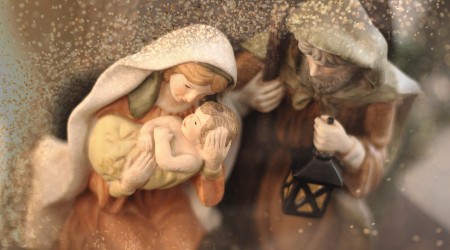
The Gospel passages proclaimed at the Vigil and the Midnight Mass of Christmas root the Nativity of the Lord, in the family history and ... continue reading
5 Ways to keep Jesus in your Christmas celebrations this year
Christmas is a magical time of year when decorations line the streets, children are suddenly behaving and the Post Office struggles to keep ... continue reading
Advent Reflection - Day 22- The Fourth Sunday of Advent Watch

Advent Reflection - Day 22 - The Fourth Sunday of Advent This is the last day of this year's Advent preparations. Tonight, we greet the ... continue reading
Advent Reflection - Day 21 - The Third Saturday of Advent Watch
Advent Reflection - Day 21 - The Third Saturday of Advent Within Mary's womb, our Savior stirs. The moment is near! The Holy Family turns ... continue reading
Join the Movement
When you sign up below, you don't just join an email list - you're joining an entire movement for Free world class Catholic education.


-

-
Mysteries of the Rosary
-
St. Faustina Kowalska
-
Litany of the Blessed Virgin Mary
-
Saint of the Day for Wednesday, Oct 4th, 2023
-
Popular Saints
-
St. Francis of Assisi
-
Bible
-
Female / Women Saints
-
7 Morning Prayers you need to get your day started with God
-
Litany of the Blessed Virgin Mary


Encouraging Scripture for the Single Mom on Mother's Day
-
New York Judge Halts Constitutional Amendment on Abortion Due to Procedural Flaws
-
Special Ways to Celebrate Mom This Mother's Day
-
Discalced Carmelites ask for Edith Stein to be declared 'Doctor of Truth'
-
Cinco de Mayo - What is the day really about?


Daily Catholic
- Daily Readings for Friday, May 10, 2024
- St. Damien of Molokai: Saint of the Day for Friday, May 10, 2024
- Prayer to St. Gabriel, for Others: Prayer of the Day for Friday, May 10, 2024
- Daily Readings for Thursday, May 09, 2024
- St. Pachomius: Saint of the Day for Thursday, May 09, 2024
- Prayer for Travelers: Prayer of the Day for Thursday, May 09, 2024
 Daily Readings for Friday, May 10, 2024
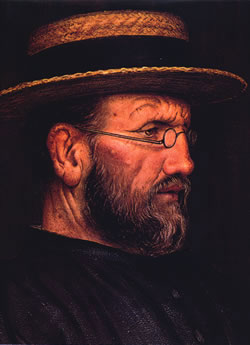 St. Damien of Molokai: Saint of the Day for Friday, May 10, 2024
 Prayer to St. Gabriel, for Others: Prayer of the Day for Friday, May 10, 2024
We ask you, humbly: don't scroll away.
Hi readers, it seems you use Catholic Online a lot; that's great! It's a little awkward to ask, but we need your help. If you have already donated, we sincerely thank you. We're not salespeople, but we depend on donations averaging $14.76 and fewer than 1% of readers give. If you donate just $5.00, the price of your coffee, Catholic Online School could keep thriving. Thank you.Help Now >

Copyright 2024 Catholic Online. All materials contained on this site, whether written, audible or visual are the exclusive property of Catholic Online and are protected under U.S. and International copyright laws, © Copyright 2024 Catholic Online. Any unauthorized use, without prior written consent of Catholic Online is strictly forbidden and prohibited.
Catholic Online is a Project of Your Catholic Voice Foundation, a Not-for-Profit Corporation. Your Catholic Voice Foundation has been granted a recognition of tax exemption under Section 501(c)(3) of the Internal Revenue Code. Federal Tax Identification Number: 81-0596847. Your gift is tax-deductible as allowed by law.