Your Catholic Family Belongs Here.
Membership Is FREE.
What if your next step in growing your family’s faith cost nothing? Join the World Catholic Education Alliance (WCEA) for FREE and explore 10,000+ Catholic lessons and 4,300+ downloadable resources for your home, classroom, or school.
Built on the work of Catholic Online School—with 2.2 million student enrollments across 193 countries—our mission is simple: free, world-class Catholic education for anyone, anywhere.
Your family belongs here. Become a member today.
St. Colman of Dromore
Facts
Patron: of Roman Catholic Diocese of Dromore
Author and Publisher - Catholic Online
Printable Catholic Saints PDFs
Shop St. Colman of Dromore
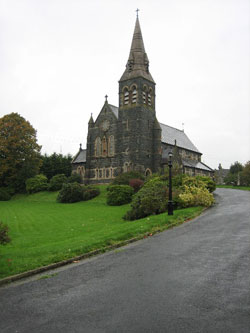
The first bishop of Dromore in County Down, was this St. Colman, who founded a monastery there, probably about the year 514. He was venerated from early times in Scotland as well as in Ireland, and under the date of June 7 we find him mentioned in several of the ancient calendars of both Countries--sometimes as Mocholmoc, or Mocholmog--"my dear little Colum". The Felire of Oengus describes him as "the great descendant of Artae", but nothing is actually known of his parentage and of his career, the manuscripts of a much later date which profess to relate his life being full of anachronisms and extravagant stories. As there are over two hundred Irish saints of the name of Coman, it is scarcely to be wondered at if their histories have become confused. According to tradition, St. Colman of Dromore was born in Dalriada. After receiving his early training at Nendrum, or Mahee Island, from St. Coelan, he became a disciple of St. Ailbe of Emly. Among his friends was St. Macanisius, whose advice he sought as to his future career. "It is the will of God that you erect a monastery within the bounds of Coba plain", was the answer he received. He accordingly set to work and established his community by the river Lagan which passes through Dromore. The most famous of his pupils was St. Finnian of Moville. St. Colman seems to have died about the middle of the sixth century or rather earlier, and was probably interred at Dromore, though the Breviary of Aberdeen gives Inchmacome as his place of Burial. His feast is kept in all dioceses of Ireland.
Come Grow With Us
Sign up and walk the Catholic journey with millions around the world.
Receive inspiring emails on saints, daily readings, and free faith-building resources—no cost, ever.
World Catholic Education Alliance
Your Child Needs Help Tonight—Could the Answer Be Right Here?
Watch the Video.
- 7 Morning Prayers
- Mysteries of the Rosary
- Litany of the Bl. Virgin Mary
- Popular Saints
- Popular Prayers
- Female Saints
- Saint Feast Days by Month
- Stations of the Cross
- St. Francis of Assisi
- St. Michael the Archangel
- The Apostles' Creed
- Unfailing Prayer to St. Anthony
- Pray the Rosary






Copyright 2026 Catholic Online. All materials contained on this site, whether written, audible or visual are the exclusive property of Catholic Online and are protected under U.S. and International copyright laws, © Copyright 2026 Catholic Online. Any unauthorized use, without prior written consent of Catholic Online is strictly forbidden and prohibited.
Catholic Online is a Project of Your Catholic Voice Foundation, a Not-for-Profit Corporation. Your Catholic Voice Foundation has been granted a recognition of tax exemption under Section 501(c)(3) of the Internal Revenue Code. Federal Tax Identification Number: 81-0596847. Your gift is tax-deductible as allowed by law.