 Dear readers, Catholic Online was de-platformed by Shopify for our pro-life beliefs. They shut down our Catholic Online, Catholic Online School, Prayer Candles, and Catholic Online Learning Resources essential faith tools serving over 2.2 million students and millions of families worldwide. Our founders, now in their 70's, just gave their entire life savings to protect this mission. But fewer than 2% of readers donate. If everyone gave just $5, the cost of a coffee, we could rebuild stronger and keep Catholic education free for all. Stand with us in faith. Thank you. DONATE TODAY >
St. Peter Urseolus
Facts
Birth: 928
Death: 987
Author and Publisher - Catholic Online
Printable Catholic Saints PDFs
Shop St. Peter Urseolus
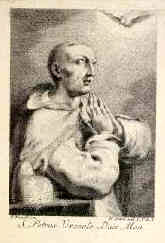
Benedictine hermit. Also called Peter Orseolo, he was a member of one of the most noble houses of Venice and, at the age of twenty, became an admiral in the Venetian Navy. After a series of successful campaigns against the Dalmatian pirates, he was elected Doge of Venice in 967, supposedly securing his elevation by poisoning his predecessor Peter Candiani IV, as was charged by St. Peter Damian. For two years Peter ruled with consummate skill, assisting Venice to weather a series of political crises. Then, without any warning and without informing his family, he disappeared from Venice and secretly entered the Benedictine abbey of Cuxa, in the Spanish Pyrenees. There he devoted himself to a life of severe austerity and asceticism, working as a humble sacrist until St. Romuald suggested that he become a hermit. He lived alone until his death.
Come Grow With Us
Sign up and walk the Catholic journey with millions around the world.
Receive inspiring emails on saints, daily readings, and free faith-building resources—no cost, ever.
This 15-Second Video Will Change How You See Catholic Education.
Watch Now
- 7 Morning Prayers
- Mysteries of the Rosary
- Litany of the Bl. Virgin Mary
- Popular Saints
- Popular Prayers
- Female Saints
- Saint Feast Days by Month
- Stations of the Cross
- St. Francis of Assisi
- St. Michael the Archangel
- The Apostles' Creed
- Unfailing Prayer to St. Anthony
- Pray the Rosary






Copyright 2026 Catholic Online. All materials contained on this site, whether written, audible or visual are the exclusive property of Catholic Online and are protected under U.S. and International copyright laws, © Copyright 2026 Catholic Online. Any unauthorized use, without prior written consent of Catholic Online is strictly forbidden and prohibited.
Catholic Online is a Project of Your Catholic Voice Foundation, a Not-for-Profit Corporation. Your Catholic Voice Foundation has been granted a recognition of tax exemption under Section 501(c)(3) of the Internal Revenue Code. Federal Tax Identification Number: 81-0596847. Your gift is tax-deductible as allowed by law.