Because of You, 2.2 Million Students Are Being Formed in the Faith
Because of generous supporters like you, Catholic Online School has already delivered free, faithful Catholic education to over 2.2 million students across 193 countries. In an age of noise and algorithms, you are helping form souls with truth, prayer, Scripture, and Christ.
If everyone who reads this gave just $5 — the cost of a coffee — we could reach even more families and keep this life-changing formation free for all. Be Courageous. Be Catholic. Stand with us today.
DONATE TODAY >St. Stephen the Great

Facts
Patron: of Hungary
Death: 1038
Author and Publisher - Catholic Online
Printable PDF of St. Stephen the Great
Shop St. Stephen the Great
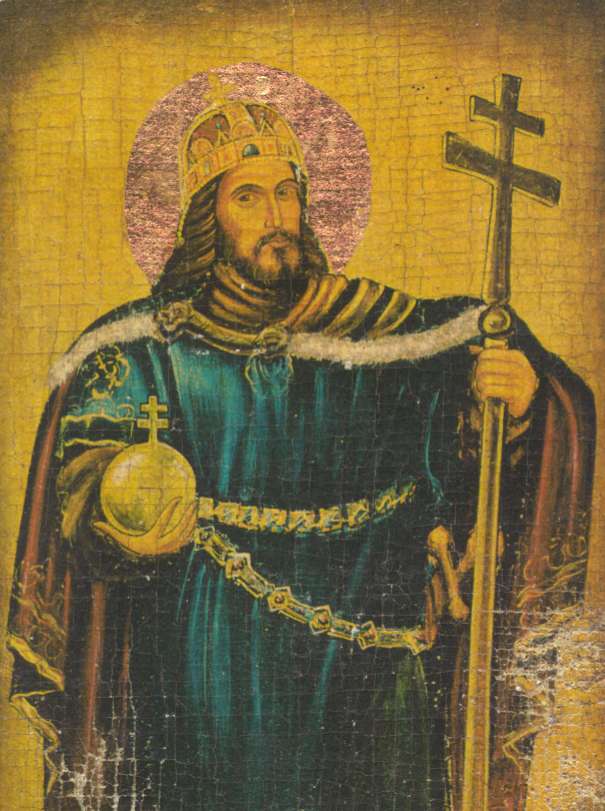
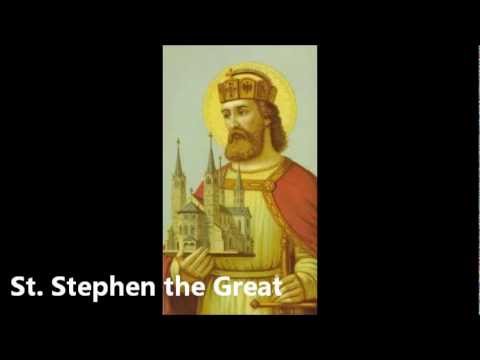
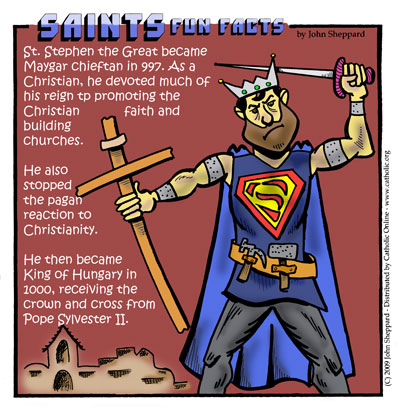
St. Stephen the Great (977-1038), was the son of the Magyar chieftain Geza, Stephen succeeded him as leader in 997. Already raised a Christian, in 996 he wed the daughter of Duke Henry II of Bavaria and devoted much of his reign to the promotion of the Christian faith. He gave his patronage to Church leaders, helped build churches, and was a proponent of the rights of the Holy See. Stephen also crushed the pagan counterreaction to Christianity, forcibly converting the so-called Black Hungarians after their failed rebellion. In recognition of his efforts, Stephen was anoited king of Hungary in 1000, receiving the cross and crown from Pope Sylvester II. The remainder of his reign was taken up with the consolidation of the Christian hold on the region. His crown and regalia became beloved symbols of the Hungarian nation, and Stephen was venerated as the ideal Christian king. Canonized in 1083 by Pope St. Gregory VII, he became the patron saint of Hungary.
Come Grow With Us
Sign up and walk the Catholic journey with millions around the world.
Receive inspiring emails on saints, daily readings, and free faith-building resources—no cost, ever.
Sister Sara Has One Message for Every Catholic Family This June
- 7 Morning Prayers
- Mysteries of the Rosary
- Litany of the Bl. Virgin Mary
- Popular Saints
- Popular Prayers
- Female Saints
- Saint Feast Days by Month
- Stations of the Cross
- St. Francis of Assisi
- St. Michael the Archangel
- The Apostles' Creed
- Unfailing Prayer to St. Anthony
- Pray the Rosary







Copyright 2026 Catholic Online. All materials contained on this site, whether written, audible or visual are the exclusive property of Catholic Online and are protected under U.S. and International copyright laws, © Copyright 2026 Catholic Online. Any unauthorized use, without prior written consent of Catholic Online is strictly forbidden and prohibited.
Catholic Online is a Project of Your Catholic Voice Foundation, a Not-for-Profit Corporation. Your Catholic Voice Foundation has been granted a recognition of tax exemption under Section 501(c)(3) of the Internal Revenue Code. Federal Tax Identification Number: 81-0596847. Your gift is tax-deductible as allowed by law.