Because of You, 2.2 Million Students Are Being Formed in the Faith
Because of generous supporters like you, Catholic Online School has already delivered free, faithful Catholic education to over 2.2 million students across 193 countries. In an age of noise and algorithms, you are helping form souls with truth, prayer, Scripture, and Christ.
If everyone who reads this gave just $5 — the cost of a coffee — we could reach even more families and keep this life-changing formation free for all. Be Courageous. Be Catholic. Stand with us today.
DONATE TODAY >Carmelite Nuns of Compiegne


Facts
Death: 1794
Author and Publisher - Catholic Online
Printable Catholic Saints PDFs
Shop Carmelite Nuns of Compiegne

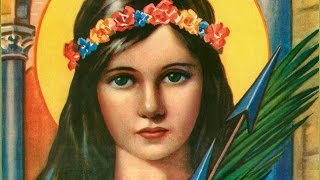
Sixteen Carmelites caught up in the French Revolution and martyred. When the revolution started in 1789, a group of twenty-one discalced Carmelites lived in a monastery in Compiegne France, founded in 1641. The monastery was ordered closed in 1790 by the Revolutionary government, and the nuns were disbanded. Sixteen of the nuns were accused of living in a religious community in 1794. They were arrested on June 22 and imprisoned in a Visitation convent in Compiegne There they openly resumed their religious life. On July 12, 1794, the Carmelites were taken to Paris and five days later were sentenced to death. They went to the guillotine singing the Salve Regina. They were beatified in 1906 by Pope St. Pius X. The Carmelites were: Marie Claude Brard; Madeleine Brideau, the subprior; Maire Croissy, grandniece of Colbert Marie Dufour; Marie Hanisset; Marie Meunier, a novice; Rose de Neufville Annette Pebras; Anne Piedcourt: Madeleine Lidoine, the prioress; Angelique Roussel; Catherine Soiron and Therese Soiron, both extern sisters, natives of Compiegne and blood sisters: Anne Mary Thouret; Marie Trezelle; and Eliza beth Verolot. The martyrdom of the nuns was immortalized by the composer Francois Poulenc in his famous opera Dialogues des Carmelites.
Come Grow With Us
Sign up and walk the Catholic journey with millions around the world.
Receive inspiring emails on saints, daily readings, and free faith-building resources—no cost, ever.
An important update for our readers.
Please Watch
- 7 Morning Prayers
- Mysteries of the Rosary
- Litany of the Bl. Virgin Mary
- Popular Saints
- Popular Prayers
- Female Saints
- Saint Feast Days by Month
- Stations of the Cross
- St. Francis of Assisi
- St. Michael the Archangel
- The Apostles' Creed
- Unfailing Prayer to St. Anthony
- Pray the Rosary





Copyright 2026 Catholic Online. All materials contained on this site, whether written, audible or visual are the exclusive property of Catholic Online and are protected under U.S. and International copyright laws, © Copyright 2026 Catholic Online. Any unauthorized use, without prior written consent of Catholic Online is strictly forbidden and prohibited.
Catholic Online is a Project of Your Catholic Voice Foundation, a Not-for-Profit Corporation. Your Catholic Voice Foundation has been granted a recognition of tax exemption under Section 501(c)(3) of the Internal Revenue Code. Federal Tax Identification Number: 81-0596847. Your gift is tax-deductible as allowed by law.