We ask you, urgently: don't scroll past this
Dear readers, Catholic Online was de-platformed by Shopify for our pro-life beliefs. They shut down our Catholic Online, Catholic Online School, Prayer Candles, and Catholic Online Learning Resources essential faith tools serving over 1.4 million students and millions of families worldwide. Our founders, now in their 70's, just gave their entire life savings to protect this mission. But fewer than 2% of readers donate. If everyone gave just $5, the cost of a coffee, we could rebuild stronger and keep Catholic education free for all. Stand with us in faith. Thank you.Help Now >
St. Artaldus
Facts
Birth: 1101
Death: 1206
Author and Publisher - Catholic Online
Printable Catholic Saints PDFs
Shop St. Artaldus
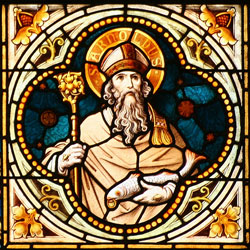
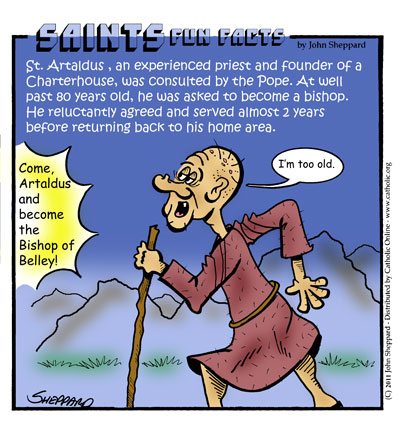
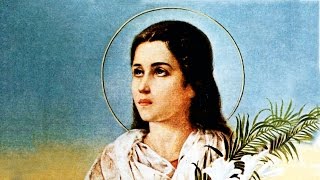
Artaldus (also called Arthaud) was born in the castle of Sothonod in Savoy. At the age of eighteen, he went to the court of Duke Amadeus III, but a year or two after, he became a Carthusian at Portes. After many years, being a priest and an experienced and holy religious, he was sent by the prior of the Grande Chartreuse to found a charterhouse near his home, in a valley in the Valromey significantly called "the cemetery". Here Artaldus established himself with six of his brethren from Portes. The community was no sooner well settled down, than there buildings were destroyed by fire, and St. Artaldus had to begin all over again. He chose a fresh site on the Arvieres River, and his second foundation was soon built and occupied. But a Carthusian cell could not contain the ever-increasing reputation of Artaldus: like his master St. Bruno, he was consulted by the Pope, and when he was well over eighty, he was called from his monastery to be bishop of Belley, in spite of his vehement and reasonable protest. However, after less than two years of episcopate, his resignation was accepted, and he thankfully returned to Arvieres, where he lived in peace for the rest of his days. During his last years, he was visited by St. Hugh of Lincoln, who had come into France, and who, while he was prior of the charterhouse of Witham, had induced Henry II to become a benefactor of Arvieres. The Magna vita of St. Hugh records a gentle rebuke administered by Hugh when Artaldus asked him for political news in the presence of the community who had turned their backs upon the world to give themselves entirely to God. The cultus of St. Artaldus, called simply Blessed by the Carthusians, was confirmed for the diocese of Belley in 1834. He was 105 years old when he died and his feast day is October 7th.
Come Grow With Us
Sign up and walk the Catholic journey with millions around the world.
Receive inspiring emails on saints, daily readings, and free faith-building resources—no cost, ever.
Sister Sara just dropped the truth about the future of Catholic education… and It’s Not What You Think
- Easter / Lent
- 5 Lenten Prayers
- Ash Wednesday
- 7 Morning Prayers
- Mysteries of the Rosary
- Litany of the Bl. Virgin Mary
- Popular Saints
- Popular Prayers
- Female Saints
- Saint Feast Days by Month
- Stations of the Cross
- St. Francis of Assisi
- St. Michael the Archangel
- The Apostles' Creed
- Unfailing Prayer to St. Anthony
- Pray the Rosary









Copyright 2026 Catholic Online. All materials contained on this site, whether written, audible or visual are the exclusive property of Catholic Online and are protected under U.S. and International copyright laws, © Copyright 2026 Catholic Online. Any unauthorized use, without prior written consent of Catholic Online is strictly forbidden and prohibited.
Catholic Online is a Project of Your Catholic Voice Foundation, a Not-for-Profit Corporation. Your Catholic Voice Foundation has been granted a recognition of tax exemption under Section 501(c)(3) of the Internal Revenue Code. Federal Tax Identification Number: 81-0596847. Your gift is tax-deductible as allowed by law.