Ecclesiastical Prisons
FREE Catholic Classes
It is plain from many decrees in the "Corpus Juris Canonici" that the Church has claimed and exercised the right, belonging to a perfect and visible society, of protecting its members by condemning the guilty to imprisonment. The object of prisons originally, both among the Hebrews and the Romans, was merely the safe-keeping of a criminal, real or pretended, until his trial. The ecclesiastical idea of imprisonment, however, is that confinement be made use of both as a punishment and as affording an opportunity for reformation and reflection. This method of punishment was anciently applied even to clerics. Thus, Boniface VIII (cap. "Quamvis", iii, "De poen.", in 6) decrees :
Although it is known that prisons were specially instituted for the custody of criminals, not for their punishment, yet we shall not find fault with you if you commit to prison for the performance of penance, either perpetually or temporarily as shall seem best, thoseclerics subject to you who have confessed crimes or been convicted of them, after you have carefully considered the excesses, persons and circumstances involved in the case.The Church adopted the extreme punishment of perpetual imprisonment because, by the canons, the execution of offenders, whether clerical or lay, could not be ordered by ecclesiastical judges . It was quite common in ancient times to imprison in monasteries, for the purpose of doing penance, those clerics who had been convicted of grave crimes (c. vii, dist. 50). The "Corpus Juris", however, says (c. "Super His", viii, "De poen.") that incarceration does not of itself inflict the stigma of infamy on a cleric, as is evident from a papal pronouncement on the complaint of a cleric who had been committed to prison because he vacillated in giving testimony. The reply recorded is that imprisonment does not ipso facto carry with it any note of infamy.
 Hi readers, it seems you use Catholic Online a lot; that's great! It's a little awkward to ask, but we need your help. If you have already donated, we sincerely thank you. We're not salespeople, but we depend on donations averaging $14.76 and fewer than 1% of readers give. If you donate just $5.00, the price of your coffee, Catholic Online School could keep thriving. Thank you. Help Now >
As to monastic prisons for members of religious orders, we find them recorded in decrees dealing with the incorrigibility of those who have lost the spirit of their vocation. Thus, by command of Urban VIII, the Congregation of the Council (21 September, 1624) decreed :
For the future, no regular, legitimately professed, may be expelled from his order unless he be truly incorrigible. Aperson is not to be judged truly incorrigible unless not only all those things are found verified which are required by the common law (notwithstanding the constitutions of any religious order even confirmed and approved by the Holy See ), but also, until the delinquent has been tried by fasting and patience for one year in confinement. Therefore, let every order have private prisons, at least one in every province.The crimes in question must be such as by natural or civil law would merit the punishment of death or imprisonment for life ( Reiffenstuel, "Jus Can. univ.", no. 228). Innocent XII reduced the year required by the above-mentioned decree to six months ( Decree "Instantibus", 2). A decree of the Sacred Congregation of the Council (13 November, 1632) declares that a religious is not to be judged incorrigible because he flees from imprisonment, unless, after being punished three times, he should make a fourth escape. As the civil laws do not, at present, permit of incarceration by private authority, the Congregation on the Discipline of Regulars has decreed (22 January, 1886) that trials for incorrigibility, preceding dismissal, should be carried out by summary, not formal, process, and that for each case recourse should be had to Rome. A vestige of the monastic imprisonment (which, of course, nowadays depends only on moral force) is found in the decree of Leo XIII (4 November, 1892), in which he declares that religious who have been ordained and wish to leave their order cannot, under pain of perpetual suspension, depart from the cloister (exire ex clausura) until they have been adopted by a bishop.

We ask you, humbly: don't scroll away.
Hi readers, it seems you use Catholic Online a lot; that's great! It's a little awkward to ask, but we need your help. If you have already donated, we sincerely thank you. We're not salespeople, but we depend on donations averaging $14.76 and fewer than 1% of readers give. If you donate just $5.00, the price of your coffee, Catholic Online School could keep thriving. Thank you.Help Now >
Join the Movement
When you sign up below, you don't just join an email list - you're joining an entire movement for Free world class Catholic education.


-

-
Mysteries of the Rosary
-
St. Faustina Kowalska
-
Litany of the Blessed Virgin Mary
-
Saint of the Day for Wednesday, Oct 4th, 2023
-
Popular Saints
-
St. Francis of Assisi
-
Bible
-
Female / Women Saints
-
7 Morning Prayers you need to get your day started with God
-
Litany of the Blessed Virgin Mary


Sacrifices of Faith: The Pro-Life Legacies of St. Gianna and Jessica Hanna
-
How to love God by caring for our bodies
-
Pope Francis calls for negotiations to End Russia-Ukraine War
-
Pope Francis Contemplates Return to U.S. for United Nations Assembly Address
-
Pope Francis Calls on Faithful to Embrace Faith, Hope, and Charity in New Teaching Series


Daily Catholic
- Daily Readings for Saturday, April 27, 2024
- St. Zita: Saint of the Day for Saturday, April 27, 2024
- Prayer for the Dead # 2: Prayer of the Day for Saturday, April 27, 2024
- Daily Readings for Friday, April 26, 2024
- St. Cletus: Saint of the Day for Friday, April 26, 2024
- Prayer before the Closing of the Day: Prayer of the Day for Friday, April 26, 2024
 Daily Readings for Saturday, April 27, 2024
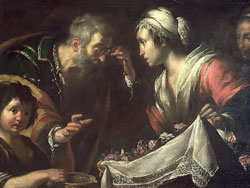 St. Zita: Saint of the Day for Saturday, April 27, 2024
 Prayer for the Dead # 2: Prayer of the Day for Saturday, April 27, 2024
We ask you, humbly: don't scroll away.
Hi readers, it seems you use Catholic Online a lot; that's great! It's a little awkward to ask, but we need your help. If you have already donated, we sincerely thank you. We're not salespeople, but we depend on donations averaging $14.76 and fewer than 1% of readers give. If you donate just $5.00, the price of your coffee, Catholic Online School could keep thriving. Thank you.Help Now >

Copyright 2024 Catholic Online. All materials contained on this site, whether written, audible or visual are the exclusive property of Catholic Online and are protected under U.S. and International copyright laws, © Copyright 2024 Catholic Online. Any unauthorized use, without prior written consent of Catholic Online is strictly forbidden and prohibited.
Catholic Online is a Project of Your Catholic Voice Foundation, a Not-for-Profit Corporation. Your Catholic Voice Foundation has been granted a recognition of tax exemption under Section 501(c)(3) of the Internal Revenue Code. Federal Tax Identification Number: 81-0596847. Your gift is tax-deductible as allowed by law.