Confraternities of Penitents
FREE Catholic Classes
Congregations, with statutes prescribing various penitential works, such as fasting, the use of the discipline, the wearing of a hair shirt, etc. The number of these confraternities increased to such a degree, Rome alone counting over a hundred, that the only way of classifying them is according to the colour of the garb worn for processions and devotional exercises. This consists of a heavy robe confined with a girdle, with a pointed hood concealing the face, the openings for the eyes permitting the wearer to see without being recognized. These confraternities have their own statues, their own churches, and often their own cemeteries. Aspirants must serve a certain time of probation before being admitted.
(1) White Penitents
The most important group of these is the Archconfraternity of the Gonfalone, established in 1264 at Rome. St. Bonaventure, at that time Inquisitor-general of the Holy Office, prescribed the rules, and the white habit, with the name Recommendati B. V. M. This confraternity was erected in the Church of St. Mary Major by Clement IV in 1265, and four others having been erected in the Church of Ara Coeli, was raised to the rank of an arch confraternity, to which the rest were aggregated. The title of gonfalone , or standard-bearer, was acquired during the pontificate of Innocent IV, when the members withstood the violence of the Roman nobles and elected a governor of the capitol to represent the pope, then at Avignon. Many privileges and churches were granted to this confraternity by succeeding pontiffs, the headquarters now being the Church of Santa Lucia del Gonfalone. The obligations of the members are to care for the sick, bury the dead, provide medical service for those unable to afford it, and give dowries to poor girls. What distinguishes these White Penitents from those other confraternities is the circle on the shoulder of the habit, within a cross of red and white. Other confraternities of White Penitents are those of the Blessed Sacrament of St. John Lateran, the Blessed Sacrament and the Five Wounds at S. Lorenzo in Damaso, the Guardian Angel, etc.
 Hi readers, it seems you use Catholic Online a lot; that's great! It's a little awkward to ask, but we need your help. If you have already donated, we sincerely thank you. We're not salespeople, but we depend on donations averaging $14.76 and fewer than 1% of readers give. If you donate just $5.00, the price of your coffee, Catholic Online School could keep thriving. Thank you. Help Now >
(2) Black Penitents
The chief confraternity in this group is that of Misericordia, or of the Beheading of St. John, founded in 1488 to assist and console criminals condemned to death, accompany them to the gallows, and provide for them religious services and Christian burial. The Archconfraternity of Death provides burial and religious services for the poor and those found dead within the limits of the Roman Campagna. Other confraternities of Black Penitents are those of the Crucifix of St. Marcellus, and of Jesus and Mary of St. Giles.
(3) Blue Penitents
Among the confraternities of this group are those of St. Joseph, St. Julian in Monte Giordano, Madonna del Giardino, Santa Maria in Caccaberi, etc. A number of these confraternities were established in France under the patronage of St. Jerome.
(4) Grey Penitents
Includes, besides the Stigmati of St. Francis, the confraternities of St. Rose of Viterbo, The Holy Cross of Lucca, St. Rosalia of Palermo, St. Bartholomew, St. Alexander, etc.
(5) Red Penitents
Embracing the confraternities of Sts. Ursula and Catherine, the red robe being confined with a green cincture ; St. Sebastian and St. Valentine, with a blue cincture ; and the Quattro Coronati, with a white cincture, etc.
(6) Violet Penitents
The confraternity of the Blessed Sacrament at the Church of St. Andrea della Fratte, under the patronage of St. Francis of Paula.
(7) Green Penitents
Including the confraternities of St. Rocco and St. Martin at Ripetto, the care of the sick.
There are many other confraternities which cannot be comprised within any of these groups, because of the combination of colours in their habits. The various confraternities were well represented in France from the thirteenth century on, reaching, perhaps, their most flourishing condition in the sixteenth century.


Join the Movement
When you sign up below, you don't just join an email list - you're joining an entire movement for Free world class Catholic education.


-

-
Mysteries of the Rosary
-
St. Faustina Kowalska
-
Litany of the Blessed Virgin Mary
-
Saint of the Day for Wednesday, Oct 4th, 2023
-
Popular Saints
-
St. Francis of Assisi
-
Bible
-
Female / Women Saints
-
7 Morning Prayers you need to get your day started with God
-
Litany of the Blessed Virgin Mary


Sacrifices of Faith: The Pro-Life Legacies of St. Gianna and Jessica Hanna
-
How to love God by caring for our bodies
-
Pope Francis calls for negotiations to End Russia-Ukraine War
-
Pope Francis Contemplates Return to U.S. for United Nations Assembly Address
-
Pope Francis Calls on Faithful to Embrace Faith, Hope, and Charity in New Teaching Series


Daily Catholic
- Daily Readings for Sunday, April 28, 2024
- St. Peter Chanel: Saint of the Day for Sunday, April 28, 2024
- Prayer before a Crucifix: Prayer of the Day for Sunday, April 28, 2024
- Daily Readings for Saturday, April 27, 2024
- St. Zita: Saint of the Day for Saturday, April 27, 2024
- Prayer for the Dead # 2: Prayer of the Day for Saturday, April 27, 2024
 Daily Readings for Sunday, April 28, 2024
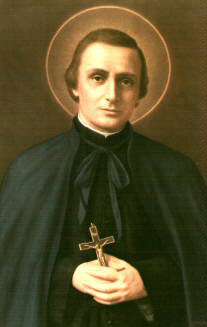 St. Peter Chanel: Saint of the Day for Sunday, April 28, 2024
 Prayer before a Crucifix: Prayer of the Day for Sunday, April 28, 2024


Copyright 2024 Catholic Online. All materials contained on this site, whether written, audible or visual are the exclusive property of Catholic Online and are protected under U.S. and International copyright laws, © Copyright 2024 Catholic Online. Any unauthorized use, without prior written consent of Catholic Online is strictly forbidden and prohibited.
Catholic Online is a Project of Your Catholic Voice Foundation, a Not-for-Profit Corporation. Your Catholic Voice Foundation has been granted a recognition of tax exemption under Section 501(c)(3) of the Internal Revenue Code. Federal Tax Identification Number: 81-0596847. Your gift is tax-deductible as allowed by law.