 Hi readers, it seems you use Catholic Online a lot; that's great! It's a little awkward to ask, but we need your help. If you have already donated, we sincerely thank you. We're not salespeople, but we depend on donations averaging $14.76 and fewer than 1% of readers give. If you donate just $5.00, the price of your coffee, Catholic Online School could keep thriving. Thank you. Help Now >
Domenico Passionei
FREE Catholic Classes
A cardinal, theologian, born at Fossombrone, 2 Dec., 1682; died 5 July, 1761. Educated in the Clementine College at Rome, later he joined the household of his brother Guido, afterwards secretary of the Sacred College, devoting himself to higher studies at the Sapienza. He was soon made a prelate and in 1706 was sent to Paris to present the nuncio with the red hat, but he there acquired the Jansenistic tendencies which he never entirely eradicated. In 1708 he was sent on a confidential mission to The Hague ; in 1712 he was present at Utrecht as official representative of the Holy See and successfully maintained the cause of Ruiswych concerning religion. His efforts were less successful at Baden (1714) and at Turin. He was later sent to Malta as inquisitor (1717-49); he became Secretary of Propaganda, Secretary of Latin Letters, and in 1721 nuncio in Switzerland, where he wrote "Acta Apostolicæ Legationis Helvetiæ 1723-29" (Zurich, 1729; Rome, 1738). He blessed the marriage of Maria Theresa and was instrumental in converting Friedrich Ludwig, Prince of Würtemberg. Later on he was hostile to Austria.
After his return to Rome he became secretary of briefs and cardinal of the title of S. Bernardo. In 1755 he succeeded Quirini as librarian of the Holy Roman Church. Although a member of the Academy of Berlin, he published little. But he carried on a learned correspondence with the most distinguished literati . He protected the Jansenists and encouraged them to publish Arnauld's works. His library of 32,000 volumes was open to all; it was acquired by the Augustinians. His character was impetuous and haughty, especially towards the Romans. He was compelled to confirm the decree prohibiting the "Exposition de la doctrine chrétienne" of Masenguy, his protégé, but this so afflicted him as to hasten his death.
We ask you, humbly: don't scroll away.
Hi readers, it seems you use Catholic Online a lot; that's great! It's a little awkward to ask, but we need your help. If you have already donated, we sincerely thank you. We're not salespeople, but we depend on donations averaging $14.76 and fewer than 1% of readers give. If you donate just $5.00, the price of your coffee, Catholic Online School could keep thriving. Thank you.Help Now >

We ask you, humbly: don't scroll away.
Hi readers, it seems you use Catholic Online a lot; that's great! It's a little awkward to ask, but we need your help. If you have already donated, we sincerely thank you. We're not salespeople, but we depend on donations averaging $14.76 and fewer than 1% of readers give. If you donate just $5.00, the price of your coffee, Catholic Online School could keep thriving. Thank you.Help Now >
Join the Movement
When you sign up below, you don't just join an email list - you're joining an entire movement for Free world class Catholic education.


-

-
Mysteries of the Rosary
-
St. Faustina Kowalska
-
Litany of the Blessed Virgin Mary
-
Saint of the Day for Wednesday, Oct 4th, 2023
-
Popular Saints
-
St. Francis of Assisi
-
Bible
-
Female / Women Saints
-
7 Morning Prayers you need to get your day started with God
-
Litany of the Blessed Virgin Mary


Sacrifices of Faith: The Pro-Life Legacies of St. Gianna and Jessica Hanna
-
How to love God by caring for our bodies
-
Pope Francis calls for negotiations to End Russia-Ukraine War
-
Pope Francis Contemplates Return to U.S. for United Nations Assembly Address
-
Pope Francis Calls on Faithful to Embrace Faith, Hope, and Charity in New Teaching Series


Daily Catholic
- Daily Readings for Sunday, April 28, 2024
- St. Peter Chanel: Saint of the Day for Sunday, April 28, 2024
- Prayer before a Crucifix: Prayer of the Day for Sunday, April 28, 2024
- Daily Readings for Saturday, April 27, 2024
- St. Zita: Saint of the Day for Saturday, April 27, 2024
- Prayer for the Dead # 2: Prayer of the Day for Saturday, April 27, 2024
 Daily Readings for Sunday, April 28, 2024
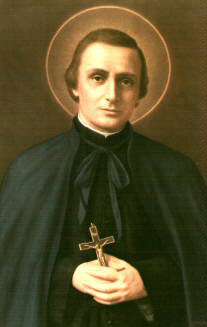 St. Peter Chanel: Saint of the Day for Sunday, April 28, 2024
 Prayer before a Crucifix: Prayer of the Day for Sunday, April 28, 2024



Copyright 2024 Catholic Online. All materials contained on this site, whether written, audible or visual are the exclusive property of Catholic Online and are protected under U.S. and International copyright laws, © Copyright 2024 Catholic Online. Any unauthorized use, without prior written consent of Catholic Online is strictly forbidden and prohibited.
Catholic Online is a Project of Your Catholic Voice Foundation, a Not-for-Profit Corporation. Your Catholic Voice Foundation has been granted a recognition of tax exemption under Section 501(c)(3) of the Internal Revenue Code. Federal Tax Identification Number: 81-0596847. Your gift is tax-deductible as allowed by law.