We ask you, humbly: don't scroll away.
Hi readers, it seems you use Catholic Online a lot; that's great! It's a little awkward to ask, but we need your help. If you have already donated, we sincerely thank you. We're not salespeople, but we depend on donations averaging $14.76 and fewer than 1% of readers give. If you donate just $5.00, the price of your coffee, Catholic Online School could keep thriving. Thank you.Help Now >
Otto of Passau
FREE Catholic Classes
All we know of him is in the preface of his work, in which he calls himself a member of the Franciscan Order, at one time lector of theology at Basle, and says that he finished his writing on 2 (1) Feb., 1386, dedicating it to all the "friends of God ", both clerical and lay, male and female, and begs for their prayers. According to Sbaralea ("Suppl. Script. Franciscani ordinis", Rome, 1806, 571) he was a native of Flanders and belonged to the Franciscan province of Cologne. His book bears the title "Die vierundzwanzig alten oder der guldin Tron der minnenden seelen". He introduces the twenty-four ancients of Apocalypse 4:4 , and makes them utter sentences of wisdom by which men can obtain the golden throne in eternal life. The sentences are taken from Holy Scripture , the Fathers, Scholastics, and from those heathen authors, "whom the Church does not condemn". He thus enumerates 104 "masters", among whom are also some of the mystics, as Hugo and Richard of St. Victor. He generally gives accurate quotation of his sources though he also draws from some not specified, e.g., St. Elizabeth of Schönau . He tries to remain on strictly Catholic ground, but sometimes loses himself in dogmatical intricacies and quibbles. To be plain and intelligible he frequently uses trivial expressions. He writes on the nature of God and of man, on their mutual relation, on the requisites for perfection: contrition, confession, and penance; on internal and external life, purity of motives, shunning idleness, love of God and of the neighbour, the necessity of faith, and the grace of God. He speaks of the Scriptures as the storehouse of Divine wisdom and urges the faithful to read them. In speaking of contemplative life he insists that none can reach it without spending time in the active service of God and man. The term "friends of God " he explains according to John 15:15 , and speaks of prayer, humility, obedience, spiritual life, virtues and vices, and shows Christ as the model of all virtues. The longest chapters, eleven and twelve, he devotes to the Holy Eucharist and to the Blessed Virgin. The last chapters treat of death and the future life. The number of manuscript copies of the book (about forty) bears evidence of the estimation in which it was held. It found its way to all "friends of God " in the south of Germany, along the Lower Rhine and in the Netherlands. It first appeared in print in 1470, probably by Pfister in Bamberg. A modernized edition, "Die Krone der Aeltesten", was made in 1835 at Landshut as a tenth volume of "Leitstern auf der Bahn des Heils".


We ask you, humbly: don't scroll away.
Hi readers, it seems you use Catholic Online a lot; that's great! It's a little awkward to ask, but we need your help. If you have already donated, we sincerely thank you. We're not salespeople, but we depend on donations averaging $14.76 and fewer than 1% of readers give. If you donate just $5.00, the price of your coffee, Catholic Online School could keep thriving. Thank you.Help Now >
Join the Movement
When you sign up below, you don't just join an email list - you're joining an entire movement for Free world class Catholic education.


-

-
Mysteries of the Rosary
-
St. Faustina Kowalska
-
Litany of the Blessed Virgin Mary
-
Saint of the Day for Wednesday, Oct 4th, 2023
-
Popular Saints
-
St. Francis of Assisi
-
Bible
-
Female / Women Saints
-
7 Morning Prayers you need to get your day started with God
-
Litany of the Blessed Virgin Mary


Sacrifices of Faith: The Pro-Life Legacies of St. Gianna and Jessica Hanna
-
How to love God by caring for our bodies
-
Pope Francis calls for negotiations to End Russia-Ukraine War
-
Pope Francis Contemplates Return to U.S. for United Nations Assembly Address
-
Pope Francis Calls on Faithful to Embrace Faith, Hope, and Charity in New Teaching Series


Daily Catholic
- Daily Readings for Sunday, April 28, 2024
- St. Peter Chanel: Saint of the Day for Sunday, April 28, 2024
- Prayer before a Crucifix: Prayer of the Day for Sunday, April 28, 2024
- Daily Readings for Saturday, April 27, 2024
- St. Zita: Saint of the Day for Saturday, April 27, 2024
- Prayer for the Dead # 2: Prayer of the Day for Saturday, April 27, 2024
 Daily Readings for Sunday, April 28, 2024
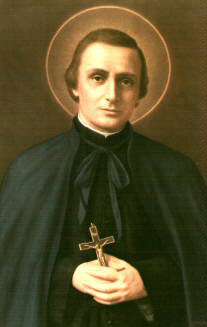 St. Peter Chanel: Saint of the Day for Sunday, April 28, 2024
 Prayer before a Crucifix: Prayer of the Day for Sunday, April 28, 2024


Copyright 2024 Catholic Online. All materials contained on this site, whether written, audible or visual are the exclusive property of Catholic Online and are protected under U.S. and International copyright laws, © Copyright 2024 Catholic Online. Any unauthorized use, without prior written consent of Catholic Online is strictly forbidden and prohibited.
Catholic Online is a Project of Your Catholic Voice Foundation, a Not-for-Profit Corporation. Your Catholic Voice Foundation has been granted a recognition of tax exemption under Section 501(c)(3) of the Internal Revenue Code. Federal Tax Identification Number: 81-0596847. Your gift is tax-deductible as allowed by law.
