 Hi readers, it seems you use Catholic Online a lot; that's great! It's a little awkward to ask, but we need your help. If you have already donated, we sincerely thank you. We're not salespeople, but we depend on donations averaging $14.76 and fewer than 1% of readers give. If you donate just $5.00, the price of your coffee, Catholic Online School could keep thriving. Thank you. Help Now >
Osaka
FREE Catholic Classes
(Osachensis).
Osaka ( Oye , great river; saka , cliff), one of the three municipal prefectures ( ken ) of Japan, is situated on both banks of the Yodo River and along the eastern shore of Osaka Bay. The second city in Japan in population, it far outstrips all other cities of the empire in wealth, commerce, and industries. The name Osaka apparently dates only from about 1492; previously the town was called Naniwa ("dashing waves", still used in poetry). According to our earliest information concerning the town, not undoubtedly genuine, it received its original name from Jinmu, first Emperor of Japan, who landed there about 660 B.C. In A.D. 313 Emperor Nintoku made it his capital. Various subsequent emperors (e.g. Kotoku in 645 and Shomu in 724) also resided there, but it was only after it had become in the sixteenth century a great Buddhist religious centre that the wealth and importance of the city began rapidly to increase. Fortified in 1534, it was the chief stronghold of the Buddhists during the bloody persecution to which they were subjected under Nobunaga. All efforts to dislodge them failed until, in obedience to the order of the emperor, they yielded up possession of the town in 1580. The true founder of the modern prosperity and importance of Osaka was undoubtedly Hideyoshi (see Japan ). Recognizing that the strategic position of the town would enable him to dominate the daimyos of the south and west, he determined to make Osaka his capital, and built on the site of the great Buddhist monastery the Castle of Osaka — an admirable example of old Japanese architecture. The palace which he built within this castle has been placed by some authorities among the most glorious the world has ever seen; it was deliberately burned by the Tokugawa party in 1868, before they retreated to Yedo (now Tokio ). Hideyoshi devoted himself sedulously to the improvement of the town, laying out new streets and causing the wealthy merchants of Fushumi and Sakai to immigrate thither. Situated in the middle of the richest agricultural district of Japan, the growth of Osaka has been unceasing during the last three centuries, although its commercial supremacy was for a time imperilled when the seat of government was transferred from Kioto to Yedo (1868). In 1871 a mint was established in Osaka, its management being entrusted to European officials. The port was opened to foreign trade in 1868, but, as the harbour was poor and unsuitable for large vessels, Kobe (20 miles west) attracted most of the foreign commerce especially after the establishment of railway connection between the cities in 1873. At present, however, an extensive scheme of improvement to render the harbour capable of accomodating the largest vessels is being executed, and, on its completion, Osaka will take first place in foreign, as in internal commerce. Judging from the rapid growth of its population (821,235 in 1898; 1,226,590 in 1908), Osaka should be in the near future the real metropolis of Japan. Intersected by a myriad of canals, the city is often called the "Venice of the East", while its numerous industries, among which cotton-spinning occupies a leading position, has won it the title of the "Manchester of Japan ".

The diocese embraces the territory stretching from Lake Biwa and the confines of the imperial provinces of Jetchidzen, Mino, and Owari to the western shores of the island of Nippon, together with the adjacent islands (except Shikoku) belonging to this territory. While it was St. Francis Xavier's intention to proceed directly to Miyako (the modern Kioto), then the religious and political capital of Japan, it was not until 1559 that Christianity was first preached in the territory by Father Gaspar Vilela, S.J., founder of the Church in Miako. After converting about one hundred natives and fifteen bonzes, a plot against his life necessitated his temporary withdrawal, and the civil war, which for some years devastated the capital, afforded little opportunity for cultivating further the seeds of Christianity. Peace being restored, Christianity began again to make headway, and in September, 1564, we find five churches erected in the neighbourhood of the capital. By 1574 the number of faithful included many in the shogun's palace and even one of his brothers-in-law. Between 1577 and 1579 the converts in the Miako region were estimated at between 9000 and 10,000. In 1582 the central provinces contained 25,000 faithful, ministered to by five fathers and nine brothers of the Jesuit Order. When Hideyoshi determined to transfer the seat of government from Kioto to Osaka, Father Organtino, S.J., in accordance with the advice of Justus Ukondono, a Christian noble, petitioned the Taiko for a site for a church. His request was granted and the first church in Osaka was opened at Christmas, 1583. By 1585 the number of nobles baptized at Osaka was sixty-five. On the issue of the Taiko's edict banishing the missionaries and closing the churches (see Japan ), there were in the eighteen leagues between Miako and Sakai twenty churches and 35,000 faithful. Though no European met with martyrdom during the first persecution, the sufferings of the Christians terrible; fifty churches and eight residences of the Jesuits in the central provinces were burned, although the churches in Osaka, Miako, and Sakai were spared. Henceforth until the Taiko's death the ministry had to be carried on secretly. In 1593 the Franciscan embassy from the Philippines arrived, and erected the Church of Our Lady of Portiuncula and a hospital for lepers in Miako. In the next year Franciscans established the Convent of Bethlehem in Osaka. (Concerning the persecution following the San Felipe incident see Japan ; Nagasaki, Diocese of.) From Hideyoshi's death (1598) to 1613, the Church in Japan enjoyed comparative peace. At the court of Hideyori, the successor of Hideyoshi, were numerous Christians, several whom commanded his troops during the bombardment of Osaka(1615). A list of the Christians in Miako, Fushumi, Osaka, and Sakai having been drawn up in 1613, a decree was published at Miako on 11 Feb., 1614, ordering all to depart within five days. For details of the persecution, for which this decree was the signal and which within twenty-five years annihilated the Church in Japan, consult Deplace, "Le Catholicism au Japon", II (Mechlin, 1909). The first church in Osaka after the reopening of Japan to foreigners was erected by Father Cousin (now Bishop of Nagasaki ) in 1869. The agnosticism of the Japanese and the general laxity of morals constitute formidable obstacles to the growth of Christianity. The mission is entrusted to the Paris Society of Foreign Missions. It was erected into a diocese on 16 March, 1888, the present bishop being Mgr Jules Chatron (elected 23 July, 1896). According to the latest statistics the diocese counts: 27 missionaries (3 native), 4 Marianite Brothers, 37 catechists, 16 sisters, 34 stations, 32 churches, 24 oratories, 4 schools with 419 pupils, 1 high-school with 100 pupils, 5 orphanages with 228 inmates, 32 hospitals, 3711 Christians.

We ask you, humbly: don't scroll away.
Hi readers, it seems you use Catholic Online a lot; that's great! It's a little awkward to ask, but we need your help. If you have already donated, we sincerely thank you. We're not salespeople, but we depend on donations averaging $14.76 and fewer than 1% of readers give. If you donate just $5.00, the price of your coffee, Catholic Online School could keep thriving. Thank you.Help Now >

Join the Movement
When you sign up below, you don't just join an email list - you're joining an entire movement for Free world class Catholic education.


-

-
Mysteries of the Rosary
-
St. Faustina Kowalska
-
Litany of the Blessed Virgin Mary
-
Saint of the Day for Wednesday, Oct 4th, 2023
-
Popular Saints
-
St. Francis of Assisi
-
Bible
-
Female / Women Saints
-
7 Morning Prayers you need to get your day started with God
-
Litany of the Blessed Virgin Mary


Sacrifices of Faith: The Pro-Life Legacies of St. Gianna and Jessica Hanna
-
How to love God by caring for our bodies
-
Pope Francis calls for negotiations to End Russia-Ukraine War
-
Pope Francis Contemplates Return to U.S. for United Nations Assembly Address
-
Pope Francis Calls on Faithful to Embrace Faith, Hope, and Charity in New Teaching Series


Daily Catholic
- Daily Readings for Sunday, April 28, 2024
- St. Peter Chanel: Saint of the Day for Sunday, April 28, 2024
- Prayer before a Crucifix: Prayer of the Day for Sunday, April 28, 2024
- Daily Readings for Saturday, April 27, 2024
- St. Zita: Saint of the Day for Saturday, April 27, 2024
- Prayer for the Dead # 2: Prayer of the Day for Saturday, April 27, 2024
 Daily Readings for Sunday, April 28, 2024
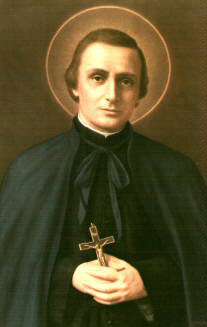 St. Peter Chanel: Saint of the Day for Sunday, April 28, 2024
 Prayer before a Crucifix: Prayer of the Day for Sunday, April 28, 2024


Copyright 2024 Catholic Online. All materials contained on this site, whether written, audible or visual are the exclusive property of Catholic Online and are protected under U.S. and International copyright laws, © Copyright 2024 Catholic Online. Any unauthorized use, without prior written consent of Catholic Online is strictly forbidden and prohibited.
Catholic Online is a Project of Your Catholic Voice Foundation, a Not-for-Profit Corporation. Your Catholic Voice Foundation has been granted a recognition of tax exemption under Section 501(c)(3) of the Internal Revenue Code. Federal Tax Identification Number: 81-0596847. Your gift is tax-deductible as allowed by law.