We ask you, humbly: don't scroll away.
Hi readers, it seems you use Catholic Online a lot; that's great! It's a little awkward to ask, but we need your help. If you have already donated, we sincerely thank you. We're not salespeople, but we depend on donations averaging $14.76 and fewer than 1% of readers give. If you donate just $5.00, the price of your coffee, Catholic Online School could keep thriving. Thank you.Help Now >
Abstemii
FREE Catholic Classes
An abstemius is one who cannot take wine without risk of vomiting. As, therefore, the consecration at Mass must be effected in both species, of bread and wine, an abstemius is consequently irregular.
St. Alphonsus, following the opinion of Francisco Suárez, teaches that such irregularity is de jure divino ; and that, therefore, the Pope cannot dispense from it. The term is also applied to one who has a strong distaste for wine, though able to take a small quantity. A distaste of this nature does not constitute irregularity, but a papal dispensation is required, in order to excuse from the use of wine at the purification of the chalice and the ablution of the priest's fingers at the end of Mass. In these cases the use of wine is an ecclesiastical law from whose observance the Church has power to dispense. A decree of Propaganda, dated 13 January, 1665, grants a dispensation in this sense to missionaries in China, on account of the scarcity of wine; various similar rulings are to be found in the collection of the decrees of the Congregation of Rites. Abstention from the use of wine has, occasionally, been declared obligatory by heretics. It was one of the tenets of Gnosticism in the second century. Tatian, the founder of the sect known as the Encratites, forbade the use of wine, and his adherents refused to make use of it even in the Sacrament of the Altar; in its place they used water. These heretics, mentioned by St. Irenæus (Adv. Hær., I, xxx), are known as Hydroparastes, Aquarians, and Encratites. The great Manichean heresy followed a few years later. These heretics, in their turn, professed the greatest possible aversion to wine, as one of the sources of sin. St. Augustine, in his book against heresies, ch. xlvi, says of them, "Vinum non bibunt, dicentes esse fel principum tenebrarum" — "They drink no wine, for they say it is the gall of the princes of darkness." They made use of water in celebrating Mass. At the beginning of the Reformation, one of the grievances alleged against the Church was that she did not allow the faithful to communicate under both kinds. "We excuse the Church ", so runs the Augsburg Confession, "which has suffered the injustice of only receiving under one kind, not being able to have both; but we do not excuse the authors of this injustice, who maintain that it was right to forbid the administering of the complete Sacrament." How, then, were those to be admitted to the Lord's Table, who were unable to communicate under the species of wine? A decree of the Synod of Poitiers, in 1560, reads: "The Bread of the Lord's Supper shall be administered to those who cannot drink the wine, on condition that they shall declare that they do not abstain out of contempt." Other Protestant synods also lay down the rule that persons unable to take wine shall be admitted to the Lord's Table on condition that they shall at least touch with their lips the cup which holds the species of wine; Jurieu, on the other hand, starting from the principle that Christ has founded the essence of the Eucharist on the two species, held that an abstemius does not receive the Sacrament, because it consists of two parts, and he receives only one. A great controversy ensued among the Protestants themselves on this point. Bossuet held that communion under both kinds could not be of divine obligation, since many would thereby be deprived of the Sacrament owing to a natural weakness.
We ask you, humbly: don't scroll away.
Hi readers, it seems you use Catholic Online a lot; that's great! It's a little awkward to ask, but we need your help. If you have already donated, we sincerely thank you. We're not salespeople, but we depend on donations averaging $14.76 and fewer than 1% of readers give. If you donate just $5.00, the price of your coffee, Catholic Online School could keep thriving. Thank you.Help Now >


Join the Movement
When you sign up below, you don't just join an email list - you're joining an entire movement for Free world class Catholic education.


-

-
Mysteries of the Rosary
-
St. Faustina Kowalska
-
Litany of the Blessed Virgin Mary
-
Saint of the Day for Wednesday, Oct 4th, 2023
-
Popular Saints
-
St. Francis of Assisi
-
Bible
-
Female / Women Saints
-
7 Morning Prayers you need to get your day started with God
-
Litany of the Blessed Virgin Mary


Sacrifices of Faith: The Pro-Life Legacies of St. Gianna and Jessica Hanna
-
How to love God by caring for our bodies
-
Pope Francis calls for negotiations to End Russia-Ukraine War
-
Pope Francis Contemplates Return to U.S. for United Nations Assembly Address
-
Pope Francis Calls on Faithful to Embrace Faith, Hope, and Charity in New Teaching Series


Daily Catholic
- Daily Readings for Sunday, April 28, 2024
- St. Peter Chanel: Saint of the Day for Sunday, April 28, 2024
- Prayer before a Crucifix: Prayer of the Day for Sunday, April 28, 2024
- Daily Readings for Saturday, April 27, 2024
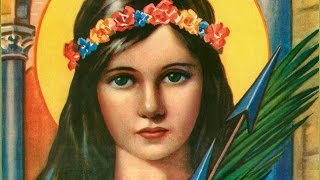
- St. Zita: Saint of the Day for Saturday, April 27, 2024
- Prayer for the Dead # 2: Prayer of the Day for Saturday, April 27, 2024
 Daily Readings for Sunday, April 28, 2024
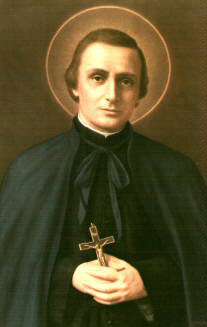 St. Peter Chanel: Saint of the Day for Sunday, April 28, 2024
 Prayer before a Crucifix: Prayer of the Day for Sunday, April 28, 2024
We ask you, humbly: don't scroll away.
Hi readers, it seems you use Catholic Online a lot; that's great! It's a little awkward to ask, but we need your help. If you have already donated, we sincerely thank you. We're not salespeople, but we depend on donations averaging $14.76 and fewer than 1% of readers give. If you donate just $5.00, the price of your coffee, Catholic Online School could keep thriving. Thank you.Help Now >

Copyright 2024 Catholic Online. All materials contained on this site, whether written, audible or visual are the exclusive property of Catholic Online and are protected under U.S. and International copyright laws, © Copyright 2024 Catholic Online. Any unauthorized use, without prior written consent of Catholic Online is strictly forbidden and prohibited.
Catholic Online is a Project of Your Catholic Voice Foundation, a Not-for-Profit Corporation. Your Catholic Voice Foundation has been granted a recognition of tax exemption under Section 501(c)(3) of the Internal Revenue Code. Federal Tax Identification Number: 81-0596847. Your gift is tax-deductible as allowed by law.
