We ask you, humbly: don't scroll away.
Hi readers, it seems you use Catholic Online a lot; that's great! It's a little awkward to ask, but we need your help. If you have already donated, we sincerely thank you. We're not salespeople, but we depend on donations averaging $14.76 and fewer than 1% of readers give. If you donate just $5.00, the price of your coffee, Catholic Online School could keep thriving. Thank you.Help Now >
Diego Hurtade de Mendoza
FREE Catholic Classes
A Spanish diplomat and writer, and one of the greatest figures in the history of Spanish politics and letters; born in Granada, of noble parentage, about 1503; died in Madrid, 1575. He received his early education under private tutors and later at the University of Salamanca . A powerful personality, he was a man who carried to a successful termination whatever he undertook. He was destined originally for the Church, and acquired much knowledge suited to further his ecclesiastical advancement, both at home, where he learned to speak Arabic fluently, and at Salamanca, where he studied Latin, Greek, philosophy, civil and canon law. But he preferred politics and literature, and attracted the notice of Charles V, who sent him in 1530 as ambassador to the Republic of Venice . In 1543 the emperor sent him as one of his representatives to the Council of Trent , where he successfully sustained the imperial interests. While at the Council he was appointed in 1547 special ambassador to Rome and captain-general of Siena in Tuscany, whence he returned to Spain in 1554.
As a poet Mendoza excelled in both the older Spanish and the new Italian measures, but his specimens of the latter show more richness of thought, and he probably exercised considerable influence in popularizing and securing the triumph of the Italian school of lyric poetry in Spain. In his "Guerra de Granada", published in Lisbon in 1627, he shows himself a master of prose. It was written during his exile at Granada (1568-1571), whither he had been sent by Philip II after some trouble with a noble at court, and is a masterly piece of Spanish prose writing. His "Lazarillo de Tormes" is a work of genius. He is said to have written it while he was at the university or soon after leaving it. It is the autobiography of a boy born on the banks of the Tormes near Salamanca, and its object is to satirize all classes of Spanish society. It is written in rich idiomatic Spanish, and after 1553, when it first appeared, it went through many editions, both in Spain and abroad. Like other books that enjoy great popularity, it led to many imitations.

Just before his death he presented to Philip II for the Escurial library his valuable collection of books and manuscripts including the Arabic ones he had found in Granada, and they remain there to this day. La Biblioteca de Autores Españoles (Madrid, 1848-86) publishes his "Lazarillo" in the third volume, his poems in the thirty-second, and selected works in the twenty-first and thirty-sixth volumes.
We ask you, humbly: don't scroll away.
Hi readers, it seems you use Catholic Online a lot; that's great! It's a little awkward to ask, but we need your help. If you have already donated, we sincerely thank you. We're not salespeople, but we depend on donations averaging $14.76 and fewer than 1% of readers give. If you donate just $5.00, the price of your coffee, Catholic Online School could keep thriving. Thank you.Help Now >

Join the Movement
When you sign up below, you don't just join an email list - you're joining an entire movement for Free world class Catholic education.


-

-
Mysteries of the Rosary
-
St. Faustina Kowalska
-
Litany of the Blessed Virgin Mary
-
Saint of the Day for Wednesday, Oct 4th, 2023
-
Popular Saints
-
St. Francis of Assisi
-
Bible
-
Female / Women Saints
-
7 Morning Prayers you need to get your day started with God
-
Litany of the Blessed Virgin Mary

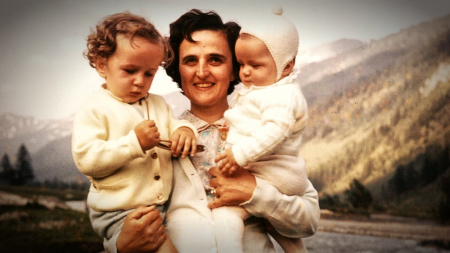
Sacrifices of Faith: The Pro-Life Legacies of St. Gianna and Jessica Hanna
-
How to love God by caring for our bodies
-
Pope Francis calls for negotiations to End Russia-Ukraine War
-
Pope Francis Contemplates Return to U.S. for United Nations Assembly Address
-
Pope Francis Calls on Faithful to Embrace Faith, Hope, and Charity in New Teaching Series

Daily Catholic
- Daily Readings for Monday, April 29, 2024
- St. Catherine of Siena: Saint of the Day for Monday, April 29, 2024
- Prayer for the Dead # 3: Prayer of the Day for Monday, April 29, 2024
- Daily Readings for Sunday, April 28, 2024
- St. Peter Chanel: Saint of the Day for Sunday, April 28, 2024
- Prayer before a Crucifix: Prayer of the Day for Sunday, April 28, 2024
 Daily Readings for Monday, April 29, 2024
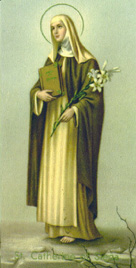 St. Catherine of Siena: Saint of the Day for Monday, April 29, 2024
 Prayer for the Dead # 3: Prayer of the Day for Monday, April 29, 2024
We ask you, humbly: don't scroll away.
Hi readers, it seems you use Catholic Online a lot; that's great! It's a little awkward to ask, but we need your help. If you have already donated, we sincerely thank you. We're not salespeople, but we depend on donations averaging $14.76 and fewer than 1% of readers give. If you donate just $5.00, the price of your coffee, Catholic Online School could keep thriving. Thank you.Help Now >

Copyright 2024 Catholic Online. All materials contained on this site, whether written, audible or visual are the exclusive property of Catholic Online and are protected under U.S. and International copyright laws, © Copyright 2024 Catholic Online. Any unauthorized use, without prior written consent of Catholic Online is strictly forbidden and prohibited.
Catholic Online is a Project of Your Catholic Voice Foundation, a Not-for-Profit Corporation. Your Catholic Voice Foundation has been granted a recognition of tax exemption under Section 501(c)(3) of the Internal Revenue Code. Federal Tax Identification Number: 81-0596847. Your gift is tax-deductible as allowed by law.