Juan de Medina
FREE Catholic Classes
Theologian ; born 1490; died 1547; he occupied the first rank among the theologians of the sixteenth century. He was born at Medina de Pomar in the Province of Burgos, and not at Alcalá as some writers state. Very little has been written about his life though he is repeatedly quoted and praised by several theologians of his time. He entered the College of St. Ildefonsus at Alcalá, 20 May, 1516, took doctor's degrees in philosophy and theology, and soon after was made canon and master of theology at the university. He was selected as primary professor of theology in the College of St. Ildefonsus in succession to Michael Carasco, whom Cardinal Ximenes wished to be made perpetual Rector of the College : "Ximenes perpetuum rectorem esse voluerit". From about 1526 and for the space of twenty years, Medina filled his position with the greatest distinction. Alvarez Gomez says that Medina had a wonderful power of presenting the most intricate questions in a simple and clear style so that his pupils had no difficulty in understanding him -- "nihil esset tam perplexum aut obscurum quod vel tardissimus non assequeretur". His love of study impaired his health he died at the age of fifty-seven years. Medina's works are principally on moral theology and ethics. Some of his opinions were not in accordance with the doctrine propounded at the Council of Trent. The "Diccionario Enciclop. Hispano Americano" says that his treatise "de Poenitientia" was put on the Index published in 1707; the edition of the Index printed in 1711 does not give Medina's work, nor does any of the subsequent editions. The Council of Trent declares that at the hour of death there is no "reservatio" and that all priests can absolve "in articulo mortis". Medina says "that absolution given by an excommunicated priest is invalid"; and again, "at a time of necessity (arliculo necessitatis) any priest, not suspended or excommunicated can absolve any person ". His opinions on the "materia" for sacramental absolution, and on the "Copia confessariorum" seem opposed to the teaching of the council on these points. Alvarez Gomez and Andrea Schott state that Media was buried in the church of St. Ildefonsus. The first lines of the epitaph on his tomb are:
Complutense decus jacet hic, attente viator
Ter tumultum lustra, ter pia thura crema
Hoc moriente silet vox, qua non clarior unquam
Compluti fulsit, nec fuit illa.
Many editions of Medina's works were printed in the fifteenth and sixteenth centuries. His brother John de Medina brought out the theological books at Alcalá in 1544 and sqq.; Salamanca, 1555; Ingoldstadt, 158I; Brescia, 1590-l606; Cologne, 1607 etc.
We ask you, humbly: don't scroll away.
Hi readers, it seems you use Catholic Online a lot; that's great! It's a little awkward to ask, but we need your help. If you have already donated, we sincerely thank you. We're not salespeople, but we depend on donations averaging $14.76 and fewer than 1% of readers give. If you donate just $5.00, the price of your coffee, Catholic Online School could keep thriving. Thank you.Help Now >
We ask you, humbly: don't scroll away.
Hi readers, it seems you use Catholic Online a lot; that's great! It's a little awkward to ask, but we need your help. If you have already donated, we sincerely thank you. We're not salespeople, but we depend on donations averaging $14.76 and fewer than 1% of readers give. If you donate just $5.00, the price of your coffee, Catholic Online School could keep thriving. Thank you.Help Now >
Join the Movement
When you sign up below, you don't just join an email list - you're joining an entire movement for Free world class Catholic education.


-

-
Mysteries of the Rosary
-
St. Faustina Kowalska
-
Litany of the Blessed Virgin Mary
-
Saint of the Day for Wednesday, Oct 4th, 2023
-
Popular Saints
-
St. Francis of Assisi
-
Bible
-
Female / Women Saints
-
7 Morning Prayers you need to get your day started with God
-
Litany of the Blessed Virgin Mary

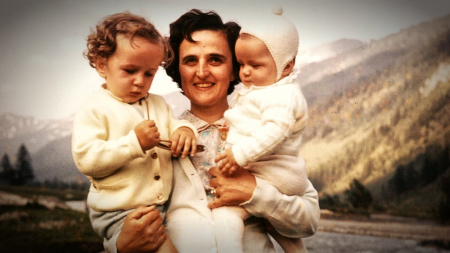
Sacrifices of Faith: The Pro-Life Legacies of St. Gianna and Jessica Hanna
-
How to love God by caring for our bodies
-
Pope Francis calls for negotiations to End Russia-Ukraine War
-
Pope Francis Contemplates Return to U.S. for United Nations Assembly Address
-
Pope Francis Calls on Faithful to Embrace Faith, Hope, and Charity in New Teaching Series


Daily Catholic
- Daily Readings for Monday, April 29, 2024
- St. Catherine of Siena: Saint of the Day for Monday, April 29, 2024
- Prayer for the Dead # 3: Prayer of the Day for Monday, April 29, 2024
- Daily Readings for Sunday, April 28, 2024
- St. Peter Chanel: Saint of the Day for Sunday, April 28, 2024
- Prayer before a Crucifix: Prayer of the Day for Sunday, April 28, 2024
 Daily Readings for Monday, April 29, 2024
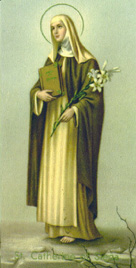 St. Catherine of Siena: Saint of the Day for Monday, April 29, 2024
 Prayer for the Dead # 3: Prayer of the Day for Monday, April 29, 2024


Copyright 2024 Catholic Online. All materials contained on this site, whether written, audible or visual are the exclusive property of Catholic Online and are protected under U.S. and International copyright laws, © Copyright 2024 Catholic Online. Any unauthorized use, without prior written consent of Catholic Online is strictly forbidden and prohibited.
Catholic Online is a Project of Your Catholic Voice Foundation, a Not-for-Profit Corporation. Your Catholic Voice Foundation has been granted a recognition of tax exemption under Section 501(c)(3) of the Internal Revenue Code. Federal Tax Identification Number: 81-0596847. Your gift is tax-deductible as allowed by law.