We ask you, humbly: don't scroll away.
Hi readers, it seems you use Catholic Online a lot; that's great! It's a little awkward to ask, but we need your help. If you have already donated, we sincerely thank you. We're not salespeople, but we depend on donations averaging $14.76 and fewer than 1% of readers give. If you donate just $5.00, the price of your coffee, Catholic Online School could keep thriving. Thank you.Help Now >
Matthew Lang
FREE Catholic Classes
Cardinal, Bishop of Gurk and Archbishop of Salzburg, b. at Augsburg in 1468; d. at Salzburg, 30 March, 1540.
After receiving a secular education at Ingolstadt, Tübingen, and Vienna, he entered the chancery of Archbishop Berthold von Henneberg of Mainz, became secretary of Emperor Maximilian I in 1494, imperial councillor in 1501, and chancellor in 1508. The emperor esteemed him very highly, and gave him many ecclesiastical benefices. After being raised to the nobility with the title of "von Wellenburg" in 1498, he became provost of the cathedral of Augsburg in 1500, and shortly after also of that of Constance. In 1503 he was appointed coadjutor, and on 5 October, 1505, Prince- Bishop of Gurk. Though bishop, he remained in the imperial chancery as a layman, not even once visiting his diocese as long as he was Bishop of Gurk (from 1505 to 11 March, 1522). As imperial legate he directed the emperor's negotiations with France, Venice, Hungary, and the pope from 1508 to 1515. On 10 March, 1511, Pope Julius II created him cardinal, but kept him in petto until 24 November, 1512. Despite imperial influence he was unsuccessful in his aspirations to the Sees of Mainz, Magdeburg, Halberstadt, and Trent, but was finally appointed coadjutor of the See of Salzburg in 1514, against the express wish of Archbishop Leonard Keutschach of Salzburg. After the death of the latter, on 8 June, 1519, Lang became Archbishop of Salzburg. On 24 September, 1519, he was ordained priest and on the next day consecrated bishop. Though originally a promoter of the schismatic Council of Pisa, he later effected a settlement between the pope and the emperor, and joined the Lateran Council on 3 December, 1512. It was due chiefly to his influence that Charles V was elected emperor in 1519. He also induced Charles V in 1521 to take measures against Luther, suppressed the Peasants' War in his domain between 1525 and 1526, insisted on church reform at the synods which he held in Mühldorf in 1522 and 1537, and joined the league of Catholic princes at Ratisbon on 7 July, 1524. In 1529 he received the title of " Primate of Germany ". Cardinal Lang was a friend of letters but a proud and ambitious prince of the Church. His suppression of Protestantism and his ecclesiastical reforms were dictated rather by political than religious motives.
 Hi readers, it seems you use Catholic Online a lot; that's great! It's a little awkward to ask, but we need your help. If you have already donated, we sincerely thank you. We're not salespeople, but we depend on donations averaging $14.76 and fewer than 1% of readers give. If you donate just $5.00, the price of your coffee, Catholic Online School could keep thriving. Thank you. Help Now >
We ask you, humbly: don't scroll away.
Hi readers, it seems you use Catholic Online a lot; that's great! It's a little awkward to ask, but we need your help. If you have already donated, we sincerely thank you. We're not salespeople, but we depend on donations averaging $14.76 and fewer than 1% of readers give. If you donate just $5.00, the price of your coffee, Catholic Online School could keep thriving. Thank you.Help Now >

Join the Movement
When you sign up below, you don't just join an email list - you're joining an entire movement for Free world class Catholic education.


-

-
Mysteries of the Rosary
-
St. Faustina Kowalska
-
Litany of the Blessed Virgin Mary
-
Saint of the Day for Wednesday, Oct 4th, 2023
-
Popular Saints
-
St. Francis of Assisi
-
Bible
-
Female / Women Saints
-
7 Morning Prayers you need to get your day started with God
-
Litany of the Blessed Virgin Mary


Sacrifices of Faith: The Pro-Life Legacies of St. Gianna and Jessica Hanna
-
How to love God by caring for our bodies
-
Pope Francis calls for negotiations to End Russia-Ukraine War
-
Pope Francis Contemplates Return to U.S. for United Nations Assembly Address
-
Pope Francis Calls on Faithful to Embrace Faith, Hope, and Charity in New Teaching Series


Daily Catholic
- Daily Readings for Sunday, April 28, 2024
- St. Peter Chanel: Saint of the Day for Sunday, April 28, 2024
- Prayer before a Crucifix: Prayer of the Day for Sunday, April 28, 2024
- Daily Readings for Saturday, April 27, 2024
- St. Zita: Saint of the Day for Saturday, April 27, 2024
- Prayer for the Dead # 2: Prayer of the Day for Saturday, April 27, 2024
 Daily Readings for Sunday, April 28, 2024
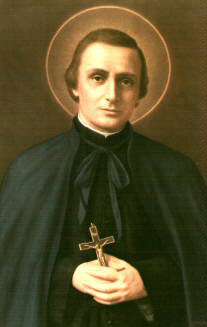 St. Peter Chanel: Saint of the Day for Sunday, April 28, 2024
 Prayer before a Crucifix: Prayer of the Day for Sunday, April 28, 2024


Copyright 2024 Catholic Online. All materials contained on this site, whether written, audible or visual are the exclusive property of Catholic Online and are protected under U.S. and International copyright laws, © Copyright 2024 Catholic Online. Any unauthorized use, without prior written consent of Catholic Online is strictly forbidden and prohibited.
Catholic Online is a Project of Your Catholic Voice Foundation, a Not-for-Profit Corporation. Your Catholic Voice Foundation has been granted a recognition of tax exemption under Section 501(c)(3) of the Internal Revenue Code. Federal Tax Identification Number: 81-0596847. Your gift is tax-deductible as allowed by law.