 Hi readers, it seems you use Catholic Online a lot; that's great! It's a little awkward to ask, but we need your help. If you have already donated, we sincerely thank you. We're not salespeople, but we depend on donations averaging $14.76 and fewer than 1% of readers give. If you donate just $5.00, the price of your coffee, Catholic Online School could keep thriving. Thank you. Help Now >
Judas Machabeus
FREE Catholic Classes
Third son of the priest Mathathias who with his family was the centre and soul of the patriotic and religious revolt of the Jews against the King of Syria ( 1 Maccabees 2:4 ). Various conjectures have been put forth as to the origin of his surname. The name appears to be derived from the Syriac word maqqaba (a hammer or mallet) and it was bestowed with reference to the crushing prowess displayed by Judas against the enemies of the nation, being equivalent to the name Martel given to Charles Martel. Judas was designated by his dying father as the new leader of the band of guerrilla warriors in year 167 B.C., and he remained in command until the year 161. He was animated with a great confidence in the help of the Lord in the good cause. He began his military operations by surprising and burning down many towns which had held out for the enemies of Israel, and when regular armed forces were sent to put a stop to his ravages, he did not refuse to meet them in the field ( 2 Maccabees 8:1-7 ). He proved himself to be an excellent tactician as well as an intrepid warrior. Among his military exploits are mentioned the defeat and slaying of Apollonius the recent plunderer of Jerusalem, and the utter rout of the Syrian forces led by the deputy governor Seron in an encounter at Bethoron ( 1 Maccabees 3:10-24 ). Other Syrian leaders were also vanquished by Judas, viz., Gorgias and Nicanor, Timotheus, Bachides, and Lysias ( 1 Maccabees 3:10 - 4:35 ).
We ask you, humbly: don't scroll away.
Hi readers, it seems you use Catholic Online a lot; that's great! It's a little awkward to ask, but we need your help. If you have already donated, we sincerely thank you. We're not salespeople, but we depend on donations averaging $14.76 and fewer than 1% of readers give. If you donate just $5.00, the price of your coffee, Catholic Online School could keep thriving. Thank you.Help Now >
These victories afforded a respite during which Judas turned his attention to the condition of the ruined city of Jerusalem and that of the Temple which had been ignominiously profaned. Having appointed a body of armed men to hold in check the Syrian garrison still occupying the citadel, the Jewish leader set about renovating and purifying the sanctuary, being aided in the work by the priests. When the renovation was completed the new Temple service was inaugurated by a feast of re-dedication which lasted eight days, and it was decreed that henceforth in memory of this event an annual feast also of eight days should be celebrated ( 1 Maccabees 4:36-59 ; 2 Maccabees 10:1-8 ; John 10:22 ). Some of the neighbouring tribes, alarmed at the progress of the Jews, took up arms against them, but they were easily vanquished by Judas, who then bent all his energies to bring a successful issue the war of independence against Syria. For three years he pursued this arduous task with relentless energy and patience and with varying success. In the meantime he sent messengers to Rome in order to secure the protection of the Government against the oppression of the Syrians. The mission was diplomatically successful, but before the negotiations had time to become known in the East, Judas had been defeated and slain on the battlefield at Laisa (161 B.C.) ( 1 Maccabees 4:60 - 9:18 ; 2 Maccabees 10-15 ).


Join the Movement
When you sign up below, you don't just join an email list - you're joining an entire movement for Free world class Catholic education.


-

-
Mysteries of the Rosary
-
St. Faustina Kowalska
-
Litany of the Blessed Virgin Mary
-
Saint of the Day for Wednesday, Oct 4th, 2023
-
Popular Saints
-
St. Francis of Assisi
-
Bible
-
Female / Women Saints
-
7 Morning Prayers you need to get your day started with God
-
Litany of the Blessed Virgin Mary

U.S. Catholic Parishes Experience Resurgence of Traditional Practices
-
Pope Francis Urges Faith and Prayers for Peace
-
Florida Welcomes Volunteer Chaplains to Public Schools
-
10 Fascinating Details About St. Joseph the Worker: Celebrating His Feast Day - May 1
-
St. Joseph the Worker: Model for Men, Young and Old

Daily Catholic
- Daily Readings for Thursday, May 02, 2024
- St. Athanasius: Saint of the Day for Thursday, May 02, 2024
- The Our Father: Prayer of the Day for Thursday, May 02, 2024
- Daily Readings for Wednesday, May 01, 2024
- St. Marculf: Saint of the Day for Wednesday, May 01, 2024
- To Saint Peregrine: Prayer of the Day for Wednesday, May 01, 2024
 Daily Readings for Thursday, May 02, 2024
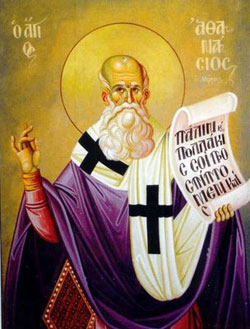 St. Athanasius: Saint of the Day for Thursday, May 02, 2024
 The Our Father: Prayer of the Day for Thursday, May 02, 2024
We ask you, humbly: don't scroll away.
Hi readers, it seems you use Catholic Online a lot; that's great! It's a little awkward to ask, but we need your help. If you have already donated, we sincerely thank you. We're not salespeople, but we depend on donations averaging $14.76 and fewer than 1% of readers give. If you donate just $5.00, the price of your coffee, Catholic Online School could keep thriving. Thank you.Help Now >


Copyright 2024 Catholic Online. All materials contained on this site, whether written, audible or visual are the exclusive property of Catholic Online and are protected under U.S. and International copyright laws, © Copyright 2024 Catholic Online. Any unauthorized use, without prior written consent of Catholic Online is strictly forbidden and prohibited.
Catholic Online is a Project of Your Catholic Voice Foundation, a Not-for-Profit Corporation. Your Catholic Voice Foundation has been granted a recognition of tax exemption under Section 501(c)(3) of the Internal Revenue Code. Federal Tax Identification Number: 81-0596847. Your gift is tax-deductible as allowed by law.