John of Falkenberg
FREE Catholic Classes
Author, b. at Falkenberg, Pomerania, Prussia, date unknown; d. about 1418 in Italy &151; or, according to other accounts, in his native town. Of his early life little is known, save that he entered the Order of St. Dominic and spent his novitiate in the convent at Kammin, a town of the above-named province. The fact that he was a master in Sacred Theology indicates that for a number of years he taught philosophy and theology in his order. His prominence in medieval history is due partly to the share he took in the great papal schism which wrought such confusion in the Church during the first part of the fifteenth century, but chiefly to his involving himself in the long-standing troubles between the Teutonic Order of Knights of Livonia and the King of Poland. In opposition to the general of his order, Bernard de Datis, and to many of the brethren of his province who were firm adherents of the antipopes Alexander V and John XXIII, he was a strong and ardent adherent of Gregory XII, the legitimate pope ; and, being of a quick and passionate temperament, he carried his opposition so far as to refuse publicly in the Council of Constance to acknowledge Bernard as his superior. In the protracted and disastrous conflict between the Teutonic Order of Knights and Prussia on the one side and King Wladislaw of Poland and Duke Withold of Lithuania on the other, his sympathies for the former found expression in a book in which he undertook to show that the King of Poland and his adherents were idolators and unbelievers and that the opposition against them was noble and praiseworthy. In this violent work he maintained the principles of the licitness of tyrannicide, advocated by the Franciscan, Jean Petit: that it was lawful to kill the King of Poland and his associates ( Mansi, "Conc." XXVII, 765). A little later he wrote "Tres tractatuli" (given as appendix to the works of Gerson in the edition of Dupin, V, 1013-32) in justification of his position and against Gerson, d'Ailly, and other doctors of the University of Paris, who had condemned the works of Jean Petit. In this work, moreover, he denied the bishops the right to declare his book or any part of it heretical, claiming that in matters of faith the pope and general councils alone are infallible. By order of Nicolaus, Archbishop of Gnesen, Falkenberg was thrown into prison. The committee appointed to examine the work recommended that it be burned. A similar verdict was given by a chapter of his order assembled at Strasburg from 30 May to June, 1417 which besides condemned the author to life imprisonment. The Poles earnestly demanded the condemnation of Falkenberg by the council, but in vain. When finally in the forty-fifth (last) session they attempted to force Martin V to give a definitive sentence, he imposed silence on their representatives and declared that in matters of faith and in this particular matter he would approve only what had been decided by the general council conciliariter . On his return to Rome, Martin V took Falkenberg with him and kept him for several years in close confinement. Whether he eventually regained his liberty or died there is uncertain.



Join the Movement
When you sign up below, you don't just join an email list - you're joining an entire movement for Free world class Catholic education.


-

-
Mysteries of the Rosary
-
St. Faustina Kowalska
-
Litany of the Blessed Virgin Mary
-
Saint of the Day for Wednesday, Oct 4th, 2023
-
Popular Saints
-
St. Francis of Assisi
-
Bible
-
Female / Women Saints
-
7 Morning Prayers you need to get your day started with God
-
Litany of the Blessed Virgin Mary

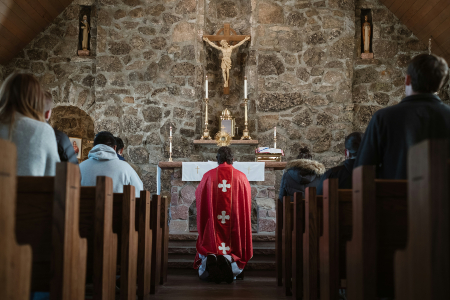
U.S. Catholic Parishes Experience Resurgence of Traditional Practices
-
Pope Francis Urges Faith and Prayers for Peace
-
Florida Welcomes Volunteer Chaplains to Public Schools
-
10 Fascinating Details About St. Joseph the Worker: Celebrating His Feast Day - May 1
-
St. Joseph the Worker: Model for Men, Young and Old

Daily Catholic
- Daily Readings for Thursday, May 02, 2024
- St. Athanasius: Saint of the Day for Thursday, May 02, 2024
- The Our Father: Prayer of the Day for Thursday, May 02, 2024
- Daily Readings for Wednesday, May 01, 2024
- St. Marculf: Saint of the Day for Wednesday, May 01, 2024
- To Saint Peregrine: Prayer of the Day for Wednesday, May 01, 2024
 Daily Readings for Thursday, May 02, 2024
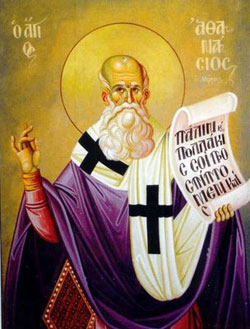 St. Athanasius: Saint of the Day for Thursday, May 02, 2024
 The Our Father: Prayer of the Day for Thursday, May 02, 2024
We ask you, humbly: don't scroll away.
Hi readers, it seems you use Catholic Online a lot; that's great! It's a little awkward to ask, but we need your help. If you have already donated, we sincerely thank you. We're not salespeople, but we depend on donations averaging $14.76 and fewer than 1% of readers give. If you donate just $5.00, the price of your coffee, Catholic Online School could keep thriving. Thank you.Help Now >

Copyright 2024 Catholic Online. All materials contained on this site, whether written, audible or visual are the exclusive property of Catholic Online and are protected under U.S. and International copyright laws, © Copyright 2024 Catholic Online. Any unauthorized use, without prior written consent of Catholic Online is strictly forbidden and prohibited.
Catholic Online is a Project of Your Catholic Voice Foundation, a Not-for-Profit Corporation. Your Catholic Voice Foundation has been granted a recognition of tax exemption under Section 501(c)(3) of the Internal Revenue Code. Federal Tax Identification Number: 81-0596847. Your gift is tax-deductible as allowed by law.