Irnerius
FREE Catholic Classes
(GARNERIUS)
An Italian jurist and founder of the School of Glossators, b. at Bologna about 1050; d. there about 1130. Though he was one of the most famous jurists of the Middle Ages, very little is known concerning his life and works, and it is only during the last twenty years that he has received the attention which his influence on the history and development of medieval jurisprudence demands. He was probably little over twenty years of age when he already taught didactics and rhetoric at Bologna. At the instance of Countess Matilda of Tuscany he began to devote himself to the study of jurisprudence, taking the Justinian code as a guide. Up to his time the study of jurisprudence had been much neglected in the empire, and he had to depend to a great extent on private studies, though it is probable that for a time he frequented a law school in Rome. After teaching jurisprudence for a short while in Rome he returned to Bologna, where he founded a new school of jurisprudence in 1084. It appears that some jurisprudence had been taught at Bologna, before Irnerius founded his school, by a certain Pepo and a few others; but the great impulse which juridical studies received at Bologna at this time, and from there began to spread throughout Europe, was entirely due to the school of Irnerius. He introduced the custom of explaining the Roman law by means of glosses, which originally were meagre interlinear elucidations of the text. But since the glosses were often too extensive to be inserted between the lines of the text, he began to write them on the margin of the page, thus being the first to introduce the marginal glosses which afterwards came into general use. After the death of Pope Paschal II , he defended the rights of Emperor Henry V in the papal election and upheld the legality of the election of the imperial antipope, Gregory VIII.

Irnerius is the author of numerous juridical works, but most of them have either been lost, or their genuineness is not sufficiently established. His chief work is "Summa Codicis", which is of a special historical value, because it is the first medieval system of Roman jurisprudence. It was recently edited with a critical introduction by Fitting, "Summa Codicis des Irnerius, mit einer Einleitung" (Berlin, 1894). Another important work generally ascribed to Irnerius is "Quaestiones de juris subtilitatibus". It was also edited by Fitting, "Quaestiones de juris subtilitatibus des Irnerius, mit einer Einleitung" (Festschrift zum 200jährigern Jubiläum der Universitat Halle-Wittenberg, 1894). The other juridical works and glosses that are ascribed to Irnerius are extant only in fragments, or their authorship is still too uncertain.
We ask you, humbly: don't scroll away.
Hi readers, it seems you use Catholic Online a lot; that's great! It's a little awkward to ask, but we need your help. If you have already donated, we sincerely thank you. We're not salespeople, but we depend on donations averaging $14.76 and fewer than 1% of readers give. If you donate just $5.00, the price of your coffee, Catholic Online School could keep thriving. Thank you.Help Now >

Join the Movement
When you sign up below, you don't just join an email list - you're joining an entire movement for Free world class Catholic education.


-

-
Mysteries of the Rosary
-
St. Faustina Kowalska
-
Litany of the Blessed Virgin Mary
-
Saint of the Day for Wednesday, Oct 4th, 2023
-
Popular Saints
-
St. Francis of Assisi
-
Bible
-
Female / Women Saints
-
7 Morning Prayers you need to get your day started with God
-
Litany of the Blessed Virgin Mary


Sacrifices of Faith: The Pro-Life Legacies of St. Gianna and Jessica Hanna
-
How to love God by caring for our bodies
-
Pope Francis calls for negotiations to End Russia-Ukraine War
-
Pope Francis Contemplates Return to U.S. for United Nations Assembly Address
-
Pope Francis Calls on Faithful to Embrace Faith, Hope, and Charity in New Teaching Series


Daily Catholic
- Daily Readings for Sunday, April 28, 2024
- St. Peter Chanel: Saint of the Day for Sunday, April 28, 2024
- Prayer before a Crucifix: Prayer of the Day for Sunday, April 28, 2024
- Daily Readings for Saturday, April 27, 2024
- St. Zita: Saint of the Day for Saturday, April 27, 2024
- Prayer for the Dead # 2: Prayer of the Day for Saturday, April 27, 2024
 Daily Readings for Sunday, April 28, 2024
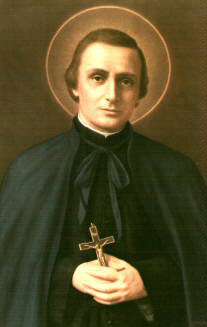 St. Peter Chanel: Saint of the Day for Sunday, April 28, 2024
 Prayer before a Crucifix: Prayer of the Day for Sunday, April 28, 2024



Copyright 2024 Catholic Online. All materials contained on this site, whether written, audible or visual are the exclusive property of Catholic Online and are protected under U.S. and International copyright laws, © Copyright 2024 Catholic Online. Any unauthorized use, without prior written consent of Catholic Online is strictly forbidden and prohibited.
Catholic Online is a Project of Your Catholic Voice Foundation, a Not-for-Profit Corporation. Your Catholic Voice Foundation has been granted a recognition of tax exemption under Section 501(c)(3) of the Internal Revenue Code. Federal Tax Identification Number: 81-0596847. Your gift is tax-deductible as allowed by law.
