Ven. William Hartley
FREE Catholic Classes
Martyr ; b. at Wyn, in Derbyshire, England, of a yeoman family about 1557; d. 5 October, 1588. At eighteen he matriculated at St. John's, Oxford, where he became a chaplain. Being ejected by the vice-chancellor, Tobie Mathew, in 1579, he went to Reims in August, was ordained at Châlons, and returned to England in June, 1580. He was of great service to Fathers Persons and Campion in printing and distributing their books, but was eventually arrested, 13 August, 1581, and sent to Marshalsea Prison, London. Here he was detected saying Mass in a cell before Lord Vaux, and for this he was laid in irons (5 December, 1583). He was indicted for high treason, 7 February, 1584, but for some unknown reason, not tried. In January, 1585, he was sent into exile. He then spent some little time at Reims, recovering his health, and made a pilgrimage to Rome (15 April, 1586), before returning to his perilous mission. In September, 1588, he was arrested in Holborn, London, and, as his friend father Warford said, "being beset by the deceits of the heretics, incurred the suspicion of having apostatized. But the event showed how unjust the suspicion was; when he suffered at Tyburn he won the greatest credit for constancy. He was a man of the meekest disposition and naturally virtuous, modest, and grave, with a sober and peaceful look. His beard was blackish and his height moderate" ("Acts of English Martyrs ", cited below, 272).
We ask you, humbly: don't scroll away.
Hi readers, it seems you use Catholic Online a lot; that's great! It's a little awkward to ask, but we need your help. If you have already donated, we sincerely thank you. We're not salespeople, but we depend on donations averaging $14.76 and fewer than 1% of readers give. If you donate just $5.00, the price of your coffee, Catholic Online School could keep thriving. Thank you.Help Now >
The Armada year was for Catholics both the time of worst bloodshed and of the greatest dearth of news, and this explains why we know but little of Hartley's companions. The first was a priest, the Venerable John Hewitt, son of a draper at York and a student at Caius College, Cambridge. He had once been in York prison, but was arrested in Grey's Inn Lane, London, 10 March, 1857, going under the name of Weldon, and died under that name; this had led several early martyrologists into the curious mistake of making him into two martyrs, Hewett dying at York, and Weldon at London. Hartley's second companion was the Venerable Robert Sutton, a tutor or schoolmaster, born at Kegworth in Leichestershire, who had practiced his profession in Paternoster Row, London. The fourth [sic] was John Harrison, alias Symons, who had carried letters from one priest to another. As he had before "been slandered to be a spy" we can guess why his fame suffered some obscurity. It is also hardly doubtful that his name, Harrison, was confounded with that of either Matthias or James Harrison, priests, who suffered martyrdom in 1599 or 1602 respectively. This perhaps explains why his name has fallen out of the process of the English martyrs, and in its place we find inserted that of Venerable Richard Williams, a " Queen Mary priest " who really suffered four years later.
 Hi readers, it seems you use Catholic Online a lot; that's great! It's a little awkward to ask, but we need your help. If you have already donated, we sincerely thank you. We're not salespeople, but we depend on donations averaging $14.76 and fewer than 1% of readers give. If you donate just $5.00, the price of your coffee, Catholic Online School could keep thriving. Thank you. Help Now >

Join the Movement
When you sign up below, you don't just join an email list - you're joining an entire movement for Free world class Catholic education.


-

-
Mysteries of the Rosary
-
St. Faustina Kowalska
-
Litany of the Blessed Virgin Mary
-
Saint of the Day for Wednesday, Oct 4th, 2023
-
Popular Saints
-
St. Francis of Assisi
-
Bible
-
Female / Women Saints
-
7 Morning Prayers you need to get your day started with God
-
Litany of the Blessed Virgin Mary


Sacrifices of Faith: The Pro-Life Legacies of St. Gianna and Jessica Hanna
-
How to love God by caring for our bodies
-
Pope Francis calls for negotiations to End Russia-Ukraine War
-
Pope Francis Contemplates Return to U.S. for United Nations Assembly Address
-
Pope Francis Calls on Faithful to Embrace Faith, Hope, and Charity in New Teaching Series


Daily Catholic
- Daily Readings for Sunday, April 28, 2024
- St. Peter Chanel: Saint of the Day for Sunday, April 28, 2024
- Prayer before a Crucifix: Prayer of the Day for Sunday, April 28, 2024
- Daily Readings for Saturday, April 27, 2024
- St. Zita: Saint of the Day for Saturday, April 27, 2024
- Prayer for the Dead # 2: Prayer of the Day for Saturday, April 27, 2024
 Daily Readings for Sunday, April 28, 2024
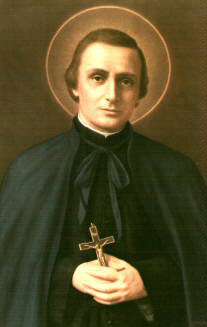 St. Peter Chanel: Saint of the Day for Sunday, April 28, 2024
 Prayer before a Crucifix: Prayer of the Day for Sunday, April 28, 2024


Copyright 2024 Catholic Online. All materials contained on this site, whether written, audible or visual are the exclusive property of Catholic Online and are protected under U.S. and International copyright laws, © Copyright 2024 Catholic Online. Any unauthorized use, without prior written consent of Catholic Online is strictly forbidden and prohibited.
Catholic Online is a Project of Your Catholic Voice Foundation, a Not-for-Profit Corporation. Your Catholic Voice Foundation has been granted a recognition of tax exemption under Section 501(c)(3) of the Internal Revenue Code. Federal Tax Identification Number: 81-0596847. Your gift is tax-deductible as allowed by law.