We ask you, humbly: don't scroll away.
Hi readers, it seems you use Catholic Online a lot; that's great! It's a little awkward to ask, but we need your help. If you have already donated, we sincerely thank you. We're not salespeople, but we depend on donations averaging $14.76 and fewer than 1% of readers give. If you donate just $5.00, the price of your coffee, Catholic Online School could keep thriving. Thank you.Help Now >
Aggeus (Haggai)
FREE Catholic Classes
Name and personal life
Aggeus, the tenth among the minor prophets of the Old Testament, is called in the Hebrew text, Hággáy , and in the Septuagint Haggaios , whence the Latin form Aggeus. The exact meaning of his name is uncertain. Many scholars consider it as an adjective signifying "the festive one" (born on feast-day ), while others take it to be an abbreviated form of the noun Hággíyyah, "my feast is Yahweh ", a Jewish proper name found in 1 Paralipomenon 6:15 (Vulgate: 1 Chronicles 6:30 ).
Great uncertainty prevails also concerning the prophet's personal life. The book which bears his name is very short, and contains no detailed information about its author. The few passages which speak of him refer simply to the occasion on which he had to deliver a divine message in Jerusalem, during the second year of the reign of the Persian King, Darius I (520 B.C.) And all that Jewish tradition tells of Aggeus does not seem to have much, if any, historical basis. It states that he was born in Chaldea during the Babylonian Captivity, was a young man when he came to Jerusalem with the returning exiles, and was buried in the Holy City among the priests. It also represents him as an angel in human form, as one of the men who were with Daniel when he saw the vision related in Daniel 10:7, as a member of the so-called Great Synagogue, as surviving until the entry of Alexander the Great into Jerusalem (331 B.C.), and even until the time of Our Saviour . Obviously, these and similar traditions deserve but little credence.

Historical circumstances
Upon the return from Babylon (536 B.C.) the Jews, full of religious zeal, promptly set up an altar to the God of Israel, and reorganized His sacrificial worship. They next celebrated the feast of Tabernacles, and some time later laid the foundation of the "Second" Temple, called also the Temple of Zorobabel. Presently the Samaritans -- that is, the mixed races which dwelt in Samaria -- prevented them, by an appeal to the Persian authorities, from proceeding further with the rebuilding of the Temple. In fact, the work was interrupted for sixteen years, during which various circumstances, such as the Persian invasion of Egypt in 527 B.C., a succession of bad seasons entailing the failure of the harvest and the vintage, the indulgence in luxury and self-seeking by the wealthier classes of Jerusalem, caused the Jews to neglect altogether the restoration of the House of the Lord. Toward the end of this period the political struggles through which Persia passed would have made it impossible for its rulers to interfere with the work of reconstruction in Jerusalem, even had they wished to do so, and this was distinctly realized by the Prophet Aggeus. At length, in the second year of the reign of Darius the son of Hystaspes (520 B.C.), Aggeus came forward in the name of the Lord to rebuke the apathy of the Jews, and convince them that the time had come to complete their national sanctuary, that outward symbol of the Divine presence among them.
The prophecies
The book of Aggeus is made up of four prophetical utterances, each one headed by the date on which it was delivered.
- The first (1:1,2) is ascribed to the first day of the sixth month (August) of the second year of Darius' reign. It urges the Jews to resume the work of rearing the Temple, and not to be turned aside from this duty by the enjoyment of their luxurious homes. It also represents a recent drought as a divine punishment for their past neglect. This first utterance is followed by a brief account (1:12-14) of its effect upon the hearers; three weeks later work was started on the Temple.
- In his second utterance (2:1-9), dated the twentieth day of the same month, the prophet foretells that the new House, which then appears so poor in comparison with the former Temple of Solomon, will one day be incomparably more glorious.
- The third utterance (2:11-20), referred to the twenty-fourth of the ninth month (Nov.-Dec.), declares that as long as God's House is not rebuilt, the life of the Jews will be tainted and blasted, but that the divine blessing will reward their renewed zeal.
- The last utterance (2:20-23), ascribed to the same day as the preceding, tells of the divine favour which, in the approaching overthrow of the heathen nations, will be bestowed on Zorobabel, the scion and representative of the royal house of David.
The simple reading of these oracles makes one feel that although they are shaped into parallel clauses such as are usual in Hebrew poetry, their literary style is rugged and unadorned, extremely direct, and, therefore, most natural on the part of a prophet intent on convincing his hearers of their duty to rebuild the House of the Lord.
 Hi readers, it seems you use Catholic Online a lot; that's great! It's a little awkward to ask, but we need your help. If you have already donated, we sincerely thank you. We're not salespeople, but we depend on donations averaging $14.76 and fewer than 1% of readers give. If you donate just $5.00, the price of your coffee, Catholic Online School could keep thriving. Thank you. Help Now >
Besides this harmony of the style with the general tone of the book of Aggeus, strong internal data occur to confirm the traditional date and authorship of that sacred writing. In particular, each portion of the work is supplied with such precise dates and ascribed so expressly to Aggeus, that each utterance bears the distinct mark of having been written soon after it was delivered.
It should also be borne in mind that although the prophecies of Aggeus were directly meant to secure the immediate rearing of the Lord's House, they are not without a much higher import. The three passages which are usually brought forth as truly Messianic, are 2:7-8, 2:10, and 2:21-24. It is true that the meaning of the first two passages in the original Hebrew differs somewhat from the present rendering of the Vulgate, but all three contain a reference to Messianic times.
The primitive text of the book of Aggeus has been particularly well preserved. The few variations which occur in the manuscripts are due to errors in transcribing, and do not affect materially the sense of the prophecy.
Besides the short prophetical work which bears his name, Aggeus has also been credited, but wrongly, with the authorship of Psalms 111 and 145 . ( See P SALMS .)
We ask you, humbly: don't scroll away.
Hi readers, it seems you use Catholic Online a lot; that's great! It's a little awkward to ask, but we need your help. If you have already donated, we sincerely thank you. We're not salespeople, but we depend on donations averaging $14.76 and fewer than 1% of readers give. If you donate just $5.00, the price of your coffee, Catholic Online School could keep thriving. Thank you.Help Now >

Join the Movement
When you sign up below, you don't just join an email list - you're joining an entire movement for Free world class Catholic education.


-

-
Mysteries of the Rosary
-
St. Faustina Kowalska
-
Litany of the Blessed Virgin Mary
-
Saint of the Day for Wednesday, Oct 4th, 2023
-
Popular Saints
-
St. Francis of Assisi
-
Bible
-
Female / Women Saints
-
7 Morning Prayers you need to get your day started with God
-
Litany of the Blessed Virgin Mary


Sacrifices of Faith: The Pro-Life Legacies of St. Gianna and Jessica Hanna
-
How to love God by caring for our bodies
-
Pope Francis calls for negotiations to End Russia-Ukraine War
-
Pope Francis Contemplates Return to U.S. for United Nations Assembly Address
-
Pope Francis Calls on Faithful to Embrace Faith, Hope, and Charity in New Teaching Series

Daily Catholic
- Daily Readings for Sunday, April 28, 2024
- St. Peter Chanel: Saint of the Day for Sunday, April 28, 2024
- Prayer before a Crucifix: Prayer of the Day for Sunday, April 28, 2024
- Daily Readings for Saturday, April 27, 2024
- St. Zita: Saint of the Day for Saturday, April 27, 2024
- Prayer for the Dead # 2: Prayer of the Day for Saturday, April 27, 2024
 Daily Readings for Sunday, April 28, 2024
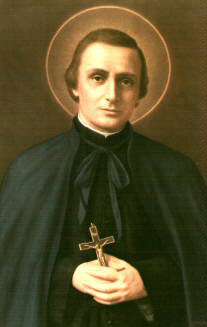 St. Peter Chanel: Saint of the Day for Sunday, April 28, 2024
 Prayer before a Crucifix: Prayer of the Day for Sunday, April 28, 2024


Copyright 2024 Catholic Online. All materials contained on this site, whether written, audible or visual are the exclusive property of Catholic Online and are protected under U.S. and International copyright laws, © Copyright 2024 Catholic Online. Any unauthorized use, without prior written consent of Catholic Online is strictly forbidden and prohibited.
Catholic Online is a Project of Your Catholic Voice Foundation, a Not-for-Profit Corporation. Your Catholic Voice Foundation has been granted a recognition of tax exemption under Section 501(c)(3) of the Internal Revenue Code. Federal Tax Identification Number: 81-0596847. Your gift is tax-deductible as allowed by law.