Gratian
FREE Catholic Classes
Roman Emperor; son of Valentinian I; born at Sirmium, 359; died at Lyons, 383. Before he had attained his ninth year he received the purple robe and diadem, with the title of Augustus; and on the death of his father (375) he became Emperor of the West. His half-brother, Valentinian II, an infant, was associated with him in the title. He fixed his residence at Trier, and devoted himself to opposing the advance of the Alamanni, whom he routed in the great battle of Colmar (378). His colleague in the east, Valens, was, however, defeated and slain by the Goths in the same year at the battle of Adrianople. Gratian, feeling himself unequal to the task of governing the whole empire alone, assigned the eastern portion to Theodosius I . Up to this time he had shown himself to be a wise ruler and a brave and skilful general, but now he began to neglect his duties and to devote himself to hunting and other sports. A rebellion which arose in Britain under Maximus, one of his generals, spread into Gaul. Gratian, who was residing at Paris, fled to Lyons, and was there treacherously slain (25 Aug., 383). Gratian's reign marks a distinct epoch in the transition of the empire from paganism to Christianity. At the time of his accession (375) he refused the insignia of pontifex maximus, which even Constantine and the other Christian emperors had always accepted. At the instance of St. Ambrose , who became his chief adviser, he caused the statue of Victory to be removed from the senate house at Rome (382). In this same year he abolished all the privileges of the pagan pontiffs and the grants for the support of pagan worship. Deprived of the assistance of the State, paganism rapidly lost influence. Gratian did not go so far as to confer upon the Church the privileges and emoluments which he took from the pagans, but he gave proof of his zeal by undoing the effects of Valens's persecution, and by taking measures for the suppression of various forms of heresy. Though in general his policy was one of toleration, he made apostasy a crime punishable by the State (383). It was for Gratian that St. Ambrose wrote his great treatise "De Fide".

We ask you, humbly: don't scroll away.
Hi readers, it seems you use Catholic Online a lot; that's great! It's a little awkward to ask, but we need your help. If you have already donated, we sincerely thank you. We're not salespeople, but we depend on donations averaging $14.76 and fewer than 1% of readers give. If you donate just $5.00, the price of your coffee, Catholic Online School could keep thriving. Thank you.Help Now >
Join the Movement
When you sign up below, you don't just join an email list - you're joining an entire movement for Free world class Catholic education.


-

-
Mysteries of the Rosary
-
St. Faustina Kowalska
-
Litany of the Blessed Virgin Mary
-
Saint of the Day for Wednesday, Oct 4th, 2023
-
Popular Saints
-
St. Francis of Assisi
-
Bible
-
Female / Women Saints
-
7 Morning Prayers you need to get your day started with God
-
Litany of the Blessed Virgin Mary


Sacrifices of Faith: The Pro-Life Legacies of St. Gianna and Jessica Hanna
-
How to love God by caring for our bodies
-
Pope Francis calls for negotiations to End Russia-Ukraine War
-
Pope Francis Contemplates Return to U.S. for United Nations Assembly Address
-
Pope Francis Calls on Faithful to Embrace Faith, Hope, and Charity in New Teaching Series


Daily Catholic
- Daily Readings for Sunday, April 28, 2024
- St. Peter Chanel: Saint of the Day for Sunday, April 28, 2024
- Prayer before a Crucifix: Prayer of the Day for Sunday, April 28, 2024
- Daily Readings for Saturday, April 27, 2024
- St. Zita: Saint of the Day for Saturday, April 27, 2024
- Prayer for the Dead # 2: Prayer of the Day for Saturday, April 27, 2024
 Daily Readings for Sunday, April 28, 2024
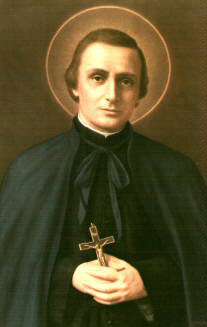 St. Peter Chanel: Saint of the Day for Sunday, April 28, 2024
 Prayer before a Crucifix: Prayer of the Day for Sunday, April 28, 2024


Copyright 2024 Catholic Online. All materials contained on this site, whether written, audible or visual are the exclusive property of Catholic Online and are protected under U.S. and International copyright laws, © Copyright 2024 Catholic Online. Any unauthorized use, without prior written consent of Catholic Online is strictly forbidden and prohibited.
Catholic Online is a Project of Your Catholic Voice Foundation, a Not-for-Profit Corporation. Your Catholic Voice Foundation has been granted a recognition of tax exemption under Section 501(c)(3) of the Internal Revenue Code. Federal Tax Identification Number: 81-0596847. Your gift is tax-deductible as allowed by law.