St. Gennadius I
FREE Catholic Classes
Patriarch of Constantinople (458-471), has left scarcely any writings. Facundus (Defensio, II, iv) states that he wrote against St. Cyril of Alexandria , probably in 431-2, and quotes a passage to show that his work was more violent even than the letter of Ibas. If St. Cyril's letter of 434 (Ep. lvi) is to the same Gennadius, they were friends in that year. Gennadius succeeded Anatolius as Bishop of Constantinople in 458. On 17 June, 460, St. Leo wrote to him (Ep. clxx) warning him against Timothy Aelurus, the Monophysite who had made himself Patriarch of Alexandria. Not later, it seems, than 459 St. Gennadius celebrated a great council of eighty-one bishops, many of whom were from the East and even from Egypt, including those who had been dispossessed of their sees by Aelurus. The letter of this council against simony is still preserved ( Mansi, VII, 912). About the same time St. Daniel the Stylite began to live on a column near Constantinople, apparently without the Patriarch's leave, and certainly without the permisslon of Gelasius, the owner of the property where the pillar stood, who strongly objected to this strange invasion of his land. The Emperor Leo protected the ascetic, and some time later sent St. Gennadius to ordain him priest, which he is said to have done standing at the foot of the column, since St. Daniel objected to being ordained, and refused to let the bishop mount the ladder. At the end of the rite, however, the patriarch ascended to give Holy Communion to the stylite and to receive it from him. Whether he then imposed his hands on him is not said. Possibly he considered it sufficient to extend them from below towards the saint. According to Theodorus Lector, Gennadius would allow no one to become a cleric unless he had learned the Psalter by heart. He made St. Marcian oeconomus of the Church of Constantinople.

St. Gennadius is said by Joannes Moschus to have been very mild and of great purity. We are told by Gennadius of Marseilles that he was lingua nitidus et ingenio acer , and so rich in knowledge of the ancients that he composed a commentary on the whole Book of Daniel. The continuation of St. Jerome's Chronicle by Marcellinus Comes tells us (according to some manuscripts ) that Gennadius commented on all St. Paul's Epistles. Some fragments are collected in Migne, P.G., LXXXV, chiefly from the two catenae of Cramer on Romans; a few passages are found in the catena of Oecumenius, and a few in the Vienna manuscript gr. 166 (46). Some fragments in the catenae of Niceohorus show that Gennadius also commented on Genesis. He is seen to have been a learned writer, who followed the Antiochene school of literal exegesis. He is celebrated in the Greek Menaea on 25 Aug. and 17 Nov., and on the former day in the Roman-Martyrology.

We ask you, humbly: don't scroll away.
Hi readers, it seems you use Catholic Online a lot; that's great! It's a little awkward to ask, but we need your help. If you have already donated, we sincerely thank you. We're not salespeople, but we depend on donations averaging $14.76 and fewer than 1% of readers give. If you donate just $5.00, the price of your coffee, Catholic Online School could keep thriving. Thank you.Help Now >
Join the Movement
When you sign up below, you don't just join an email list - you're joining an entire movement for Free world class Catholic education.


-

-
Mysteries of the Rosary
-
St. Faustina Kowalska
-
Litany of the Blessed Virgin Mary
-
Saint of the Day for Wednesday, Oct 4th, 2023
-
Popular Saints
-
St. Francis of Assisi
-
Bible
-
Female / Women Saints
-
7 Morning Prayers you need to get your day started with God
-
Litany of the Blessed Virgin Mary

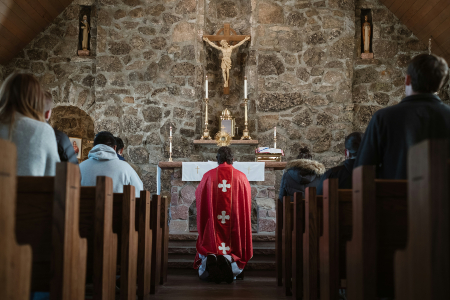
U.S. Catholic Parishes Experience Resurgence of Traditional Practices
-
Pope Francis Urges Faith and Prayers for Peace
-
Florida Welcomes Volunteer Chaplains to Public Schools
-
10 Fascinating Details About St. Joseph the Worker: Celebrating His Feast Day - May 1
-
St. Joseph the Worker: Model for Men, Young and Old


Daily Catholic
- Daily Readings for Thursday, May 02, 2024
- St. Athanasius: Saint of the Day for Thursday, May 02, 2024
- The Our Father: Prayer of the Day for Thursday, May 02, 2024
- Daily Readings for Wednesday, May 01, 2024
- St. Marculf: Saint of the Day for Wednesday, May 01, 2024
- To Saint Peregrine: Prayer of the Day for Wednesday, May 01, 2024
 Daily Readings for Thursday, May 02, 2024
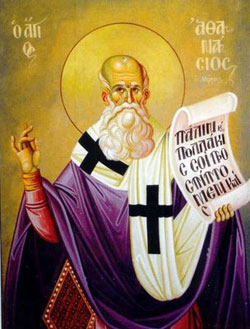 St. Athanasius: Saint of the Day for Thursday, May 02, 2024
 The Our Father: Prayer of the Day for Thursday, May 02, 2024
We ask you, humbly: don't scroll away.
Hi readers, it seems you use Catholic Online a lot; that's great! It's a little awkward to ask, but we need your help. If you have already donated, we sincerely thank you. We're not salespeople, but we depend on donations averaging $14.76 and fewer than 1% of readers give. If you donate just $5.00, the price of your coffee, Catholic Online School could keep thriving. Thank you.Help Now >

Copyright 2024 Catholic Online. All materials contained on this site, whether written, audible or visual are the exclusive property of Catholic Online and are protected under U.S. and International copyright laws, © Copyright 2024 Catholic Online. Any unauthorized use, without prior written consent of Catholic Online is strictly forbidden and prohibited.
Catholic Online is a Project of Your Catholic Voice Foundation, a Not-for-Profit Corporation. Your Catholic Voice Foundation has been granted a recognition of tax exemption under Section 501(c)(3) of the Internal Revenue Code. Federal Tax Identification Number: 81-0596847. Your gift is tax-deductible as allowed by law.
