We ask you, humbly: don't scroll away.
Hi readers, it seems you use Catholic Online a lot; that's great! It's a little awkward to ask, but we need your help. If you have already donated, we sincerely thank you. We're not salespeople, but we depend on donations averaging $14.76 and fewer than 1% of readers give. If you donate just $5.00, the price of your coffee, Catholic Online School could keep thriving. Thank you.Help Now >
Council of Frankfort
FREE Catholic Classes
Convened in the summer of 794, by the grace of God, authority of the pope, and command of Charlemagne (can. 1), and attended by the bishops of the Frankish kingdom, Italy, and the province of Aquitania, and even by ecclesiastics from England. The council was summoned primarily for the condemnation of Adoptionism. According to the testimony of contemporaries two papal legates were present, Theophylact and Stephen, representing Pope Adrian I. After an allocution by Charlemagne, the bishops drew up two memorials against the Adoptionists, one containing arguments from patristic writings; the other arguments from Scripture. The first was the Libellus sacrosyllabus , written by Paulinus, Patriarch of Aquileia, in the name of the Italian bishops ; the second was the Epistola Synodica , addressed to the bishops of Spain by those of Germany, Gaul, and Aquitania. In the first of its fifty-six canons the council condemned Adoptionism, and in the second repudiated the Second Council of Nicaea (787), which, according to the faulty Latin translation of its Acts (see CAROLINE BOOKS ), seemed to decree that the same kind of worship should be paid to images as to the Blessed Trinity , though the Greek text clearly distinguishes between latreia and proskynesis . The remaining fifty-four canons dealt with metropolitan jurisdiction, monastic discipline, superstition, etc.


Join the Movement
When you sign up below, you don't just join an email list - you're joining an entire movement for Free world class Catholic education.
-

-
Mysteries of the Rosary
-
St. Faustina Kowalska
-
Litany of the Blessed Virgin Mary
-
Saint of the Day for Wednesday, Oct 4th, 2023
-
Popular Saints
-
St. Francis of Assisi
-
Bible
-
Female / Women Saints
-
7 Morning Prayers you need to get your day started with God
-
Litany of the Blessed Virgin Mary

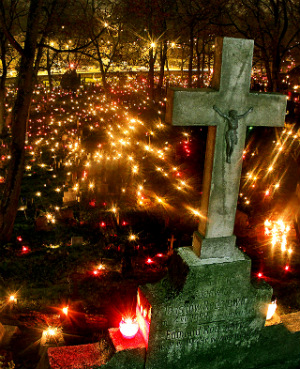
All Saints' Day, Halloween and All Souls' Day: What's the difference?
-
Should Christians Celebrate Halloween?
-
Since when did Halloween become a Christian holiday?
-
ADORABLE: A Little Boy's Heartfelt Lunchtime Prayer
-
Scientists Decode 3,000-Year-Old Babylonian Tablet, Revealing Potential Location of Noah's Ark
Daily Catholic
- Daily Readings for Friday, November 01, 2024
- St. Valentine Berrio-Ochoa: Saint of the Day for Friday, November 01, 2024
- Litany of the Saints: Prayer of the Day for Friday, November 01, 2024
- Daily Readings for Thursday, October 31, 2024
- St. Wolfgang: Saint of the Day for Thursday, October 31, 2024
- Memorare: Prayer of the Day for Thursday, October 31, 2024
 Daily Readings for Friday, November 01, 2024
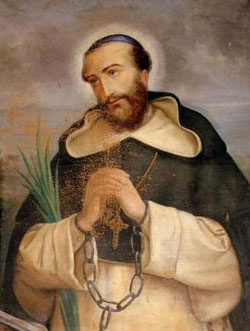 St. Valentine Berrio-Ochoa: Saint of the Day for Friday, November 01, 2024
 Litany of the Saints: Prayer of the Day for Friday, November 01, 2024


Copyright 2024 Catholic Online. All materials contained on this site, whether written, audible or visual are the exclusive property of Catholic Online and are protected under U.S. and International copyright laws, © Copyright 2024 Catholic Online. Any unauthorized use, without prior written consent of Catholic Online is strictly forbidden and prohibited.
Catholic Online is a Project of Your Catholic Voice Foundation, a Not-for-Profit Corporation. Your Catholic Voice Foundation has been granted a recognition of tax exemption under Section 501(c)(3) of the Internal Revenue Code. Federal Tax Identification Number: 81-0596847. Your gift is tax-deductible as allowed by law.
