 Hi readers, it seems you use Catholic Online a lot; that's great! It's a little awkward to ask, but we need your help. If you have already donated, we sincerely thank you. We're not salespeople, but we depend on donations averaging $14.76 and fewer than 1% of readers give. If you donate just $5.00, the price of your coffee, Catholic Online School could keep thriving. Thank you. Help Now >
Galeazzo Alessi
FREE Catholic Classes
A famous Italian architect, b. 1500; d. 1572. He showed an inclination for mathematics and literature at a very early age, and afterwards studied drawing for civil and military architecture, under the direction of Giambattista Caporali, a Perugian architect and painter. At Rome he became a friend of Michael Angelo. He completed the fortress of Perugia, begun by Sangallo, built an apartment in it for the governor of the castle, and erected a number of palaces, regarded as the finest in the city. He resided in Genoa a number of years, engaged in the erection of various edifices, the laying-out of streets, and the restoration of the walls of the city. On the Carignano Hill he built the church of the Madonna. He repaired, restored, and embellished the cathedral and made designs for its tribune, choir, and cupola. His abilities were most conspicuous in his design for the harbour. He erected therein large gateway, flanked by rustic columns, and adorned the sea-front with a Doric portico, ingeniously defended by balustrades. This fortress-like work protected the city from within and without and had a spacious square for the military in the interior. He also extended the mole more than 600 paces into the sea, and left a number of designs and models which have been at various times executed by the rich nobles of that city. These and similar splendid edifices have obtained for Genoa the title of La Superba (The Proud ). Alessi executed many works at Ferrara. At Bologna he erected the great gate of the Palazzo Publico. He finished the palace of the Institute according to the design of Pellegrino Tibaldi, and made plans for the façade of San Petronio. At Milan he built the church of San Vittore, the whimsical auditorium del Cambio, and the façade of San Celso, and greatly distinguished himself by the erection of the magnificent palace of Tommaso Marini, Duke of Torre Nuova. He also designed edifices in Naples and Sicily, France, Germany, and Flanders. The King of Spain sent for him to execute some buildings, which, however, are not known, and after some period of time permitted him to return to Perugia, laden with riches and honours. He was received by his fellow-citizens with the most flattering expressions of regard, was admitted into the Scuola di Commerzio ; and was sent to Pope Pius V on a commission involving public interest. On his return to his own country he was requested by Cardinal Odoardo Farnese to submit a design for the façade of the Gesu at Rome, so expensive, that it was never executed. For the Duke della Corgna he built the stately palace of Castiglione on the Lake of Perugia, and for the Cardinal, brother of the Duke, he erected another on a hill a few miles from the city. In conjunction with Giulio Danti, a Perugian architect, he was employed in the erection of the church on the Madonna degli Angeli, near Assisi, built after the design of Vignola. Finally, Alessi submitted to the Spanish Court a design for the monastery and church of the Escorial in Spain. It was considered the best among plans submitted in a general competition by all the architects of Europe, and he was requested to execute it, but age and indisposition prevented him. Alessi was learned, agreeable in conversation, and capable of negotiating the most important affairs.


Join the Movement
When you sign up below, you don't just join an email list - you're joining an entire movement for Free world class Catholic education.


-

-
Mysteries of the Rosary
-
St. Faustina Kowalska
-
Litany of the Blessed Virgin Mary
-
Saint of the Day for Wednesday, Oct 4th, 2023
-
Popular Saints
-
St. Francis of Assisi
-
Bible
-
Female / Women Saints
-
7 Morning Prayers you need to get your day started with God
-
Litany of the Blessed Virgin Mary


Sacrifices of Faith: The Pro-Life Legacies of St. Gianna and Jessica Hanna
-
How to love God by caring for our bodies
-
Pope Francis calls for negotiations to End Russia-Ukraine War
-
Pope Francis Contemplates Return to U.S. for United Nations Assembly Address
-
Pope Francis Calls on Faithful to Embrace Faith, Hope, and Charity in New Teaching Series


Daily Catholic
- Daily Readings for Sunday, April 28, 2024
- St. Peter Chanel: Saint of the Day for Sunday, April 28, 2024
- Prayer before a Crucifix: Prayer of the Day for Sunday, April 28, 2024
- Daily Readings for Saturday, April 27, 2024
- St. Zita: Saint of the Day for Saturday, April 27, 2024
- Prayer for the Dead # 2: Prayer of the Day for Saturday, April 27, 2024
 Daily Readings for Sunday, April 28, 2024
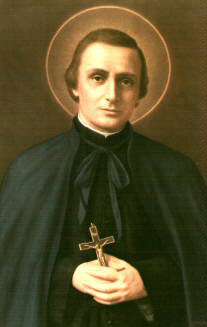 St. Peter Chanel: Saint of the Day for Sunday, April 28, 2024
 Prayer before a Crucifix: Prayer of the Day for Sunday, April 28, 2024
We ask you, humbly: don't scroll away.
Hi readers, it seems you use Catholic Online a lot; that's great! It's a little awkward to ask, but we need your help. If you have already donated, we sincerely thank you. We're not salespeople, but we depend on donations averaging $14.76 and fewer than 1% of readers give. If you donate just $5.00, the price of your coffee, Catholic Online School could keep thriving. Thank you.Help Now >

Copyright 2024 Catholic Online. All materials contained on this site, whether written, audible or visual are the exclusive property of Catholic Online and are protected under U.S. and International copyright laws, © Copyright 2024 Catholic Online. Any unauthorized use, without prior written consent of Catholic Online is strictly forbidden and prohibited.
Catholic Online is a Project of Your Catholic Voice Foundation, a Not-for-Profit Corporation. Your Catholic Voice Foundation has been granted a recognition of tax exemption under Section 501(c)(3) of the Internal Revenue Code. Federal Tax Identification Number: 81-0596847. Your gift is tax-deductible as allowed by law.