We ask you, humbly: don't scroll away.
Hi readers, it seems you use Catholic Online a lot; that's great! It's a little awkward to ask, but we need your help. If you have already donated, we sincerely thank you. We're not salespeople, but we depend on donations averaging $14.76 and fewer than 1% of readers give. If you donate just $5.00, the price of your coffee, Catholic Online School could keep thriving. Thank you.Help Now >
Durandus of Saint-Pourçain
FREE Catholic Classes
Philosopher and theologian, b. at Saint-Pourçain, Auvergne France ; d. 13 September, 1332, at Meaux. He entered the Dominican Order at Clermont and obtained the doctor's degree at Paris in 1313. John XXII called him to Avignon as Master of the Sacred Palace, where he expounded the Scriptures. In 1318 he was consecrated Bishop of Le Puy -en-Velay and was transferred to Meaux in 1326. He is known as Doctor Resolutissimus owing to his strenuous advocacy of certain opinions novel to the Schoolmen of his day. His writings include commentaries on the "Sentences" (Paris, 1508); "De origine jurisdictionum" (Paris, 1506); and a treatise on the condition of holy souls after their separation from the body. His nominalism was so much opposed to the contemporary philosophic realism that the third period of Scholasticism is made to begin with him. He rejects both the sensible and the intelligible species, introduced, he says, to explain sense-perception, as also the active intellect. He denies the principle of individuation as distinct from the specific nature of the individual. In theology he argues for a separation of natural knowledge from that obtained through faith and revelation. Certain dogmas, as that of the Trinity, cannot be shown not to contain impossibilities, but to believe them, withal increases the merit of faith. Because the miracles of Christ do not prove His Divinity, His acceptance by the faithful enhances the merit of believing. After all, he says, theology is not strictly a science, since it rests on faith, not on the first principles of knowledge. In theology it is sufficient to know the idea of him who, being inspired, cannot err. He teaches, besides, that all actions proceed from God Who gives the power to act, but this is no immediate influx of the Creator upon the actions of the creature. The sacraments are only causes without which grace is not conferred. Marriage is not strictly a sacrament. He also insinuates that Christ could be present in the Eucharist with the substances of bread and wine remaining. Throughout, Durandus shows admirable submission to the corrective prerogative of the Church, the exercise of which was not unnecessary. By order of John XXII the treatise "De statu animarum" was examined and was found to contain eleven errors.
We ask you, humbly: don't scroll away.
Hi readers, it seems you use Catholic Online a lot; that's great! It's a little awkward to ask, but we need your help. If you have already donated, we sincerely thank you. We're not salespeople, but we depend on donations averaging $14.76 and fewer than 1% of readers give. If you donate just $5.00, the price of your coffee, Catholic Online School could keep thriving. Thank you.Help Now >

Join the Movement
When you sign up below, you don't just join an email list - you're joining an entire movement for Free world class Catholic education.


-

-
Mysteries of the Rosary
-
St. Faustina Kowalska
-
Litany of the Blessed Virgin Mary
-
Saint of the Day for Wednesday, Oct 4th, 2023
-
Popular Saints
-
St. Francis of Assisi
-
Bible
-
Female / Women Saints
-
7 Morning Prayers you need to get your day started with God
-
Litany of the Blessed Virgin Mary

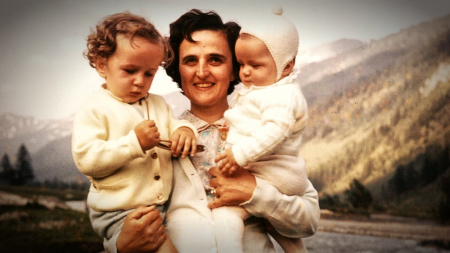
Sacrifices of Faith: The Pro-Life Legacies of St. Gianna and Jessica Hanna
-
How to love God by caring for our bodies
-
Pope Francis calls for negotiations to End Russia-Ukraine War
-
Pope Francis Contemplates Return to U.S. for United Nations Assembly Address
-
Pope Francis Calls on Faithful to Embrace Faith, Hope, and Charity in New Teaching Series
Daily Catholic
- Daily Readings for Saturday, April 27, 2024
- St. Zita: Saint of the Day for Saturday, April 27, 2024
- Prayer for the Dead # 2: Prayer of the Day for Saturday, April 27, 2024
- Daily Readings for Friday, April 26, 2024
- St. Cletus: Saint of the Day for Friday, April 26, 2024
- Prayer before the Closing of the Day: Prayer of the Day for Friday, April 26, 2024
 Daily Readings for Saturday, April 27, 2024
 St. Zita: Saint of the Day for Saturday, April 27, 2024
 Prayer for the Dead # 2: Prayer of the Day for Saturday, April 27, 2024
We ask you, humbly: don't scroll away.
Hi readers, it seems you use Catholic Online a lot; that's great! It's a little awkward to ask, but we need your help. If you have already donated, we sincerely thank you. We're not salespeople, but we depend on donations averaging $14.76 and fewer than 1% of readers give. If you donate just $5.00, the price of your coffee, Catholic Online School could keep thriving. Thank you.Help Now >


Copyright 2024 Catholic Online. All materials contained on this site, whether written, audible or visual are the exclusive property of Catholic Online and are protected under U.S. and International copyright laws, © Copyright 2024 Catholic Online. Any unauthorized use, without prior written consent of Catholic Online is strictly forbidden and prohibited.
Catholic Online is a Project of Your Catholic Voice Foundation, a Not-for-Profit Corporation. Your Catholic Voice Foundation has been granted a recognition of tax exemption under Section 501(c)(3) of the Internal Revenue Code. Federal Tax Identification Number: 81-0596847. Your gift is tax-deductible as allowed by law.