St. Alban
FREE Catholic Classes
First martyr of Britain, suffered c. 304. The commonly received account of the martyrdom of St. Alban meets us as early as the pages of Bede's "Ecclesiastical History" (Bk. I, chs. vii and xviii). According to this, St. Alban was a pagan living at Verulamium (now the town of St. Albans in Hertfordshire), when a persecution of the Christians broke out, and a certain cleric flying for his life took refuge in Alban's house. Alban sheltered him, and after some days, moved by his example, himself received baptism. Later on, when the governor's emissaries came to search the house, Alban disguised himself in the cloak of his guest and gave himself up in his place. He was dragged before the judge, scourged, and, when he would not deny his faith, condemned to death. On the way to the place of execution Alban arrested the waters of a river so that they crossed dry-shod, and he further caused a fountain of water to flow on the summit of the hill on which he was beheaded. His executioner was converted, and the man who replaced him, after striking the fatal blow, was punished with blindness. A later development in the legend informs us that the cleric's name was Amphibalus, and that he, with some companions, was stoned to death a few days afterwards at Redbourn, four miles from St. Albans . What germ of truth may underlie these legends it is difficult to decide. The first authority to mention St. Alban is Constantius, in his Life of St. Germanus of Auxerre, written about 480. But the further details there given about the opening of St. Alban's tomb and the taking out of relics are later interpolations, as has recently been discovered (see Livison in the "Neues Archiv", 1903, p. 148). Still the whole legend as known to Bede was probably in existence in the first half of the sixth century (W. Meyer, "Legende des h. Albanus", p. 21), and was used by Gildas before 547. It is also probable that the name Amphibalus is derived from some version of the legend in which the cleric's cloak is called an amphibalus ; for Geoffrey of Monmouth , the earliest witness to the name Amphibalus, makes precisely the same mistake in another passage, converting the garment called amphibalus into the name of a saint. (See Ussher, Works, V, p. 181, and VI, pg. 58; and Revue Celtique, 1890, p. 349.) From what has been said, it is certain that St. Alban has been continuously venerated in England since the fifth century. Moreover, his name was known about the year 580 to Venantius Fortunatus, in Southern Gaul, who commemorates him in the line:

Albanum egregium fecunda Britannia profert.
("Lo! fruitful Britain vaunts great Alban's name.")
("Carmina", VII, iii, 155).
His feast is still kept as of old, on 22 June, and it is celebrated throughout England as a greater double. That of St. Amphibalus is not now observed, but it seems formerly to have been attached to 25 June. In some later developments of the legend St. Alban appears as a soldier who had visited Rome, and his story was also confused with that of another St. Alban, or Albinus, martyred at Mainz.
We ask you, humbly: don't scroll away.
Hi readers, it seems you use Catholic Online a lot; that's great! It's a little awkward to ask, but we need your help. If you have already donated, we sincerely thank you. We're not salespeople, but we depend on donations averaging $14.76 and fewer than 1% of readers give. If you donate just $5.00, the price of your coffee, Catholic Online School could keep thriving. Thank you.Help Now >

Join the Movement
When you sign up below, you don't just join an email list - you're joining an entire movement for Free world class Catholic education.


-

-
Mysteries of the Rosary
-
St. Faustina Kowalska
-
Litany of the Blessed Virgin Mary
-
Saint of the Day for Wednesday, Oct 4th, 2023
-
Popular Saints
-
St. Francis of Assisi
-
Bible
-
Female / Women Saints
-
7 Morning Prayers you need to get your day started with God
-
Litany of the Blessed Virgin Mary


Sacrifices of Faith: The Pro-Life Legacies of St. Gianna and Jessica Hanna
-
How to love God by caring for our bodies
-
Pope Francis calls for negotiations to End Russia-Ukraine War
-
Pope Francis Contemplates Return to U.S. for United Nations Assembly Address
-
Pope Francis Calls on Faithful to Embrace Faith, Hope, and Charity in New Teaching Series


Daily Catholic
- Daily Readings for Sunday, April 28, 2024
- St. Peter Chanel: Saint of the Day for Sunday, April 28, 2024
- Prayer before a Crucifix: Prayer of the Day for Sunday, April 28, 2024
- Daily Readings for Saturday, April 27, 2024
- St. Zita: Saint of the Day for Saturday, April 27, 2024
- Prayer for the Dead # 2: Prayer of the Day for Saturday, April 27, 2024
 Daily Readings for Sunday, April 28, 2024
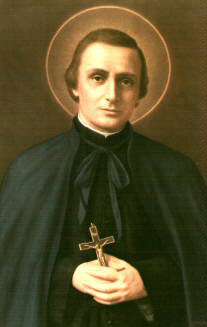 St. Peter Chanel: Saint of the Day for Sunday, April 28, 2024
 Prayer before a Crucifix: Prayer of the Day for Sunday, April 28, 2024
We ask you, humbly: don't scroll away.
Hi readers, it seems you use Catholic Online a lot; that's great! It's a little awkward to ask, but we need your help. If you have already donated, we sincerely thank you. We're not salespeople, but we depend on donations averaging $14.76 and fewer than 1% of readers give. If you donate just $5.00, the price of your coffee, Catholic Online School could keep thriving. Thank you.Help Now >



Copyright 2024 Catholic Online. All materials contained on this site, whether written, audible or visual are the exclusive property of Catholic Online and are protected under U.S. and International copyright laws, © Copyright 2024 Catholic Online. Any unauthorized use, without prior written consent of Catholic Online is strictly forbidden and prohibited.
Catholic Online is a Project of Your Catholic Voice Foundation, a Not-for-Profit Corporation. Your Catholic Voice Foundation has been granted a recognition of tax exemption under Section 501(c)(3) of the Internal Revenue Code. Federal Tax Identification Number: 81-0596847. Your gift is tax-deductible as allowed by law.