We ask you, humbly: don't scroll away.
Hi readers, it seems you use Catholic Online a lot; that's great! It's a little awkward to ask, but we need your help. If you have already donated, we sincerely thank you. We're not salespeople, but we depend on donations averaging $14.76 and fewer than 1% of readers give. If you donate just $5.00, the price of your coffee, Catholic Online School could keep thriving. Thank you.Help Now >
Ecclesiastical Commissions
FREE Catholic Classes
Ecclesiastical Commissions are bodies of ecclesiastics juridically established and to whom are committed certain specified functions or charges. They are:
I. Pontifical;II. Roman Prelatitial;
III. Diocesan.
I
Pontifical commissions are special committees of cardinals created by the pope for some particular purpose, e.g. for the proper interpretation and defence of Sacred Scripture (see BIBLICAL COMMISSION), for historical studies (see ECCLESIASTICAL HISTORY), for the codification of the canon law (see LAW), for the supervision, correction, etc. of the liturgical books of the Roman Church, e.g. the Breviary, Missal, Pontifical, Ritual, etc. (see BREVIARY; LITURGY), for the restoration and perfection of ecclesiastical music (see GREGORIAN CHANT), for the reunion of dissenting churches (see EASTERN CHURCH), for the preservation of the Faith (see ITALY; ROME).
II
Prelatitial commissions are composed of Roman prelates, secretaries, consultors, etc., and may be presided over by a cardinal. Such, e.g., are the Commission of Sacred Archæology (see ARCHÆOLOGY), for the preservation and illustration of the Christian antiquities of Rome, the commission for the administration of Peter's-pence, and the Palatine Commission (established by Leo XIII ) for the settlement of controversies or lawsuits between the personnel of the Vatican or other papal residences. Most of these commissions, however, are attached to the Roman Congregations, as special departments or sections, and are described in the article ROMAN CONGREGATIONS, e.g. the Liturgical Commission attached to the Congregation of Rites; the commissions for the examination of episcopal reports, for the revision and correction of the liturgical books of the Eastern Church, and for the examination of religious institutes in Propaganda territory, all three attached to the Congregation of Propaganda ; for the examination of new religious institutes attached to the Congregation of Bishops and Regulars; for the selection of bishops in Italy (now suppressed and its attributions vested in the Congregation of the Inquisition ).
We ask you, humbly: don't scroll away.
Hi readers, it seems you use Catholic Online a lot; that's great! It's a little awkward to ask, but we need your help. If you have already donated, we sincerely thank you. We're not salespeople, but we depend on donations averaging $14.76 and fewer than 1% of readers give. If you donate just $5.00, the price of your coffee, Catholic Online School could keep thriving. Thank you.Help Now >
III
The diocesan commissions provided for by general ecclesiastical law are four: the commission for seminaries (in two sections for spiritual and temporal concerns, respectively), according to the Council of Trent (Sess. XXIII, cap. xviii, De ref.), for which see ECCLESIASTICAL SEMINARY; the commission of examiners of the clergy (see SYNODAL EXAMINERS), to aid in the control of all competition for vacant parochial benefices ; the commission on sacred music (Motu proprio of Pius X, 22 Nov., 1903) for the improvement of the character and execution of ecclesiastical music in the churches; a vigilance committee ( Consilium a vigilantia ) for the repression of modernism ( Pius X , "Pascendi Dominici Gregis" , 8 Sept., 1907). In many dioceses of England there exist diocesan school commissions or associations. There exists also in England (since 1853) for each diocese a commission of investigation for criminal and disciplinary causes of ecclesiastics (Taunton, 210-213); a similar commission for the dioceses of the United States, established by Propaganda in 1878, was abrogated in 1884 in favour of a new form of procedure, detailed in the Instruction of that year, "Cum Magnopere". For Ireland see "Acta et Decreta", by the Synod of Maynooth (1900), p. 75; and for Scotland, Taunton, op. cit., 214-20. The scope, authority, and attributions of these bodies are described either in the pontifical documents that create them, or in the legislation pertaining to the Roman congregations , or in the common ecclesiastical law and its authoritative interpretations.

Join the Movement
When you sign up below, you don't just join an email list - you're joining an entire movement for Free world class Catholic education.


-

-
Mysteries of the Rosary
-
St. Faustina Kowalska
-
Litany of the Blessed Virgin Mary
-
Saint of the Day for Wednesday, Oct 4th, 2023
-
Popular Saints
-
St. Francis of Assisi
-
Bible
-
Female / Women Saints
-
7 Morning Prayers you need to get your day started with God
-
Litany of the Blessed Virgin Mary


Sacrifices of Faith: The Pro-Life Legacies of St. Gianna and Jessica Hanna
-
How to love God by caring for our bodies
-
Pope Francis calls for negotiations to End Russia-Ukraine War
-
Pope Francis Contemplates Return to U.S. for United Nations Assembly Address
-
Pope Francis Calls on Faithful to Embrace Faith, Hope, and Charity in New Teaching Series


Daily Catholic
- Daily Readings for Sunday, April 28, 2024
- St. Peter Chanel: Saint of the Day for Sunday, April 28, 2024
- Prayer before a Crucifix: Prayer of the Day for Sunday, April 28, 2024
- Daily Readings for Saturday, April 27, 2024
- St. Zita: Saint of the Day for Saturday, April 27, 2024
- Prayer for the Dead # 2: Prayer of the Day for Saturday, April 27, 2024
 Daily Readings for Sunday, April 28, 2024
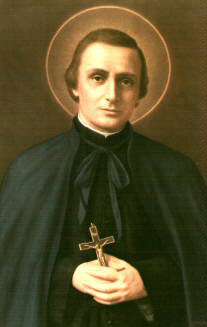 St. Peter Chanel: Saint of the Day for Sunday, April 28, 2024
 Prayer before a Crucifix: Prayer of the Day for Sunday, April 28, 2024



Copyright 2024 Catholic Online. All materials contained on this site, whether written, audible or visual are the exclusive property of Catholic Online and are protected under U.S. and International copyright laws, © Copyright 2024 Catholic Online. Any unauthorized use, without prior written consent of Catholic Online is strictly forbidden and prohibited.
Catholic Online is a Project of Your Catholic Voice Foundation, a Not-for-Profit Corporation. Your Catholic Voice Foundation has been granted a recognition of tax exemption under Section 501(c)(3) of the Internal Revenue Code. Federal Tax Identification Number: 81-0596847. Your gift is tax-deductible as allowed by law.