 Hi readers, it seems you use Catholic Online a lot; that's great! It's a little awkward to ask, but we need your help. If you have already donated, we sincerely thank you. We're not salespeople, but we depend on donations averaging $14.76 and fewer than 1% of readers give. If you donate just $5.00, the price of your coffee, Catholic Online School could keep thriving. Thank you. Help Now >
John Colet
FREE Catholic Classes
Dean of St. Paul's Cathedral and founder of St. Paul's School, London ; b. in London, 1467; d. there 18 Sept., 1519. He was the eldest son of Sir Henry Colet, twice Lord Mayor of London. Having finished his schooling in London, he was sent to Oxford, but no particulars of his life there have been preserved, not even the name of his college. While at Oxford he determined to become a priest and even before ordination obtained through family influence much preferment, including the livings of St. Mary Dennington, Suffolk, St. Dunstan, Stepney, and the benefices in the counties of Huntingdon, Northamptos, York, and Norfolk. In 1493 he began a tour through France and Italy, studying as he went and acquiring that love of the new learning which marked his after-life. Returning to England in 1496, he prepared for ordination, and became deacon on 17 Dec., 1497, and priest on 25 March, 1497-8. He lectured at Oxford on St. Paul's Epistles, introducing a new treatment by abandoning the purely textual commentary then usual, in favour of a study of the personality of St. Paul and of the text as a whole. In 1498 he met Erasmus at Oxford, with whom he immediately became intimate, arousing in him especially a distrust of the later schoolmen. Colet's lectures on the New Testament continued for five years, until in 1504 he was made Dean of St. Paul's proceeding D.D before he left Oxford. In London he became the intimate friend and spiritual adviser of Sir Thomas More. At the death of his father in 1505 he inherited a fortune, which he devoted to public purposes. His administration of the cathedral was vigorous, and in 1509 he began the foundation of the great school with which his name will ever be associated. The cost of the buildings and endowments is estimated at forty thousand pounds in present value. The object was to provide a sound Christian education. Greek was to be at least of equal importance with Latin. William Lilly was the first head master, but Colet exercised a close personal supervision over the school, even composing some of the textbooks. In 1512 he was accused of advanced views and was in difficulties with his bishop, but on the trial Archbishop Warham dismissed the charges as frivolous. It may well be that Colet, irritated by obvious abuses and not seeing how far the reaction would go, used language on certain points which in the light of after-events is regrettable, but there can be no doubt as to his own orthodoxy and devotion. In 1518 he completed the revised statutes of his school. At his death the following year he was buried in St. Paul's Cathedral. His school remained on its original site until 1884, when it was removed to Hammersmith.
Hi readers, it seems you use Catholic Online a lot; that's great! It's a little awkward to ask, but we need your help. If you have already donated, we sincerely thank you. We're not salespeople, but we depend on donations averaging $14.76 and fewer than 1% of readers give. If you donate just $5.00, the price of your coffee, Catholic Online School could keep thriving. Thank you. Help Now >
Colet's works are: "Convocation Sermon of 1512"; "A righte fruitfull admonition concerning the order of a good Christian man's life" (1534); "Joannis Coleti Theologi olim Decani Divi Pauli Aeditio" (1527 and often reprinted), the original of almost all Latin Grammars of the sixteenth and seventeenth centuries; "Opus de Sacramentis Ecclesiae" (1867), which with the following treatises, long preserved in manuscript, was finally edited by the Rev. J. H. Lupton, sur-master of the school ; two treatises on the "Hierarchies" of Dionysius (1869); "An Exposition of St. Paul's Epistle to the Romans" (1873); "An Exposition of St. Paul's first Epistle to the Corinthians" (1874); "Letters to Radulphus" on the Mosaic account of the Creation, and some minor works (1876); "Statutes of St. Paul's School" (often reprinted). Pitts (de Ang. Scriptoribus, Paris, 1619) gives several additional works by Colet, none of which are extant. Many of his letters are in the works of Erasmus.

We ask you, humbly: don't scroll away.
Hi readers, it seems you use Catholic Online a lot; that's great! It's a little awkward to ask, but we need your help. If you have already donated, we sincerely thank you. We're not salespeople, but we depend on donations averaging $14.76 and fewer than 1% of readers give. If you donate just $5.00, the price of your coffee, Catholic Online School could keep thriving. Thank you.Help Now >
Join the Movement
When you sign up below, you don't just join an email list - you're joining an entire movement for Free world class Catholic education.


-

-
Mysteries of the Rosary
-
St. Faustina Kowalska
-
Litany of the Blessed Virgin Mary
-
Saint of the Day for Wednesday, Oct 4th, 2023
-
Popular Saints
-
St. Francis of Assisi
-
Bible
-
Female / Women Saints
-
7 Morning Prayers you need to get your day started with God
-
Litany of the Blessed Virgin Mary


Sacrifices of Faith: The Pro-Life Legacies of St. Gianna and Jessica Hanna
-
How to love God by caring for our bodies
-
Pope Francis calls for negotiations to End Russia-Ukraine War
-
Pope Francis Contemplates Return to U.S. for United Nations Assembly Address
-
Pope Francis Calls on Faithful to Embrace Faith, Hope, and Charity in New Teaching Series


Daily Catholic
- Daily Readings for Sunday, April 28, 2024
- St. Peter Chanel: Saint of the Day for Sunday, April 28, 2024
- Prayer before a Crucifix: Prayer of the Day for Sunday, April 28, 2024
- Daily Readings for Saturday, April 27, 2024
- St. Zita: Saint of the Day for Saturday, April 27, 2024
- Prayer for the Dead # 2: Prayer of the Day for Saturday, April 27, 2024
 Daily Readings for Sunday, April 28, 2024
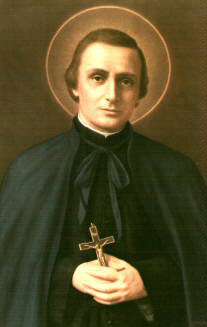 St. Peter Chanel: Saint of the Day for Sunday, April 28, 2024
 Prayer before a Crucifix: Prayer of the Day for Sunday, April 28, 2024
We ask you, humbly: don't scroll away.
Hi readers, it seems you use Catholic Online a lot; that's great! It's a little awkward to ask, but we need your help. If you have already donated, we sincerely thank you. We're not salespeople, but we depend on donations averaging $14.76 and fewer than 1% of readers give. If you donate just $5.00, the price of your coffee, Catholic Online School could keep thriving. Thank you.Help Now >



Copyright 2024 Catholic Online. All materials contained on this site, whether written, audible or visual are the exclusive property of Catholic Online and are protected under U.S. and International copyright laws, © Copyright 2024 Catholic Online. Any unauthorized use, without prior written consent of Catholic Online is strictly forbidden and prohibited.
Catholic Online is a Project of Your Catholic Voice Foundation, a Not-for-Profit Corporation. Your Catholic Voice Foundation has been granted a recognition of tax exemption under Section 501(c)(3) of the Internal Revenue Code. Federal Tax Identification Number: 81-0596847. Your gift is tax-deductible as allowed by law.